

Rene Denfeld on What Writers Get Wrong About Death Row
The author of The Talking Bone uses her experience as an investigator to craft more accurate crime fiction
As a licensed investigator, I’ve worked hundreds of cases over nearly twenty years, including on death tow. I’ve exonerated innocents. I’ve sat across from men scheduled to die and tried to figure out whether the justice system got it right.
I’m also a crime novelist. And I’m here to tell you: almost everything crime fiction gets wrong about death row, it gets wrong in the same ways, for the same reasons—and those reasons matter.
Let’s start with the men on the row.
Men on death row are seldom the brilliant, cunning sociopaths of crime literature. As tempting as that trope may be, it avoids the real reasons killers get away with murder, sometimes not just once, but dozens of times. It’s not because they outsmarted the cops at every turn. It’s because we live in a society that tolerates crappy police work, and doesn’t value victims, especially those who were poor or of color. When we perpetuate this trope, we ignore the real reasons crimes go unsolved.
Most men on death row are actually there for murders that, to the average person, seem ordinary. It might be a gas station robbery gone wrong, or a teenager, under the influence of a gang, involved in a shootout. Quite a few are men who were serving a shorter sentence but killed another inmate in custody.
The nature of death row is not to execute the worst of the worst. It’s to almost capriciously pick defendants out of the barrel and elevate some to death, while leaving others with life sentences, or even the possibility of parole. Or, when we consider cases like Epstein, letting some walk free.
In many crime novels, if a man on death row isn’t a monster, then he must be the opposite—the magical innocent. This is the innocent character with saintly, almost supernatural virtues. He might heal others with his bare hands. Or he administers wisdom from his cell.
I think this is a tempting trope because it allows us to pretend that false convictions are rare and only happen to those who are too good for this world.
Having worked many innocence cases, I can tell you that false convictions happen all the time, to all sorts of people. If you are poor, of color, intellectually or learning disabled, or make the mistake of talking to the police, it’s more likely to happen to you.
The trope of the magical innocent also allows writers to avoid this uncomfortable truth, including how false convictions happen in the first place.
The state has an arsenal of dubious methods to convict innocents: coercive interrogations, discredited junk sciences like blood splatter and bite mark analysis, paid informants, racially biased juries, and the use of state “experts” who make a handsome living putting innocent people in prison. In defense circles these are called testi-liars. Some of these testi-liars are total frauds and charlatans. Look up the so-called profiler Richard Walter, for instance.
By the time the state is done with a murder case, it can look like a mountain of evidence pointing to undeniable guilt. In truth, it might be more like a lot of hot air.
Life on the rows, too, tends to be mischaracterized.
Death row is an absence—of time, of hope and meaning. It is a place meant to bury people alive. It is a place where people fight to stay alive, not from physical threats so much as deep psychic harm.
Most death rows are lockdowns. That means the men are locked in their cells every day, all day—for eternity. If they are lucky they might be released once or twice a day to a small exercise yard. These can resemble dog kennels.
Appeals can last years, if not decades. The longest running death row inmate in my state was in prison for nearly forty years. Another man served over twenty-five years before being exonerated and freed.
Even when an investigator like me finds evidence of innocence, that doesn’t mean justice is coming. The law is written like loopholes, not justice. Few politicians are going to risk their careers to let an innocent man go free, even when confronted with overwhelming evidence.
The biggest danger to the men on death row is to their sanity. I’ve seen stone floors with deep grooves worn from the men pacing in circles.
To stay sane, the men turn to art. They crush M&Ms to make paint to color the walls of their cells. Some make intricate origami from scraps of paper. One man I worked with saved the chicken bones from his meals. He carved and polished them into intricate beads.
Inside their cells, the men are given just enough care to be kept alive, but never enough to thrive. The food is usually subpar. Prison officials have been caught accepting bribes for recalled and foul food. I’m talking lettuce slippery with rot, green meat, and dishes full of vermin.
In one lawsuit in my area, prison kitchen inmates testified about being instructed to feed others ground-up fish bait that had been marked “not for human consumption.” The smell was awful and the ground-up bait made others sick, and this was not the only putrid food they were instructed to serve. The lawsuit was tossed out, because, as the judge said, the food may have caused occasional illness, but was not constitutionally inadequate. For prisons, the bar is in hell.
When sickness comes marching down the rows, it comes for everyone. A cough brought in by a correctional officer can turn the entire row into a cesspool of vomit and diarrhea.
Death rows swelter in the summer heat, and grow deathly cold in winters. People think this is what the inmates deserve, but the correctional officers sweat and shiver too. Being a correctional officer is one of the most stressful jobs around. The rates of suicide, alcoholism and divorce are off the charts.
Some correctional officers get into the work because they are assholes. But most are simply regular people looking for a decent, stable, salaried position in a time when blue-collar work is rare. These are folk who once might have worked a timber mill or an auto manufacturing line. Nowadays, in some areas, the prison is the best job in town.
Greeting these officers when I visit prisons, I find them the kind of folk I grew up around—men and women with sun-burnt cheeks who can talk about the salmon run, or the sturgeon they caught over the weekend. Like the men on the row, they often appear ordinary.
Death row is a dark corner of our world, but it is also a telescope to a wider view into mass incarceration, justice and indifference. It speaks deeply to who we are as a people. It tells us what we value, and who we do not.
For many readers, the closest they will ever come to death row will be in the pages of a crime novel. The stories we tell shape public opinion and what people believe, even how they vote. We’ve created a mythology around death row that perpetuates horrific injustice.
We need to ground our novels in the truth. We can add in fantastical plots, maybe even toss in some magical realism or unlikely characters—there’s no rule we have to hew to every tiny fact. We just need to start from a place of recognizing the truth.
Because that is when justice begins.
***

Rene Denfeld
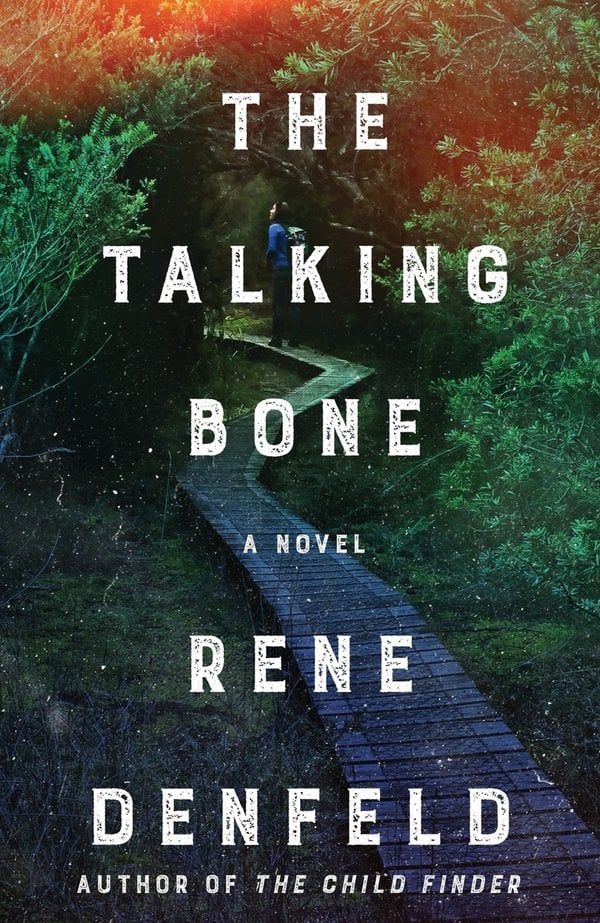
Rene Denfeld is an internationally bestselling author, journalist, licensed investigator, and therapeutic foster mother. She is the author of the novels The Child Finder, The Enchanted, and most recently, The Butterfly Girl. She has also written for the New York Times Magazine, The Oregonian, and the Philadelphia Inquirer. She lives in Portland, Oregon.