

Sarah Lotz on the Catharsis of Transforming Grief into Crime Fiction
The author of How to Kill a Crime Writer channels loss into a darkly comic murder mystery
A confession: I didn’t intend to write a grief narrative masquerading as a darkly-comic take on a classic British murder mystery. The novel in question—How to Kill a Crime Writer—was written in response to a particularly awful set of circumstances.
At the time, I was contracted to write a speculative romcom, but after my husband died suddenly from an undiagnosed medical condition, writing a love story, even an incredibly weird one, wasn’t an option for obvious reasons. Yet, my banjaxed brain kept insisting I needed to channel the grief somehow, and because crime fiction has always been my comfort zone, I decided to see if I could do this via a murder mystery (I also write horror, but that felt too close to the bone).
To give myself enough distance to tackle the subject, instead of delving into widowhood and writing from the perspective of a broken, menopausal writer, I decided to funnel the story via the POV of a relatively less broken millennial narrator/sleuth and tasked her with investigating the murder of her estranged mother, who just happened to be—ahem—a menopausal crime writer (paging Dr Freud).
But how to write about bereavement without it bogging down the narrative? After all, grief tends to be an internal and amorphous emotion, which isn’t exactly a good fit for the punchy crime and thriller genres. Unless, that is, it’s channelled into revenge.
It’s no secret that avenging the loss of a loved one is a particularly prevalent trope in mainstream action films, a large number of which feature buff ex-military men mourning their murdered wives, kids or pets by violently killing other men. While revenge seeking is an objectively unhealthy way of dealing with bereavement, to be fair, it’s far more active than say, pretending to read The Five Stages of Grief or self-medicating with back-to-back episodes of Drag Race and a metric fuckton of Pringles (ask me how I know).
In crime fiction, grief-manifesting-as-revenge is relatively less common – non-stop ass-kicking lends itself to a more visual medium – but when it’s done well it can be extraordinarily compelling. Take S.A. Crosby’s superb Razorblade Tears for example, where a pair of fathers team up to avenge the murders of their gay sons to blistering effect.
Admittedly, I didn’t go the revenge route in How to Kill a Crime Writer, but that’s mainly because this option literally only occurred to me as I was typing the above paragraph. Which is probably just as well as Niamh, my protagonist, is a sedentary introvert and the ability to creatively slaughter hench people isn’t in her skill set.
As a rampant consumer of crime fiction, I was more than aware that in the right hands, grief can give a detective or amateur sleuth more depth, and/or a viable excuse to engage in unchecked alcoholism or hardcore grumpiness. And if the grieving detective is a cop or crime-related professional, they’ll be too busy hunting down serial killers etcetera to spend too many chapters depressing readers with their own internal struggles.
Another option is to push the loss/murder of a loved one into a protagonist’s backstory. For example, Kate Atkinson’s witty and wonderful P.I. Jackson Brody has a double whammy of family deaths and mysteries haunting him, but because they happened in the distant past, they don’t steal the oxygen from his current cases.
Predictably, I also neglected to take advantage of the above options. After inheriting her dead mother’s royalty cheques and cottage in rural Shropshire, Niamh’s only job is taking care of her mum’s cat (not an actual career, I know), and instead of pushing the death into the distant past, it takes place on the first page. In fairness, to stop things getting too dour, I gave Niamh my family’s habit of using black humor as a coping mechanism, my tendency to be a bit of an avoider, and once the murder investigation kicks off, she’s kept extremely busy spying on her motley crew of neighbors/suspects.
Another way of keeping grief from bogging down a narrative is to marry it with a less potentially claggy emotion, such as guilt. This guilt-plus-grief option is explored to stunning effect in Dark Places by Gillian Flynn; Into the Woods by Tana French, and The Dry by Jane Harper, all of which also involve crimes, tragedies and losses that occurred in their respective protagonists’ distant pasts (it’s no wonder these novels are so compelling).
You might be relieved to hear that Niamh does feel some guilt where her mother is concerned, although this isn’t her primary motivation for investigating the murder (the reason she does this is far, far weirder).
And finally, bereavement can be a lonely and isolating experience, which again does not a page-turner make. To combat this, I gave my narrator an unusual sidekick in the form of a manifestation of her mother’s thriller series’ protagonist—a stereotypical ass-kicking private detective—who bullies Niamh into dealing with her grief while solving a murder mystery (and yes, this is as bonkers as it sounds).
Imagining how a John Wick-style character might operate in a relatively slower-paced cozy crime setting also helped lighten things up and gave me the opportunity to write a love letter of sorts to the crime genre, which helped haul me out of the abyss when I needed it most.
Why so many of us turn to crime fiction when the going gets tough isn’t a mystery. It helps us work through our darkest fears and emotions and provides us with a sense of closure when, in real life, there isn’t one in sight. And it turns out that writing crime fiction can be equally as cathartic (who knew?).
***
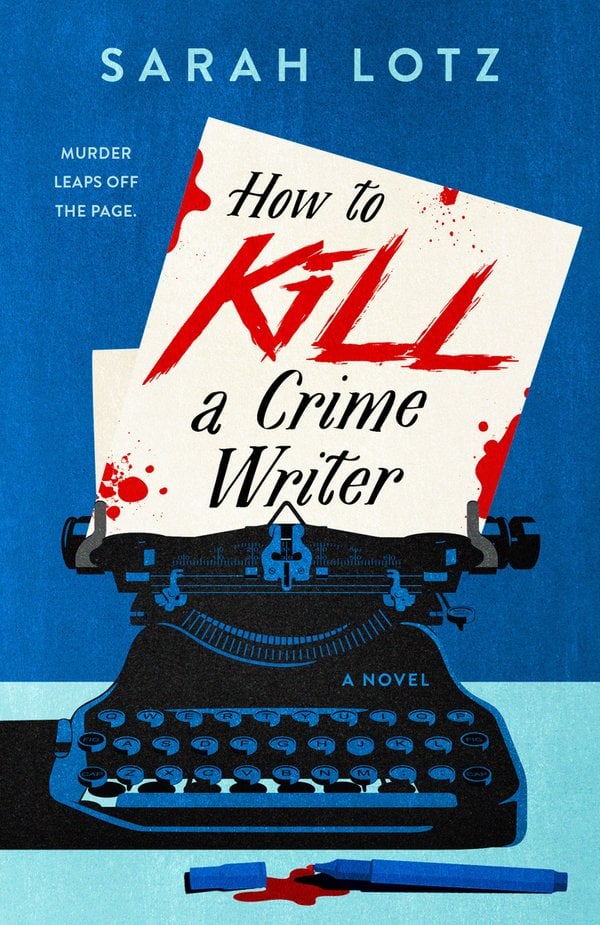

Sarah Lotz
Sarah Lotz is a novelist and screenwriter with a fondness for the macabre. She is the author of Day Four and The Three, and lives in Cape Town with her family and other animals.