20 Speculative Thrillers to Get You Through the Rest of 2026
Featuring new works from Daniel Kraus, August Clarke, Natasha Pulley, Tananarive Due, TJ Klune, and more
There is an avalanche of speculative fiction coming out this summer that is absolutely perfect for crime readers, so much so that there is no possible way to round it all up, but I’ve done my best to assemble some highlights!
While many of the books below count as both horror and speculative, I’m working on another soon-to-publish listicle with tons of horror releases coming out in the rest of the year. So, if you read the following list and wonder where all the vampires are, that is where the vampires will be. And ditto for worms, tradwives, demons, and other terrifying creatures that belong more in the horror category.
This list is more of an aliens, unicorns, and time travelers list. Also angels. There are a lot of angel books out this year. Probably because Daniel Kraus’s Angel Down left us all wanting more visits from the heavenly host. Or perhaps last year’s literature was so preoccupied with sexy antichrists that sexy and/or scary angels are really the only logical next step. Humans do tend to get turned on by whatever we’re afraid of, and we’re all freaking out about the end of the world these days. Bring on the horny apocalypse!
Other trends include a preponderance of alien first contact stories and technofascist dystopias, both of which lend themselves quite easily to the thriller genre. Magic appears less in this list than it will in the horror list, as everyone in books using magic these days seem to be doing so in rather nasty ways. Heists also appear a bit less than they should, simply because I didn’t have enough time to read them. But if you’re looking for epic speculative heist novels, I’ll make sure to add some—just add a comment.
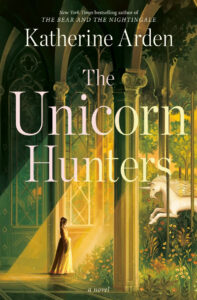
Katherine Arden, The Unicorn Hunter
(Del Rey, June 2)
In 15th century Brittany, a noblewoman facing an unwanted union with a far-away lord puts in motion a clever plan to hold off the wedding: her husband-to-be must join her in a unicorn hunt in the dense, dark forest near to her castle. Soon, they find themselves transported into a magical realm beset by an ancient curse that only the lady and her wooing courtiers can break. The Unicorn Hunter takes its inspiration from the real Anne of Brittany, whose marriage to the King of France was just another method of preserving what little sovereignty her province could hold onto under the steady creep of French imperial influence, and who brought two beds to her wedding as a symbol of her independence. I think I would have quite liked Anne of Brittany—Katharine Arden certainly feels a sprightly kinship with the impish aristocrat.
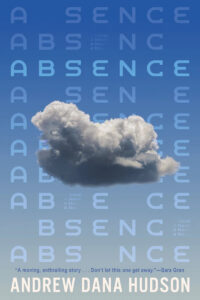
Andrew Dana Hudson, Absence
(Soho, June 2)
Andrew Dana Hudson’s speculative thriller takes as premise a similar set-up to The Leftovers: people all over the world are suddenly disappearing (“popping”), and those investigating the strange occurrences (dismissively known as “depop cops”) are without a clue as to what’s responsible for the slow-moving and seemingly arbitrary disaster. When one of the disappeared reemerges, two detectives are dispatched to verify the return, and find themselves circling inexorably closer to the bizarre truths underpinning their warped reality. Absence captures the very essence of speculative fiction; when I think of the genre, I think of this book.

Naomi Kritzer, Obstetrix
(Tordotcom, June 9)
Obstetrix is one of several upcoming thrillers to examine compulsory reproduction in the post-Roe era. In Obstetrix, the last ob-gyn to perform an abortion in South Dakota is kidnapped after her acquittal and forced to play midwife to a cult. If you like this book, check out Carrying, by Samantha Josephs, in which a trans woman so stealth her family doesn’t even know finds herself impossibly pregnant, and Fallow, by Sarah Anderson, in which a company hires an in-house surrogate to eliminate a need for executive maternity leave.

Daniel Kraus, The Sixth Nik
(Saga, June 23)
Hot off the heels of his well-received Angel Down, and with several film adaptations under his belt or in the works, Daniel Kraus is having a moment, with two novels publishing this year: the self-explanatory film criticism book Partially Devoured: How Night of the Living Dead Saved My Life and Changed the World, and the space horror novel The Sixth Nik, which completely and utterly destroyed me. In The Sixth Nik, a young girl is tasked with an epic quest to a dark truth, for a work reminiscent of Ender’s Game and Dan Simmons’ Hyperion, neither of which had been read by Kraus before writing this novel (as the publisher’s introductory note has assured me). A ridiculously awesome book, with a shattering finale.
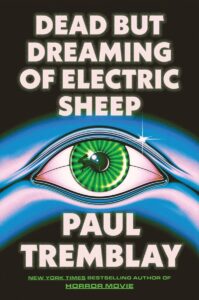
Paul Tremblay, Dead but Dreaming of Electric Sheep
(William Morrow, June 30)
A semi-professional Twitch streamer is hired to pilot a mostly-dead corpse from coast to coast in a grotesque display of proprietary technology—a plot reminiscent of nothing so much as Weekend at Bernie’s, oft-mentioned by the novel’s knowing protagonist, and a signature example of Paul Tremblay’s wacky influences and deadly serious applications.
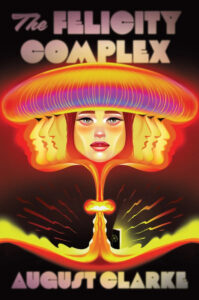
August Clarke, The Felicity Complex
(Erewhon, July 28)
A brilliant satire of misogyny, greed, and the best plans gone awry. What if scientists could grow a perfect girl in a vat, train her to be a consummate hostess, stick her and her sisters in a resort-like bunker for the ultra-wealthy, and leave her there for a very, very long time? The Felicity Complex combines the feminist fury of Annie Bot, the parodied nostalgia of Blast from the Past, and the intestinal content and social commentary of Night of the Living Dead. A singular story with remarkable set-pieces and a shattering resolution, Clarke’s latest is essential reading for the end times.
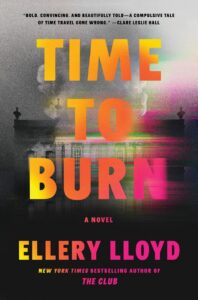
Ellery Lloyd, Time to Burn
(Harper, August 4)
What are the odds that there would be not one, but two alt history/time travel thrillers about the Blitz coming out in the same year? Well, there are indeed two, and both are excellent. The first, Nonesuch, by doyenne of alternative history Francis Spufford, came out in March, and features a cat-and-mouse game between a fascist sympathizer trying to turn back time and keep Britain from entering the war, and the sexually liberated financial advisor trying to protect the timeline (the weirdest thing about this book was how it made the stock market…kinda interesting). Time to Burn, from husband-and-wife writing team Ellery Lloyd, is just as good, and completely different. In near-future England, the very wealthy can travel back in time to a carefully curated version of history, any risks to the timeline justified by the huge payouts received by the tech company and redistributed to the appropriate government ministers. The business is going so smoothly that a famed filmmaker is hired by the tech company’s eccentric founder to document his success in appropriately artistic style, but soon enough, she’s filming a dumpster fire, as a traveler goes missing amidst the Battle of Britain and the timeline begins to deteriorate rapidly in response. Ellery Lloyd’s usual gifts for characterization and plotting are on full display throughout the novel, which I imagine was fiendishly difficult to assemble.
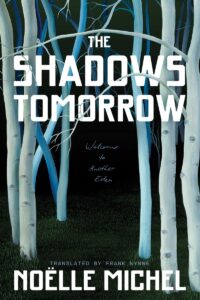
Noëlle Michel, The Shadows Tomorrow
Translated by Frank Wynne
(Simon & Schuster, August 4)
In Noëlle Michel’s newly translated parable of society and spectacle, Neanderthals have been brought back to life—and made the subject of an enormously popular reality show from within their nature reserve. Could the world’s ongoing obsession with the minutiae of their lives be covering more sinister purposes for their renewed existence? What part do humans play in the unfolding drama, as perpetrators, collaborators, bystanders, or allies? A passionate and altogether fascinating entry into the world of speculative thrillers, The Shadows Tomorrow is a must-read.
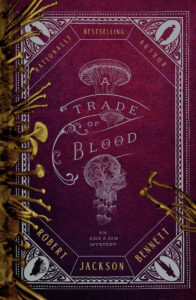
Robert Jackson Bennett, A Trade of Blood
(Del Rey, August 4)
Robert Jackson Bennett’s extremely entertaining Ana and Din series returns for a third installment, and it might be the best one yet. A Trade of Blood takes place in an agriculture region where the local aristocrats have been dropping like flies. Ana and Din have been sent to clear up the suspicious deaths and restore order to an essential region; instead, the two investigators uncover a shocking conspiracy with terrifying implications for the past, present, and future of their beloved Empire. So good!!!
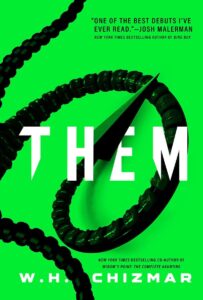
W.H. Chizmar, Them
(Gallery, August 11)
This survival horror is epic, violent, and not for the faint hearted. Chizmar’s debut consists of dual narratives, one leading up to an alien apocalypse, and the other set ten years after the fall of civilization as we know it. In the first, a government bureaucrat in charge of a top-secret research institute discovers the hubris of playing god, while in the latter, a lone survivor searches for signs of life amidst the devastation, while evading the scorpion-like monsters who now rule the landscape. A classic drama of pride before the fall, but with giant space bugs. Who have huge stingers, three jaws, and biometallic scales that are impervious to bullet fire. Yeah, they’d win.
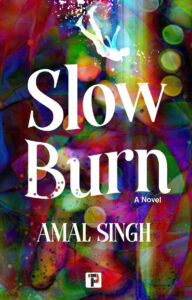
Amal Singh, Slow Burn
(Flame Tree Press, August 18)
Amal Singh playfully explores impostor syndrome and the feast-or-famine of creative work in this delightfully snarky tale of desperation, striving, and the multiverse. Rishi Tripathi, Singh’s struggling actor protagonist, is about to give up on his career and go home when he finds himself transported to a mirror-image of Bombay in which he’s found enormous success. The problem? His doppelganger wasn’t exactly the nicest guy, and even if Rishi can find a way to stay in his new reality, the previous Rishi made a whole lotta enemies. Can he keep his new status without his life (or his soul)?
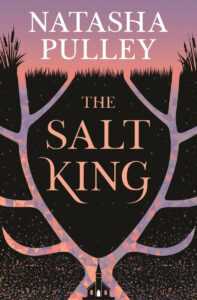
Natasha Pulley, The Salt King
(Bloomsbury, August 18)
Why does 2026 have so many books coming out about angels? I have quite a few theories: we are, after all, living through what feels like the End Times, and also everyone is obsessed with Daniel Krauss’ Angel Down, which has well-deserved its many accolades. We’re also all in need of a new speculative romance for the apocalypse, since none of us can reread Good Omens anymore (or appreciate the angel and demon cooperation and growing romance) without considering its authorship. But I digress! Back to the book in question:
Featuring Natasha Pulley’s signature delicacy in portraying the slow growth of queer love, The Salt King follows a priest in the midst of an identity crisis as he returns to his hometown and begins a romance with the local healer, a gentle figure with his own secrets. The town itself acts as a liminal threshold, a thin place, a transgressible barrier between worlds—it’s an enclave above a salt mine in which technology fizzles, enemies turn to pillars of salt, and strange creatures lurk in the cavernous depths. As the priest and the doctor try to uncover their town’s foundational mysteries, bizarre happenings at salt mines across the globe occur at an alarming rate, bring a reckoning with supernatural forces and a desperate need for both true believers and true skeptics. Also, those who enjoyed Pulley’s novel The Half-Life of Valerie K might spot a few reused facts about iodine and radiation 🙂 I love it when an author does so much research for one book, they can’t help but reference it in later works.

Jonathan Sims, The Burn Line
(Poisoned Pen Press, August 25)
The Burn Line is a terrifying, strangely heart-warming take on the vampire novel, wherein solidarity trumps individualism when it comes to fighting the undead (and, of course, negotiating union contracts). In Sims’ latest, a group of strangers discovers a horrifying conspiracy by London’s ultra-rich, who have been steadily feeding off the subway-riding proletariat in order to infinitely prolong their own monstrous existence. Do not let the heavy-handed metaphor dissuade you: Sims executes his plot with ease, finesse, and plenty of character development; the real star of the show is, of course, the London Underground. Enjoy the show! And of course, mind the gap.

Donyae Coles, The Sunken, the Adored
(Amistad, August 25)
No one writes about hunger and want like Donyae Coles. I loved her terrifying take on the fairy underworld and their monstrous appetites, Midnight Rooms, and her latest continues her thematic exploration of desire and deprivation, this time in early 18th century Venice. In The Sunken, the Adored, a ship drifts into harbor with only one passenger left alive—and how she survived the voyage is even more nightmarish than any of the deaths surrounding.
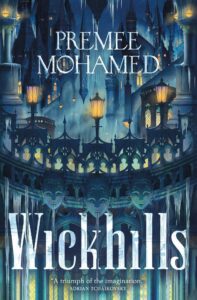
Premee Muhamed, Wickhills
(Tor Books, September 8)
Wickhills is set in a bustling, striving port city, in which magic rules the streets and is in turned controlled by the city’s elites; the people are hungry, the rulers are corrupt, and a shocking technology threatens to upset the delicate balance of power and throw the entire city into chaos. Into this morass, a new weapon arrives, operated by an unpredictable defector from a foreign land, and protected from misuse by a jaded secret agent with nothing left to lose. A fantastical melange of noir and fantasy that makes me want to go through the author’s entire oeuvre.
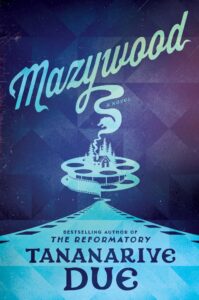
Tananarive Due, Mazywood
(Saga, September 22)
Tananarive Due has been steadily growing in reputation with each new work in her storied career, quietly amassing one of the greatest oeuvres in horror history; her last novel, The Reformatory, finally took Due from best-kept secret to household name, and her upcoming release delivers just as much heartbreak, horror, and history. Mazywood follows the long shadow of exploitation and trauma from the 1920s through to the present day: in Old Hollywood, the child of Black vaudevillians makes a fervent wish for a loyal helpmeet and a successful career, only to find herself facing rampant discrimination and impossible compromises; three generations later, her grandson takes his wife and children to his grandmother’s dilapidated resort, full of decayed glamour, dark secrets, a terrifying creature, and perhaps, just a kernel of hope. Mazywood may be 500 pages long, but I blazed through it in a single afternoon, and I have no doubt future readers will find it just as compelling. Man, this book was good…
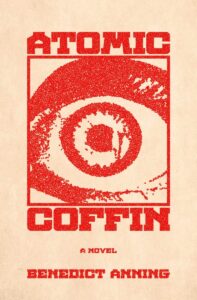
Benedict Anning, Atomic Coffin
(Saga, October 6)
If you ever wanted to read a mashup of Smilla’s Sense of Snow and The Thing, with a little Cold War espionage thrown into the mix, then wait no further: the book of your worst nightmares and the reason you will never again contemplate scuba diving has arrived, and it is terrifying. Atomic Coffin follows an agent code-named Thistle who’s getting extracted from her deep cover in East Berlin after coming across some top-secret documents with bizarre implications. After being smuggled into international waters in the North Sea, she’s unceremoniously dumped on a submarine crew to investigate the mystery at the center of the documents: deep under the surface of the ocean, just outside of Iceland, a Soviet submarine has been sitting for years. It seems abandoned, evacuated in a hurry, with only hints at the malevolent forces that sent them packing, and that will soon prove just as nightmarish to the newcomers.
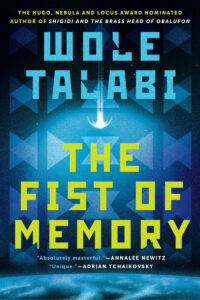
Wole Talabi, The Fist of Memory
(DAW, October 27)
In this first-contact thriller set in near-future Nigeria, an alien spaceship approaches the planet, and an assassin and an astro-physicist find themselves on a desperate quest to understand the otherworldly visitors’ obscure messages and their even more oblique intent.
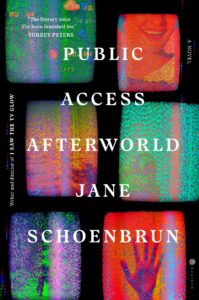
Jane Schoenbrun, Public Access Afterworld
(Hogarth, October 27)
This book is awesome! Jane Schoenbrun is already well-known for their films, and this book is just as awesome as their growing ouevre. It’s also the second book I’ve read this year in which television broadcasts are a portal for otherworldly occurrances—shoutout to Francis Spufford’s Nonesuch, again! In Public Access Afterworld, two lonely suburban teens see something strange in the static late one night as the nation finally makes the switch from analogue to digital and become obsessed with uncovering the meaning behind the disturbing images. Their search takes them on a journey that leaves one a fugitive and the other missing, presumed dead. A decade and a half later, a content moderator at a tech company comes across the same staticky messages, linked to hundreds of disappearances and underpinned by a vast conspiracy. So good!!!! And also full of Austin references, which was nice, since I live there. And complaints about Austin, which was also nice, since sometimes I would rather not live here.
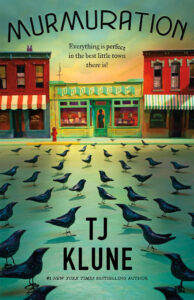
T.J. Klune, Murmuration
(Tor Books, November 17)
TJ Klune’s latest speculative romance takes us into a small town where everyone seems way too invested in the budding romance between Mike, the bookstore owner, and Sean, the lead waiter at the diner. Why does everyone want them to get together so bad? Is this a speculative universe for yaoi? Why doesn’t anyone ever leave or come back? Why aren’t there any children in town? Why does reality seem to warp at the edges of the village? And can Mike save Sean from the coming storm? Murmuration is classic Klune, and an excellent addition to the growing genre of queer fantasy.
Molly Odintz
Molly Odintz is the managing editor for CrimeReads and the editor of Austin Noir, now available from Akashic Books. She grew up in Austin and worked as a bookseller before becoming a Very Professional Internet Person. She lives in central Texas with her cat, Fritz Lang.