
Stephanie Wrobel on the nuance of twists in thrillers
A primer on why guessing 'twists' early does not determine the success of a suspense novel
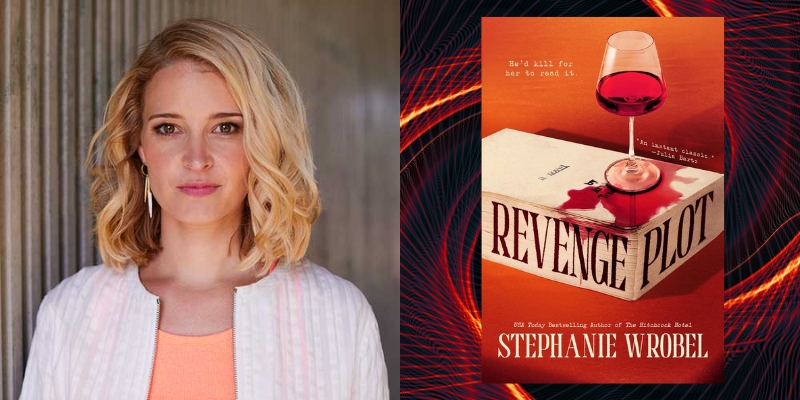
Years ago, I wrote about nine types of thriller twists for CrimeReads. I spent so much time thinking about that taxonomy that it found its way into my new novel, Revenge Plot: one of my characters, a bestselling thriller writer, reflects on those twists as she develops her book.
But after writing four thrillers, and reading hundreds more, I’ve realized my taxonomy needs an addendum: not everything you figure out before the author tells you is a twist.
First, a refresher on what a twist it. I define it as a revelation that forces the reader to substantially reinterpret what came before. It is not confirmation of something the reader has been encouraged to suspect, nor the answer to a mystery that the novel has supplied enough evidence for the reader to solve. I would call these reveals.
Let’s use Gone Girl as an example, since it’s arguably the most popular thriller of the twenty-first century. Spoilers ahead! Nick’s affair with Andie is a reveal. Nick’s lies to the police are reveals. The book’s twist is that Amy staged her disappearance, fabricated the diary and evidence, and constructed a murder case against Nick.
A reveal gives the reader new information that answers a question or changes what we know. A twist changes the meaning of what we thought we knew. Gillian Flynn gives us clues that Nick is hiding something, so when we find out he’s having an affair and lying to the police, these developments confirm our suspicions of him. But at the point when we find out the diary is fabricated, we believe Amy to be the victim of this story and Nick to be the perpetrator. Finding out Amy is framing Nick forces us to reinterpret everything that came before.
Okay, so why am I being such a pedant about terminology? Because our genre’s overemphasis on twists is ruining one of the key pleasures of thrillers: deduction.
Lots of readers choose mysteries and suspense novels so they can put the clues together, then solve the crimes themselves. Sometimes we want you to say, Holy shit, what?! But other times we want you to think, I knew it! Or, Oh, of course! A good thriller should make the reader feel smart. Thriller writers plant breadcrumbs over the course of three or four hundred pages in the hope that readers will pick up on some or all of them and put the puzzle pieces together.
Our job is not to keep you from figuring anything out. It’s to control what you figure out, and when.
Alfred Hitchcock famously illustrated the distinction between surprise and suspense with his “bomb under the table” scenario. If two people are talking and a bomb suddenly explodes beneath them, the audience is surprised. Tell the audience beforehand that the bomb is there while leaving the characters oblivious, and the same scene is suspenseful. In other words, sometimes giving the audience more information is the key to making a story work.
Thriller writers constantly make versions of this choice. Sometimes I want the reader to know something my protagonist doesn’t. Sometimes I want you to suspect something but not have enough evidence to be sure. Sometimes I want you and the protagonist to arrive at the answer together. And sometimes I want you to be confidently, spectacularly wrong.
All of those experiences require the author to manage the distance between what the reader knows, what the characters know, and what the reader thinks she knows. If I’ve spent a hundred pages planting clues that Character A is secretly Character B, then you figuring out their identity on page three hundred and fifty may not mean you’ve outsmarted me. It may mean I’ve done my job.
That isn’t to say predictability is never a problem. If I intend to stun you on page three hundred yet you figure out my big twist on page thirty, something went awry. But “I guessed it” doesn’t tell us whether that happened. The more useful question is: were you supposed to be able to guess it? And when?
In our obsession with avoiding predictability, I worry that thriller writers are being pushed toward a different—and in my opinion, worse—problem: the supposedly “unguessable” twist.
Surprise alone is easy. I could reveal on the final page of my novel that a murderer was a previously unmentioned identical twin. You probably wouldn’t have guessed it, but you also might want to chuck my book across the room.
The best twists don’t merely make us say, I never saw that coming. They make us say, How did I not see that coming? Once the truth is revealed, we should be able to look backward and recognize that the clues were there all along. The author showed us the pieces; we assembled the puzzle incorrectly.
Which means “unguessable” is a strange standard to aspire to. So many reviews these days focus on whether the reader guessed the twist. (I’m guilty of this too!) So many blurbs on book covers promise one you’ll never see coming. But when every thriller is judged according to how thoroughly it fooled us, we flatten a genre capable of producing far more complicated pleasures.
We’re supposed to notice the suspicious alibi. Remember the odd detail from chapter three. Wonder why the author chose that particular word. Form theories, discard them, resurrect them fifty pages later. We’re supposed to be right sometimes.
To judge a book’s success by whether you guessed the twist early—never mind whether that “twist” was actually a reveal—is like judging a roller coaster by whether you could see the big drop coming.
Sometimes seeing it coming is half the fun.
***


Stephanie Wrobel
Stephanie Wrobel grew up in Chicago but has been living in the UK for the last three years with her husband and dog, Moose Barkwinkle. She has an MFA from Emerson College and has had short fiction published in Bellevue Literary Review. Before turning to fiction, she worked as a creative copywriter at various advertising agencies. Her new book, Darling Rose Gold is now available from Berkley Books.