
The End of the World is Always About Parents and Children
"[W]hat better way to test the limits of your zombie-ridden world than to put a family at the centre of it."
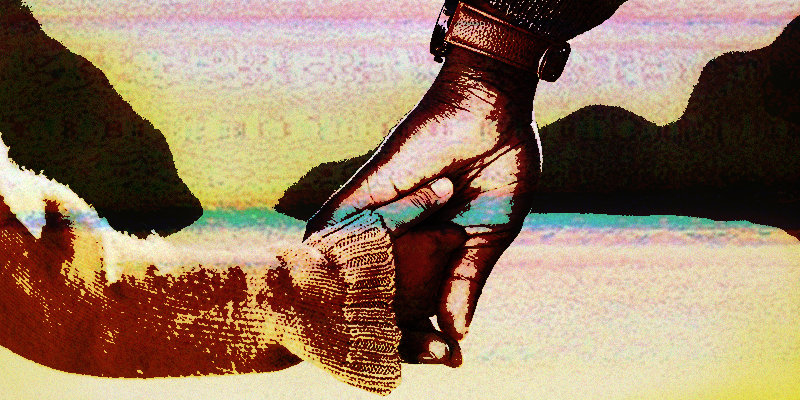
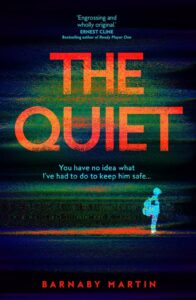
With the second season of The Last of Us airing on HBO, it seems that dystopian dramas have come back kicking and screaming. The series follows Joel and Ellie, who develop a surrogate father-daughter bond in the first season. My debut novel, The Quiet—out now in the UK and releasing on 1 July in the US—also centers on a parent-child relationship in a dystopian world. The stars have aligned. There are great reasons why writers are drawn to sticking parents at the centre of their dark stories: a child is vulnerable; they make mistakes that put their parents in danger; protection is a powerful motivation. But there’s more to it than that.
Often, the crisis which led to the dystopia happened before the child was born, so they learn about the old world through ruins and broken technology and stories around fires in the empty wilderness or overheard conversations in disused airports. That’s an interesting thing to play around with. But seen from the child’s perspective—think The Giver by Lois Lowry or Never Let Me Go by Kazuo Ishiguro—you get to see the story through the eyes of someone who doesn’t know anything other than the world they’ve been presented with. Maybe they reject the idea that things were ever better? Maybe they like their world and don’t want to ‘go back’. In Never Let Me Go—which is not a book about parenting, but is still about protection and love—the children cloned for organ donation don’t try to escape because what would they run to? They accept their world because it’s the only one they’ve ever known. This shift in perspective is ripe for exploration. Look at the switch in protagonist from the first to the second season of The Last of Us—from Joel to Ellie. The parent wants to protect, that’s obvious, but what does the child want? Love? To be looked after? To push back, to discover the ‘truth’? Or just to survive? There is no single answer to the question, and that’s why it’s interesting.
For as long as novels continue to be written and films continue to be made, there will always be dystopias, and what better way to test the limits of your zombie-ridden world than to put a family at the centre of it. It’ll either break or survive—and the thrill is finding out which.
So, here are a few examples of novels where a parent, or surrogate parent, just wants to save their child from the end of the world.
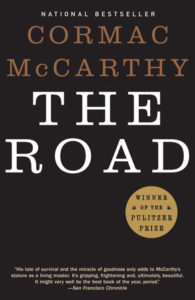
Cormac McCarthy, The Road
This is the go-to example. The Road follows the story of a man and his son trying to travel south in a world that has been set on fire by an unknown disaster. There are cannibals and limited ammunition and it’s written in beautiful, poetic prose. I found it surprisingly hopeful considering the setting.
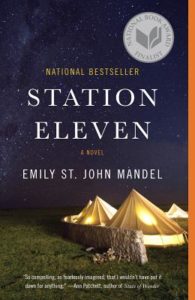
Emily St. John Mandel, Station Eleven
Station Eleven doesn’t directly feature a parent-child relationship, but it has all the hallmarks of it. Kirsten, who is eight when the Georgia Flu appears, saw actor and movie star Arthur Leander as a father figure. And Jeevan, who is with Kirsten on the night of the outbreak, looks after her as a parent would following the collapse of civilization.

Octavia E. Butler, Parable of the Sower
Lauren Olamina isn’t a mother at the start of the book—she’s a teenage girl living in a gated community as society collapses around her. But she becomes a maternal figure to the group of survivors she leads north, including young children. Parable of the Sower treats parenthood as a duty. Lauren’s actions feel parental in every way that matters.
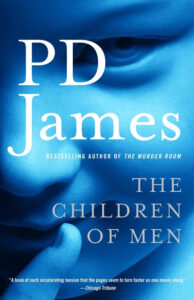
P.D. James, Children of Men
In James’s novel, the human race faces extinction after two decades of global infertility. When a young woman turns up pregnant, Theo becomes her protector. He’s not the child’s father, but he becomes something like one. His transformation into a guardian and father figure is the heart of the novel.
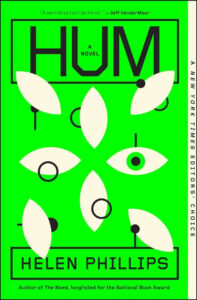
Helen Phillips, Hum
This dystopia follows a mother, May, in a world where climate catastrophe and surveillance capitalism have pushed society into a fragmented state. May works for a corporation monitoring others through earbuds, while caring for her two young children. Like The Road, Hum centers on the idea of protection, but here, the threat is not just physical but psychological.
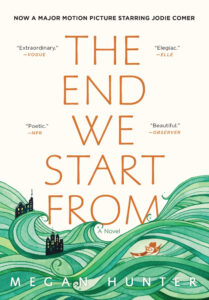
Megan Hunter, The End We Start From
This beautifully written novel follows a mother who gives birth at the start of a catastrophe. It’s unclear exactly what happened—a flood, but also a war—but that’s not what the book is about. It’s about Z, the baby, and his mother, and how they survive in this new world as Z learns to grab, walk, and think.
Honourable mention:
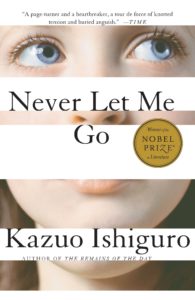
Kazuo Ishiguro, Never Let Me Go
There are no parents in Never Let Me Go, but the longing for love and protection runs deep. The clones at Hailsham search for connection – through friendship and love, and by searching for their ‘possibles’, the people they were cloned from.
***
Barnaby Martin
Barnaby Martin is a multi-talented storyteller and creator. Besides his writing, he is an award-winning and self-taught composer, video essayist and teacher. His music has been performed widely in the UK and internationally by groups including the Tokyo Philharmonic Orchestra, the Orchestra of Opera North and Westminster Cathedral Choir. His YouTube channel, Listening In, which he began in 2019 and for which he makes videos that explore the cross-section between pop culture and classical music, has garnered over 200,000 subscribers and 10 million views. He studied natural sciences at Cambridge and now teaches in London, where he lives with his husband.