The Inside Story of Stalin's Obsession with Killing Trotsky
"Stalin’s war against one man had become a war against an idea..."
How Stalin Seized the Revolution
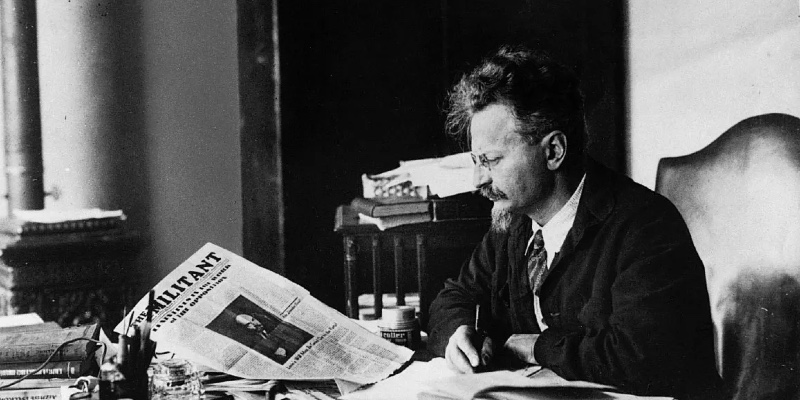
Leon Trotsky’s fall from revolutionary hero to hunted exile ranks among the most dramatic reversals in modern political history.
As Vladimir Lenin’s most brilliant lieutenant and the architect of the Red Army, Trotsky was indispensable to the Bolshevik triumph of 1917. His leadership during the Russian Civil War (1918–1921) and his theory of permanent revolution established him as one of the Revolution’s most formidable figures. Yet the same independence, intellect, and internationalist vision that elevated him also ensured his destruction.
By 1922, Lenin’s health was failing. A series of strokes left him incapacitated and increasingly alarmed by the growing power of Joseph Stalin, the newly appointed General Secretary of the Communist Party. From his sickbed, Lenin dictated his political “Testament,” warning the Central Committee that Stalin had amassed excessive authority and urging his removal. In that same document, Lenin described Trotsky as “the most capable man in the present Central Committee,” a clear indication of the succession Lenin feared was slipping away.
Lenin’s death in January 1924 foreclosed that outcome. Stalin and his allies suppressed the Testament and ensured it was never read aloud at the Party Congress. Control of the party bureaucracy allowed Stalin to isolate his rivals one by one. Trotsky, confident in the power of argument and revolutionary principle, found himself steadily marginalized. Their conflict was not merely personal but ideological: Trotsky’s insistence on international revolution clashed irreconcilably with Stalin’s doctrine of “socialism in one country.”
In January 1925, Stalin orchestrated Trotsky’s dismissal as People’s Commissar for Military and Naval Affairs, stripping him of control over the Red Army. By 1927, the struggle was effectively over. Trotsky’s alliance with Grigory Zinoviev and Lev Kamenev collapsed under staged denunciations and intimidation. That December, he was expelled from the Communist Party for “anti-Bolshevik activity.” Within months, he was banished to internal exile; by early 1929, he was forced out of the Soviet Union altogether. The man who had helped create the Soviet state was now its declared enemy. Stalin’s supremacy was complete.
Stalin’s War on Trotsky
Exile did not end the struggle. It transformed it.
By the late 1920s, Trotsky remained the last living embodiment of Lenin’s Revolution and the most visible alternative to Stalin’s rule. Stalin soon concluded that banishment was insufficient and he was exiled. From abroad, he continued to write, organize, and inspire revolutionaries worldwide. By the early 1930s, this policy hardened into a formal structure with the creation of the State Political Directorate (GPU) Department of Special Tasks (DST), assigned to operations against political enemies abroad.
From that moment forward, exile became provisional. GPU agents were assigned not merely to monitor Trotsky but to destroy his family, his followers, and the movement that sustained him. Surveillance deepened, networks were penetrated, and trusted associates vanished. Stalin’s war against one man had become a war against an idea—a final effort to erase the last living alternative to the Revolution he claimed to defend.
A Family Targeted
The campaign against Trotsky did not stop with him. It extended deliberately and relentlessly to his family.
Trotsky was married twice and outlived all four of his children—an outcome that was neither accidental nor incidental. His family members were not collateral victims of Stalin’s terror; they were targets.
Trotsky’s first wife, Aleksandra Sokolovskaya, whom he married while imprisoned in the summer of 1900, bore him two daughters, Zinaida (Zina) and Nina. Although the marriage ended in divorce in 1902, Trotsky remained close to both children, particularly Zina, who resembled him closely in temperament as well as appearance.
Nina died of tuberculosis in 1928 at the age of twenty-six after being denied adequate medical treatment by Soviet authorities. Trotsky took her death badly; it was the first loss of a child he endured, and Natalia grieved deeply as well, though Nina was not her biological daughter.
Zina, also suffering from tuberculosis, fled the Soviet Union in 1931 after prolonged GPU harassment. Denied permission to return home to see her ailing daughter, she fell into despair. On January 5, 1933, isolated and increasingly ill, Zina took her own life by gas asphyxiation in Berlin. Her mother, Aleksandra Sokolovskaya, was later swept up in the Great Purge. Arrested in 1935, she was executed three years later.
Trotsky’s second wife, Natalia Sedova—his companion from 1902 onward—had two sons, Lev and Sergei. Lev Sedov, Trotsky’s closest collaborator and political heir, became a central target of GPU operations in Paris. Sergei, by contrast, avoided politics entirely. A respected engineer at the Moscow Aviation Institute, he attempted to protect himself by adopting his mother’s surname. It offered no safety.
On March 3, 1935, Sergei was arrested on fabricated charges. Despite brutal interrogation, he refused to denounce his father. Initially he was sentenced to five years in a labor camp, but his term was later commuted to internal exile in Krasnoyarsk. Sergei’s death in 1937 was later obscured by conflicting official accounts. In 1988, Soviet authorities acknowledged that he had been returned to Moscow and executed after being accused of conspiring to assassinate Stalin.
By the time Trotsky reached Mexico in 1937, three of his four children were already dead.
The following year brought the most devastating blow. In February 1938, Lev Sedov died in a Paris clinic under circumstances officially attributed to complications from appendicitis. Trotsky rejected the explanation outright. French authorities, pressured diplomatically and eager to avoid scandal, declined to investigate objectively. Trotsky never accepted the official account and remained convinced that Sedov’s death was not a medical tragedy but an assassination cloaked as misfortune. From that point forward, Trotsky should have understood that the Kremlin’s campaign was no longer political. It was mortal.
Fleeing Across Europe
From 1929 to 1937, Trotsky lived as a fugitive—moving from country to country as each temporary refuge collapsed under Soviet pressure.
In Turkey (1929–1933), he lived under constant surveillance on the island of Prinkipo. He was guarded by Turkish police but stalked by GPU operatives posing as émigrés, sailors, and journalists. His mail was intercepted, his visitors screened, and his home watched from off-shore boats. While isolation allowed him to write The History of the Russian Revolution, his extended family in the Soviet Union endured poverty and fear.
In France (1933–1935), Trotsky found no relief. The GPU’s European networks, aided by local Communist Party sympathizers, infiltrated Trotskyist circles and tracked his movements. French authorities, anxious to preserve relations with Moscow, restricted his political activity and confined him first to Barbizon and later to Royan before expelling him altogether. By 1935, few nations were willing to risk sheltering him.
Norway (1935–1936) initially offered asylum, but it too succumbed to Soviet pressure. After threats of diplomatic retaliation, the Norwegian justice minister placed Trotsky under house arrest. His writings were censored, his home surrounded by armed guards, and his political activity curtailed. Failure to find a country willing to defy Moscow would have meant extradition to the Soviet Union—and almost certain death.
Mexico: The Final Trap
By late 1936, Stalin’s vendetta had entered its final phase.
In October, GPU mole Sylvia Callen, embedded as the secretary to the Socialist Workers Party (SWP) president in New York, alerted Moscow that discussions over Trotsky’s asylum in Mexico were supported by Mexican muralist Diego Rivera. The GPU, fearful that left-leaning Mexican President Lázaro Cárdenas might be persuaded to grant asylum, began preparing to conduct clandestine operations in Mexico City.
On November 11, 1936, GPU agent Caridad Mercader arrived in Veracruz with her daughter and two companions, traveling under clumsily forged passports that identified them as aid workers for Spanish orphans. Detained on arrival because of irregularities in their papers, they were released after political intervention. Publicly, Mercader raised funds for the Republican cause. Privately, her mission was to identify and cultivate a cadre of operatives who would later follow her orders without question.
Caridad was well-known in Spain and readily recognized by many Spanish émigrés in Mexico who had fled the Civil War. She proved adept at cultivating support among Mexico’s large pro-Communist Teachers’ Union as she toured Mexico. Her speeches resonated so strongly that in Yucatán, teachers replaced the Mexican flag above schoolhouses with the Soviet hammer and sickle and substituted portraits of President Cárdenas with those of Stalin.
On December 6, 1936, President Cárdenas formally offered Trotsky asylum. On January 9, 1937, Trotsky and Natalia arrived in Tampico—coincidentally the same day Caridad learned that her son Pablo had been killed in Spain after defying GPU orders. His brother Ramón later remarked coldly that Pablo “got what he deserved.”
Caridad continued touring Mexico for two months before being expelled in February 1937 when her Stalinist connections in the Mexican government could no longer shield her from the irregularities of her GPU-forged Spanish passport. But the trap had been laid. Her efforts in Mexico—recruiting sympathizers and building legends—formed the foundation of the plot that would unfold over the next three years. By the time Caridad returned to Spain, Ramón was already moving into position in Paris.
Final Reckoning
Trotsky’s war with Stalin did not end in debate or ideology—it ended in blood. From the mountains of Switzerland to the cafés of Paris, and finally to the sunlit courtyards of Coyoacán, the GPU’s killers moved like shadows, eliminating one dissident after another as they stalked Stalin’s number one target.
Trotsky may have outlasted exile in Europe, survived betrayal, and resisted disillusionment—but he never fully grasped the cold calculus of Stalin’s methods. Stalin sought not merely to silence a man but to extinguish a movement, a lineage, and a legacy. Though Trotsky was now in Mexico, where his followers hoped he might finally find refuge and safety, Stalin had already activated the machinery that would turn this final sanctuary into his grave.
___________________________________

Excerpted from The Assassination of Leon Trotsky: Espionage, Scandal, and the Crime of the Century by H. Keith Melton & Nigel West, Copyright © 2026 by H. Keith Melton & Nigel West. Published by Hanover Square Press.

H. Keith Melton and Nigel West
H. Keith Melton has spent more than 35 years as a historical consultant to the U.S. and international intelligence community. A frequent lecturer at the CIA, FBI, and NSA, he also advises allied intelligence services worldwide. Melton has produced or appeared in over sixty documentaries on espionage and is the owner of the world's largest private collection of intelligence artifacts--including the infamous ice axe that killed Leon Trotsky. He is a founding board member of the International Spy Museum in Washington, D.C., where he continues to serve as a permanent member of the Board of Directors. Nigel West is the author of some forty works of non-fiction on security and intelligence-related topics. He has also edited or contributed to a further thirty titles. He was voted "the experts'' expert" by a panel of spy writer assembled by the Observer. He is a specialist, a question-setter BBC TV''s Mastermind. and writes the Daily Telegraph obituaries for the intelligence community. He appears regularly as a commentator on security issues on Sky News, GBTV, CNN and other news outlets. He has also contributed to many podcasts and TV documentaries. He was chairman of the judges for the St Ermin''s Intelligence Book of the Year award and is on the editorial board of the International Journal of