
The Most Anticipated Mysteries, Thrillers, and Crime Novels of Fall 2026
(Plus a heady dose of horror)
Here are 80+ new and upcoming novels to fill out the rest of this long, long year. You’ll see quite a bit of horror in here, as Halloween season now seems to start in mid-July (summerween, anyone?) and contƒinue nonstop until All Hallow’s Day. I tried to make sure all the subgenres readers look for from CrimeReads are properly represented below; you’ll see our usual mix of translated and historical fiction, hardboiled noir, psychological and speculative thrillers, traditional and genre-bending mysteries, and more. It does seem to be a particularly good year for genre fiction…but I say that every year. Thanks to my colleagues Dwyer Murphy and Olivia Rutigliano for their many excellent contributions. Enjoy!
___________________________________
SEPTEMBER
___________________________________
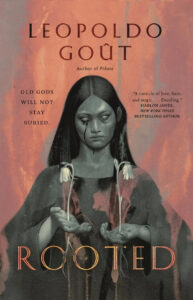
Leopoldo Goût, Rooted
(Tor Nightfire)
Gout’s first novel, Pinata, wowed me with its intricate plotting and horrifying visuals; Rooted promises to continue what Pinata started, excavating legends and inhabiting horrors based in Mesoamerican traditions. In Rooted, a museum worker accompanies a collection of repatriated objects to their new home in Mexico City, where an ancient power trapped in a looted artifact reawakens and takes possession of its careful guardian. –MO
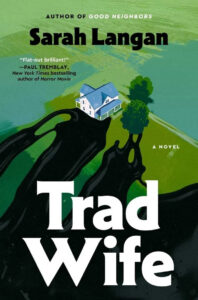
Sarah Langan, Trad Wife
(Atria)
Forget social media thrillers—it is now the age of influencer horror. Sarah Langan has already won me as a reader through her speculative suburban suspense; now she takes it a step further with a take on trad wives even more disturbing than the megahit Yesteryear. Determined to write a daring expose, an investigative reporter embeds herself with the family of a trad-wife influencer. The kitchen is messy, the kids are uneducated, the parents are exhausted, and the old-fashioned lifestyle from their videos is nowhere to be seen. But the family’s sins don’t end at hypocrisy—their matriarch is fully possessed by a demonic spirit (honestly, that tracks) and he’s looking for a new home. –MO

Harel Shapira, Basic Pistol: Living and Dying by the Gun in America
(Pantheon)
Shapira, a sociology professor at UT Austin took, on a provocative project years ago: embedding himself in a firearms school, and from that position detailing a careful and eye-opening study of American gun culture: how it spreads, its mythologies and rituals, and how it shapes American lives. –DM
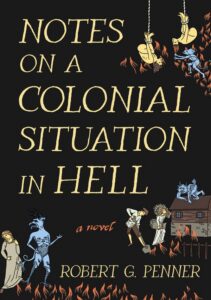
Robert G. Penner, Notes on a Colonial Situation in Hell
(McNally Jackson Books)
I love a good satire taken to its fullest, most logical absurdities, and Robert G. Penner does this in spades with Notes on a Colonial Situation in Hell. In this alternative history of the British Empire, colonialism has reached the outer circles of hell, where wraiths are put to work on enormous plantations, demons are relegated to the periphery to plot their revenge, and England’s least finest bachelors and most exploited workhouse girls try to make the most of their new lives down under (aka, the underworld). There’s a rebellion brewing amongst the host of Hell, and the profit-seeking colonizers have no idea what’s coming. –MO
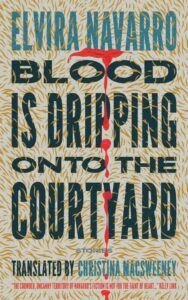
Elvira Navarro, Blood Is Dripping onto the Courtyard: Stories
Translated by Christina MacSweeney
(Two Lines Press)
This story collection is full of disturbing little gems of fiction, exploring the horrors of the everyday, side by side with the otherworldly grotesqueries of the speculative and fantastical. The first story involves a washing machine that won’t stop filling with blood, so it’s also a great follow-up to that David Sedaris holiday letter story. You know the one… –MO
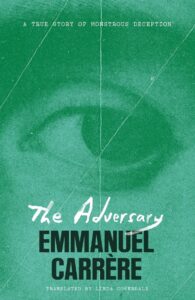
Emmanuel Carrère, The Adversary: A True Story of Monstrous Deception
Translated by Linda Coverdale
(Metropolitan Books)
I had to include this influential classic of true crime, newly reissued, not only for the author’s beautiful use of language and carefully measured pacing, and but for the depth of his philosophical exploration of monstrosity. In the wake of such crimes as the Murdaugh murders, family annihilation (the killing of an entire family unit, usually followed by the suicide of the killer) has been often in the news. This book is one of the earliest to explore the phenomena, and involved years of correspondence between Carrère and the self-aggrandizing con artist turned killer he’d made the subject of his book, amidst corresponding amounts of shame, self-recrimination, and soul-searching. What did it mean to be so concerned with the mind of a French fabulist, one who faked a career in medicine while fleecing all his relations, then killed his parents, wife, and children as soon as he ran out of funds? The questions of attention, fascination, and corruption, are of perennial concern in the world of literary true crime—just look at In Cold Blood, or the journalist in Janet Malcolm’s The Journalist and the Murderer—but this book explores the tension between curiosity and condemnation, explanation and enablement, better than most. Carrère is unsparing. He is harsh. And his writing both inspires and warns against the thirty years of true crime to follow. –MO
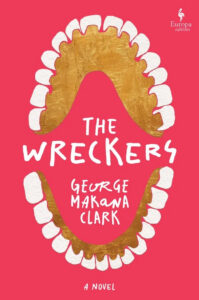
George Makana Clark, The Wreckers
(Europa)
It’s a difficult, if not impossible, task to write something so sprawling that is also so funny; this book feels a bit like if Thomas Pynchon rewrote The Count of Monte Cristo, with some editorial input from Evelyn Waugh. The Wreckers is an elaborate, fiendishly plotted revenge tale, filled with Rabelaisian set-pieces and cutting asides, as complex as it is rewarding—in short, a brilliant work of fiction. In George Makana Clark’s epic shaggy dog narrative, artifacts from a long-ago collaborator in the slave trade become the basis for a valuable mining concern’s attempt at legitimacy, as scammers track down the far-flung descendants of a ambivalent marauder in order to exploit the riches of his loosely claimed territory. –MO

Andrew Rankin, Yakuza: A Four-Hundred Year History
(Basic Books)
Rankin’s latest history is a well-researched and spirited chronicle of the Japanese underworld, tracing its roots back through the centuries and dissecting the many dark permutations the culture’s rituals and practices have taken today. –DM
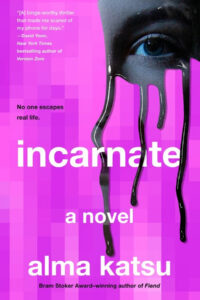
Alma Katsu, Incarnate
(Putnam)
The second on this list to take gruesome delight in the horrors of influencer culture, Incarnate centers around a put-upon tech worker with low self-esteem and a penchant for AI deepfakes; the two collide when she creates a gorgeous avatar and makes a deal with a dark internet presence to achieve fame and power via her alter-ego. When the protagonist’s IRL appearance starts shifting to resemble the impossible proportions of her creation, and her videos result in universal adulation and instant success, she begins to question her devil’s bargain, and wonder what price will be demanded for all her new rewards. Another excellent effort from a consistently entertaining writer, this one should please audiences of thrillers and horror alike. –MO
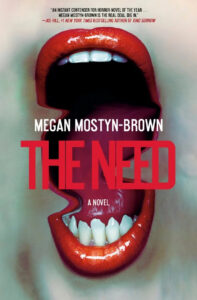
Megan Mostyn-Brown, The Need
(Del Rey)
There are a lot of books about cannibalism out this year, and a lot of titles getting compared to Succession, but this is one of the weirdest in either category. Megan Mostyn-Brown’s debut follows a mother and her teenage children as they find themselves in the clutches of her dead husband’s family, desperate for an heir who shares their predilection for human flesh. The ancient dynasty of monstrous aristocrats are not going to let their scion’s widow or her children get away easily, but as they often say, even in books about extremely wealthy cannibals, never underestimate the power of love. I can’t wait to see what Mostyn-Brown does next! –MO
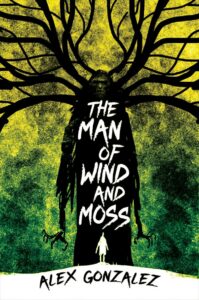
Alex Gonzalez, The Man of Wind and Moss
(Erewhon)
Alex Gonzalez’s debut, Rekt, eviscerated internet culture, broke my mind, and was one of the best thrillers I’ve ever read. Now, Gonzalez turns from technothriller to folk horror, following a group of friends on a camping trip as they confront their failures, their mistakes, their love triangles, and soon enough, their favorite cryptid. Gory, snarky, brutal, and meta AF. –MO
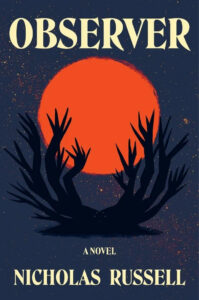
Nicholas Russell, Observer
(Ecco)
Jeff VanderMeer fans, you absolutely do not want to miss Nicholas Russell’s otherworldly debut, about a young woman whose investigation of the disappearance of her mother takes her to an abandoned observatory in the Nevada desert. All she has are her mother’s notes, and the writings of a surveyor from nearly a century before who seems to have encountered something unexplainable out there. I’ve been waiting all summer for this book!–OR
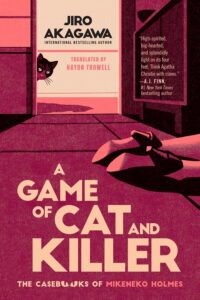
Jiro Akagawa, A Game of Cat and Killer
Translated by Haydn Trowell
(Grand Central)
This book is so delightful! In a pairing reminiscent of Rita Mae Brown or Lilian Jackson Braun, a rookie detective who’s terribly awkward with women takes in a murder victim’s cat, only to find his new feline partner pointing him to a variety of evidence he might otherwise have missed, and proving, in the end, not only essential to solving the crime, but pivotal in catching the killer. I would really like for my cat to avenge me like this if I ever get murdered, but sadly, poor Fritzy is more like to vom than to defend mom…Anyway, cat lovers rejoice, for this is the first in a verrrrry large number of books to feature the titular cat and his bumbling human, and if we are blessed by the reissuing deities, we shall soon have access to many more. –MO
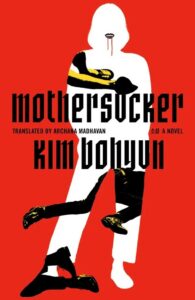
Kim Bohyun, Mothersucker
Translated by Archana Madhavan
(Vintage)
In Mothersucker, a woman returns from the dead, seeking vengeance against those complicit in her daughter’s death. Meanwhile, a serial killer seems to be targeting those who’ve mistreated women, children, and animals; no evidence is found on the bodies save for two puncture marks on each neck (you see where this is going…) Kim Bohyun’s background in poetry shows throughout the novel, evolving directly into poetic form at the tale’s end. Don’t let the cutesy name fool you – this is a spare and moving story that lingers long after the last page. –MO
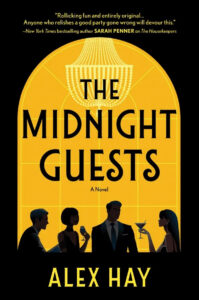
Alex Hay, The Midnight Guests
(Hanover Square)
Alex Hay’s sparkling new mystery The Midnight Guests is tons of fun—it captures the events occurring during 24 hours in an opulent London hotel in 1926 (on the hotel’s opening night, no less) when proprietor Diana Gold’s plan to rendezvous with two mysterious guests at midnight goes awry after the discovery of a body in the hotel’s grandest suite. Bartender, keep pouring this one please!–OR
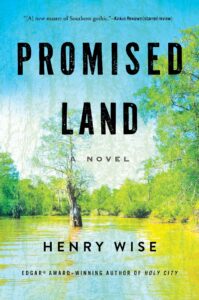
Henry Wise, Promised Land
(Atlantic Crime)
In this sequel to the breakout debut, Holy City, a new investigation takes deputy sheriff Will Seems deep into the swampland of southeast Virginia and into the hidden history of the community surrounding it. Wise brings gothic notes to the classic detective plot, creating an atmosphere all his own. –DM
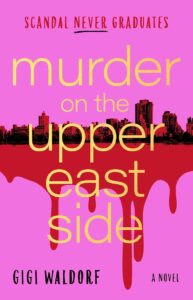
Gigi Waldorf, Murder on the Upper East Side
(Atria/Emily Bestler)
Gigi Waldorf’s new novel is pitched as Gossip Girl meets Only Murders in the Building, which is all I need to want to read this immediately. One reviewer of an advance copy warned that the book never stops noting the impact of class and wealth on characters’ behavior, but in my humble opinion, that’s not a good reason to stay away—that’s an endorsement. Waldorf is the pen name for Kit Frick, by the way, so if you like this one, definitely check out the rest of her work. –MO
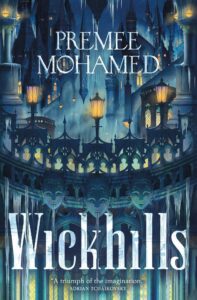
Premee Muhamed, Wickhills
(Tor Books)
Wickhills is set in a bustling, striving port city, in which magic rules the streets and is in turned controlled by the city’s elites; the people are hungry, the rulers are corrupt, and a shocking technology threatens to upset the delicate balance of power and throw the entire city into chaos. Into this morass, a new weapon arrives, operated by an unpredictable defector from a foreign land, and protected from misuse by a jaded secret agent with nothing left to lose. A fantastical melange of noir and fantasy that makes me want to go through the author’s entire oeuvre. –MO
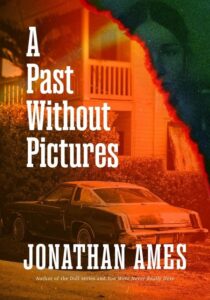
Jonathan Ames, A Past Without Pictures
(Mysterious Press)
I always recommend Jonathan Ames to people as “one of the funniest writers I’ve ever read” but I have to expand that epithet some more because it belies that he is also an excellent writer of other styles. He gravitates to noir, which is great, because he can do so much with it—tease out and really crystalize so many of its quieter hallmarks. You want a flat-out hysterical noir? He’s got ’em. You want an excellent “straight-shooting, no-nonsense noir”? He’s got those too, and the most recent is called A Past Without Pictures. The story is about a young woman, a police detective from LA who spent her youth fending off abuse and moving around in foster care, who must go to Alabama to look into the death of her very estranged ex-convict father. There’s nothing funny about it, but it’s really good. Enjoy this tour-de-force from “one of the best serious writers I’ve ever read.”–OR
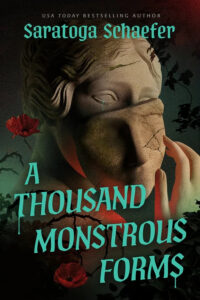
Saratoga Schaefer, A Thousand Monstrous Forms
(Crooked Lane Books)
An artist and a notorious art dealer are at the center of Schaefer’s latest thriller, a retelling of the Bluebeard legend. Schaefer has been a writer on the rise in recent years, with a string of strong thrillers behind them. This one has all the gothic notes and chilling dread readers could hope for. –DM
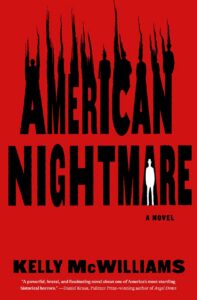
Kelly McWilliams, American Nightmare
(Crown)
Walter White, former head of the NAACP and the driving force between many of the reforms in cultural depictions of African-Americans during WWII, is the hero of this historical horror novel, his ability to pass as white enabling him to go undercover for a Black newspaper and report on the massive spike of lynchings across the South in the 1920s. American Nightmare is well-crafted, richly detailed, and an excellent drama of investigative reportage, featuring vividly drawn characters and just a tinge of the supernatural. An excellent companion to Tananarive’s upcoming Mazywood, although Walter White’s brief cameo in that one is decidedly unheroic, alas. –MO
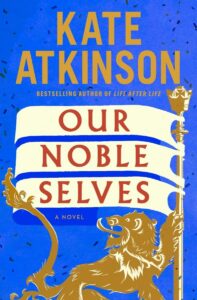
Kate Atkinson, Our Noble Selves
(Doubleday)
It may be humanly impossible to read this book without loving it. Our Noble Selves is certainly my new favorite, with its irresistible setting: A festival! Celebrating Britain! On the eve of empire’s decline! And in the midst of England’s growing irrelevancy! Into this maelstrom of amusement park planning and late empire soul-searching, Atkinson’s utterly charming characters are unceremoniously tossed, inexorably caught in the convoluted riptides of the mid-20th century, where dangerous undercurrents threaten to pull her hapless, tortured souls deep into the morass, before they even finish helping their government decide on which cake exactly represents the pinnacle of British (not suet, thank goodness, although the winner is just as hideous as any Etonian concoction). Oh, and there’s a murder. So that’s why it’s on this list. –MO
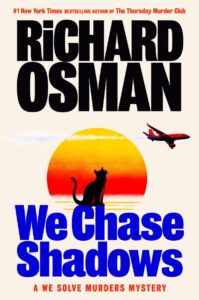
Richard Osman, We Chase Shadows
(Pamela Dorman)
Richard Osman’s second phenomenal crime series (I’m talking about the one he began with We Solve Murders two years ago) continues apace with this second installment, in which our heroes Amy, Rosie, and Steve take on their first proper case: one involving a mysterious killer who has committed a murder in the Italian hills, and an even more mysterious client who wants the killer found out, but not at the hands of any authority. STRAP IN, FRIENDS!–OR
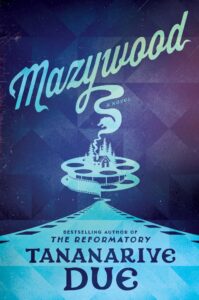
Tananarive Due, Mazywood
(Saga)
Tananarive Due has been steadily growing in reputation with each new work in her storied career, quietly amassing one of the greatest oeuvres in horror history; her last novel, The Reformatory, finally took Due from best-kept secret to household name, and her upcoming release delivers just as much heartbreak, horror, and history. Mazywood follows the long shadow of exploitation and trauma from the 1920s through to the present day: in Old Hollywood, the child of Black vaudevillians makes a fervent wish for a loyal helpmeet and a successful career, only to find herself facing rampant discrimination and impossible compromises; three generations later, her grandson takes his wife and children to his grandmother’s dilapidated resort, full of decayed glamour, dark secrets, a terrifying creature, and perhaps, just a kernel of hope. Mazywood may be 500 pages long, but I blazed through it in a single afternoon, and I have no doubt future readers will find it just as compelling. Man, this book was good… –MO
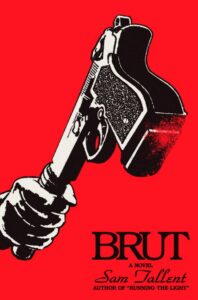
Sam Tallent, Brut
(Random House)
A young man washes out of the marines and into a life as a contract killer in this engaging new novel from author and comedian Sam Tallent. Equal parts brooding and propulsive, this is a book for anyone in search of a fresh take on a classic genre. –DM
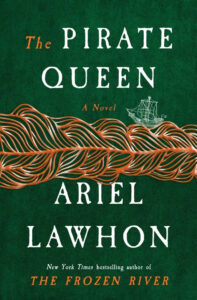
Ariel Lawhon, The Pirate Queen
(Doubleday)
Ahoy! I was stunned that I had never even heard of the real-life woman at the center of bestselling author Ariel Lawton’s next historical novel, a sixteenth-century Irish pirate queen named Grace O’Malley (or Gráinne Ní Mháille in Irish). The daughter of the leader of the powerful clan O’Malley, Grace is married off to a warrior and then later booted from his lands, leaving her free to lead the clan’s fleets. This is a wonderful, action-packed epic both brings a real heroine lost to the margins of history back into mainstream appreciation, and pays tribute to the rich folkloric tradition that surrounds her legacy. –OR
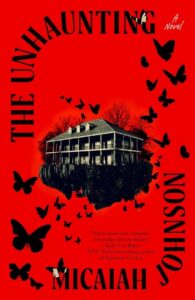
Micaiah Johnson, The Unhaunting
(Putnam)
The Unhaunting is one of the best haunted house novels I’ve read this decade, and given how the literary world has responded to the housing crisis and the pandemic need for wide open spaces, that’s saying something. In speculative fiction author Micaiah Johnson’s first foray into horror, two best friends get a chance to renovate a house built just after the Civil War, a place where nothing bad ever happens. No one has ever died there, no one has ever been ill there, no child has ever died there, and no trees have ever fallen there. While the house’s inheritor, a white man, seems to take their blessings for granted, his best friend, a Black woman, quickly develops a healthy suspicion of the estate’s good fortune, putting her on a collision course with her new residence and its powerful magic. The ending was shattering, but well-earned and necessary. –MO
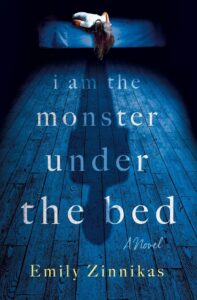
Emily Zinnikas, I Am the Monster Under the Bed
(St Martins)
This book looks so weird! An artist returns to her hometown after being outed for her connection to an infamous true crime case; her only friend in childhood was the monster that lived under the bed, who taught her to read and was in general a great friend, but obviously must have something to do with these murders. I can’t wait to find out how it all connects! And I do love a friendly monster… –MO
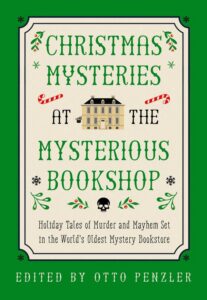
Christmas Mysteries at the Mysterious Bookshop
(Mysterious Press)
The Mysterious Bookshop’s/Mysterious Press’s delightful, bestselling anthology from 2024, Christmas Crimes at the Mysterious Bookshop, has a sequel!!! As with last time, this is a collection of mystery stories set at New York’s legendary Mysterious Bookshop. Get your copies now, because the print run always sells out well before Christmas. Included in this volume are stories by Megan Abbott, Rupert Holmes, Mary Higgins Clark, Andrew Klavan, Ed McBain and more! A perfect stocking stuffer… or, you know, a gift for yourself. –OR
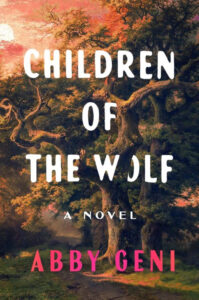
Abby Geni, Children of the Wolf
(Ballantine)
Give this book to everyone you know who watches Vikings, because it is about people who want to live as if they are vikings!!! Liv is a mild-mannered beekeeper who lives with her brother, Finn, in a small town in Michigan, trying to forget the childhood they spent being raised by their father, Ulf, a Swede descended from Erik the Red, obsessed with his family’s viking past (to, shall we say, unsettling lengths). Liv and her brother haven’t seen him since the FBI raided their home twenty years before. And they’ve mostly moved on… but then, suddenly, local men start disappearing and Liv starts to realize possible connections between them, and the father whose legacy she’d rather forget. By Odin, this was a exciting read!–OR
___________________________________
OCTOBER
___________________________________
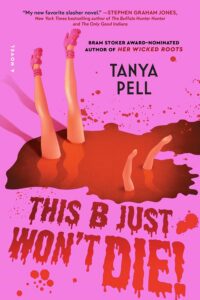
Tanya Pell, This B Just Won’t Die!
(Gallery)
Scream queen Barbie heads back to Barbie’s Scream House, the original filming location of her iconic horror franchise, to shoot a documentary, hoping to restart her long-dormant career. As the film date approaches, someone’s been committing brutal murders mimicking the OG films, and a stalker dressed as the film’s villain has been leaving terrifying messages for Barbie everywhere she should be able to feel safe. But hey, at least she’s got a new love interest, and her decades-old frenemy relationship with her biggest costar is finally becoming a real friendship. So she’ll stick it out. Even if it kills her. But it won’t, because she is, and always will be, a Final Girl. And she is, and always will be, That Bitch. Time to bloody up your old tee shirt with some preferably fake blood, grab a set of pom poms, and cheer for Barbie to make it to the end of the book. –MO
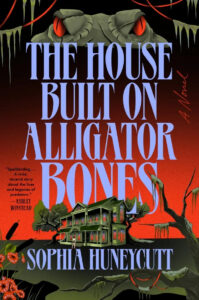
Sophia Huneycutt, The House Built on Alligator Bones
(Dutton)
Huneycutt’s debut is an absolute stunner of a novel. A young woman reeling from her mother’s death finds out she has a strange family legacy in Florida: an alligator empire. Rivalries and secrets abound, and Huneycutt lays out the strange, compulsive story in beautiful, measured prose. –DM
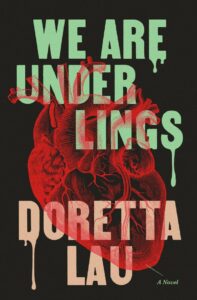
Doretta Lau, We Are Underlings
(Spiderline)
There’s a theme park for everything these days, so why not build a lavish amusement park dedicated to the final frontier: death itself? That’s the logic behind Nine Circles, in which visitors can explore attractions and rides dedicated to death, dying, and the afterlife; they’re almost ready to open, but a series of unfortunate occurances, recalcitrant bureaucrats, and lackadaisical experts threaten to derail the entire enterprise. And that’s before one of the project’s most essential execs gets ressurected in order to dupe the investors, a con that’s difficult to pull off with a literal zombie. If you’re in the mood for more hellscape workplace satires, check out the amazingly titled I Hope This Email Finds You in Hell, also out this September. –MO
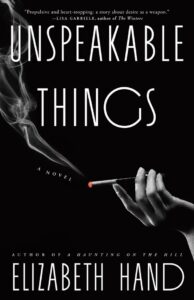
Elizabeth Hand, Unspeakable Things
(Little, Brown)
Hand has established herself as one of the most reliably innovative storytellers working the horror and gothic fiction space. This year, we get one of her most seductive novels yet, a portrait of concentrated passion between two young women on the run through the English countryside, washed up in a world of glamor and transgression on the edges of society. –DM
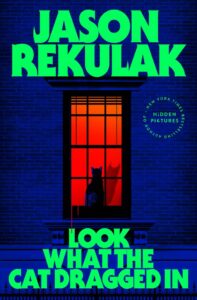
Jason Rekulak, Look What the Cat Dragged In
(Flatiron)
Cat lovers beware: there are cats in peril in this book! But if you do what I did, and skip to the back, you can return safely to the beginning (or around chapter 4, where I got anxious), and continue reading. Rekulak is one of the most playfully visual writers around, and the many illustrations included in this book, contributed by two different artists, blend seamlessly with the narrative. In Look What the Cat Dragged In, comics artist Penny is still searching for her recently missing muse, Popcorn, when her boyfriend introduces a new cat into their home, one he promised to pet-sit for his boss. Penny’s new feline friend seems obsessed with her, following her everywhere and watching her every move; he also seems possessed by something horrific, violent, and full of reallllly nasty poops. What’s up with her slinky, stinky visitor? And where the hell is Popcorn?!? All these questions, and more, will be answered by the end of the book, but be warned: most readers will have to take several breaks to squeeze whatever small animals are in the immediate vicinity. –MO
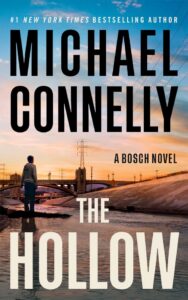
Michael Connelly, The Hollow
(Little Brown)
Connelly’s newest novel may just be one of his most powerful yet. Longtime readers will be familiar with Harry Bosch’s dark past. Now, thanks to a class action settlement (with the news brought by his half-brother, who has his own Connelly series to lead), Bosch is revisiting his days in a notorious facility for children who have become wards of the state. –DM
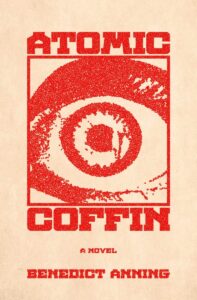
Benedict Anning, Atomic Coffin
(Saga)
If you ever wanted to read a mashup of Smilla’s Sense of Snow and The Thing, with a little Cold War espionage thrown into the mix, then wait no further: the book of your worst nightmares and the reason you will never again contemplate scuba diving has arrived, and it is terrifying. Atomic Coffin follows an agent code-named Thistle who’s getting extracted from her deep cover in East Berlin after coming across some top-secret documents with bizarre implications. After being smuggled into international waters in the North Sea, she’s unceremoniously dumped on a submarine crew to investigate the mystery at the center of the documents: deep under the surface of the ocean, just outside of Iceland, a Soviet submarine has been sitting for years. It seems abandoned, evacuated in a hurry, with only hints at the malevolent forces that sent them packing, and that will soon prove just as nightmarish to the newcomers. –MO
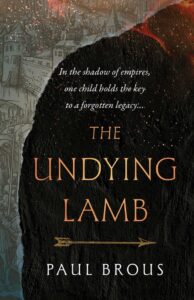
Paul Brous, The Undying Lamb
(Rising Action)
When a book starts with a glossary featuring words from several now-dead languages, you just know that it’s going to be impeccably researched. In Paul Brous’ medieval-set thriller, an Albigensian assassin and an English knight must protect a child with an inconvenient lineage, as a vast array of forces attempt to eliminate their vulnerable charge. Perfect for those who enjoyed Conclave, but wish it had been set waaaay further back in history. –MO
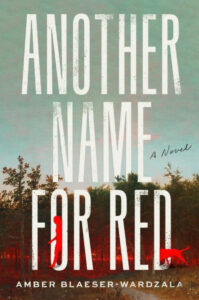
Amber Blaeser-Wardzala, Another Name for Red
(Pantheon)
Amber Blaeser-Wardzala had one of the most striking stories in last year’s Never Whistle At Night. Her debut novel is even more powerful, the story of a missing Anishinaabe woman and the sister whose life is coming undone under the strain of the trauma. –DM
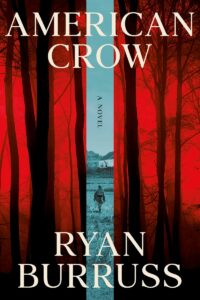
Ryan Burruss, American Crow
(Counterpoint)
American Crow is set in a hastily constructed suburb on the edge of DC, where evil lurks behind the veneer of normality, alcohol numbs the nightmares, violence rains down upon the weak and defenseless, and an epic showdown looms. Throw a mysterious, muscular stranger into this boiling cauldron of resentment and repression, add some romantic tension and dysfunctional family drama, throw in a little hinterland hijinks, and you’ve got a historical horror that packs an emotional wallop. –MO
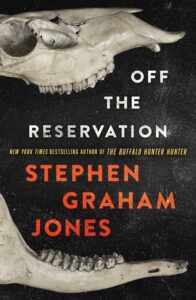
Stephen Graham Jones, Off the Reservation
(Saga)
Stephen Graham Jones returns to the world of The Only Good Indians, as the surviving characters accept a mission to rebury a native child who died at a notorious residential school; unfortunately there’s a dark spiritual presence that’s traveling with the soon-to-be-repatriated bones, and ready to wreak havoc along the journey. –MO
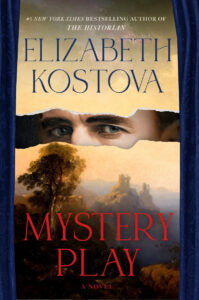
Elizabeth Kostova, Mystery Play
(Ballantine)
Another great vampire novel, in a year that’s positively full of them! Elizabeth Kostova’s upcoming take on Dracula draws inspiration from both 19th-century theater and the historical horrors of Vlad the Impaler, for an elegant tribute to an iconic story. Mystery Play feels a bit like the Booth family wandered into The Secret History and started eating everyone (and that’s a compliment). Fans of Kostova, historical fiction, and supernatural thrillers should all find much to enjoy—this is one of those books that makes it very difficult to set a demarcation point between mystery and horror. –MO
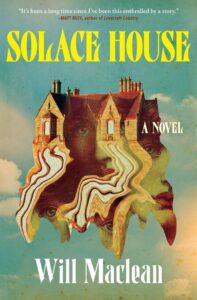
Will Maclean, Solace House
(Grove Press)
In this exceptional new novel, a group of university students have an unusual summer job, cleaning out an old Victorian house that, they soon learn, contains more secrets than anyone has guessed. Maclean handles the action skillfully, with just the right combination of suspense and suggestion, and with a cast of characters that brings to mind some of the high water marks of dark academia.–DM
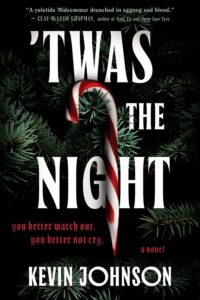
Kevin Johnson, ‘Twas the Night
(William Morrow)
The most entertaining vision of Christmas horror since Santa’s Slay, this book also has the creepiest Santa since Jack Skellington took over Christmastown. Johnson’s snarky take on the most beautiful time of the year follows a mysterious woman claiming to be a journalist as she sets up camp in a forgotten little village terrorized by a spidery Santa and his brutish reindeer. No one from the outside has ever found the village without an invitation, and no one ever, ever leaves, but the Katniss-like intruder has a plan that will put an end to the slave-labor workshops of the North Pole and their endless appetite for the village’s children once and for all. –MO
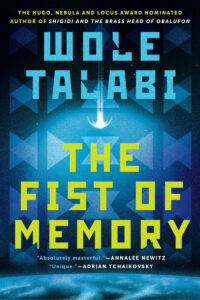
Wole Talabi, The Fist of Memory
(DAW)
In this first-contact thriller set in near-future Nigeria, an alien spaceship approaches the planet, and an assassin and an astro-physicist find themselves on a desperate quest to understand the otherworldly visitors’ obscure messages and their even more oblique intent. –MO
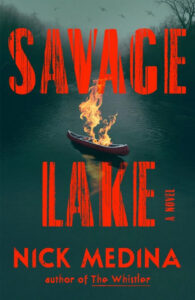
Nick Medina, Savage Lake
(Berkley)
Nick Medina writes gripping horror-thrillers braided with Native American folklore, and Savage Lake might be his best yet (though that’s saying something, because Indian Burial Ground was really great. Savage Lake is about a mother, Nell, and a horror-movie-loving son, Oscar, who return to the lakeside cabin where Nell believes part of her once died. They need to fix it up, sell it, and then be done with it forever… but when they get there, the local Native American tribe has the area blocked off, and things start to seem very… wrong. Including, suddenly, his mom. Terrifying. –OR
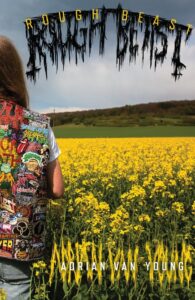
Adrian Van Young, Rough Beast
(Black Lawrence Press)
Set in a fever dream rendering of the New Orleans metal scene, this new mystery from Adrian Van Young takes readers on a dark journey they won’t soon forget. All the vivid, horrifying details of life in the Big Easy underworld make this a standout novel, with atmosphere to burn and a strong plot unraveling at its center. –DM
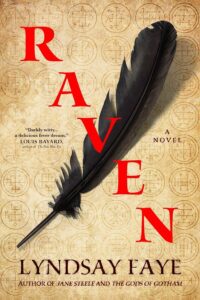
Lyndsay Faye, Raven
(Mysterious Press)
Lyndsay Faye’s new novel is a delightful romp through the Gothic, antebellum mid-Atlantic; it tells the story of a young woman shuffling from one temporary home to another after the death of her beloved mother. She passes from a theater troupe through the homes of strange relatives to a laudanum-permeated Baltimore townhouse, and eventually a large manor house where she meets a like-minded young man interested in the occult, searching for an Elixir of life that might help his ghostly invalid cousin. And at some point along the way… our heroine is murdered. Read this book and you’ll be bored nevermore. –OR
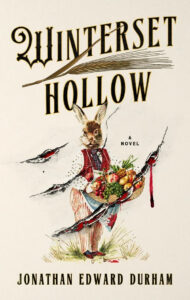
Jonathan Edward Durham, Winterset Hollow
(Union Square)
In this reversal-of-power parable of folk horror, a group of twenty-somethings obsessed with a children’s book (equal parts Beatrix Potter and Watership Down) gather together on the island that inspired their favorite work of fiction. The first surprise: the hosts of the gathering appear to be the same anthropomorphic woodland creatures that populated the novel. The second surprise: the denizens of the estate are far from fans, of either the book or its long afterlife, and they want nothing less than bloody vengeance against all who appreciate that vapid storybook enough to arrive in their fortress of misery, from whence they may finally escape if they can only collect enough bodies…Anyway, I would very much like to read something like this but for the Potterverse. Or perhaps the Duneverse. –MO
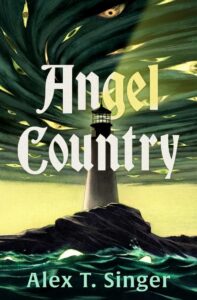
Alex T. Singer, Angel Country
(Saga)
Angels! They’re back—and they’re weirder than ever (See Daniel Krauss’s Angel Down or Natasha Pulley’s The Salt King for proof of concept). In Angel Country, angels are not numerous, but terrifying; some are covered in eyes, some are covered in mouths, and some are formerly human yet irrevocably changed by their contact with the host (usually in a nasty body horror way, wherein their organs are rearranged and their bones won’t stop growing). Singer’s grotesque magnum opus is also an excellently crafted alternative history full of sly little callouts to the scammers, strivers, and scientists of turn-of-the-century America, include a memorable appearance from a violently transformed P.T. Barnum and his now-feral colony of circus elephants. The story begins as a tale of stolen research, when an academic goes after her longtime partner and her proprietary technology for communicating with angels, but swiftly becomes a far more gruesome takedown of gilded age greed and its technological enablers. –MO
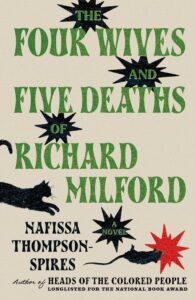
Nafissa Thompson-Spires, The Four Wives and Five Deaths of Richard Milford
(Scribner)
A vibrant historic whodunnit from the author of the acclaimed short story collection The Heads of Colored People, The Four Wives and Five Deaths of Richard Milford is set in 1920s Oklahoma, and it’s about the (long-awaited) death of a notorious moonshiner, womanizer, and generally bad dude—and the four women who can shed some light on the situation, illuminating much, much more than a simple killing. –OR
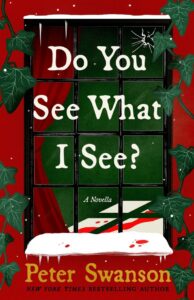
Peter Swanson, Do See What I See?
(William Morrow)
A struggling writer takes a holiday journey to the Cape Cod mansion of a wildly successful colleague playing host to a misfit cast of strivers, grudge-holders, and secret-keepers, in this delightful new holiday novella from the bestselling Swanson. –DM
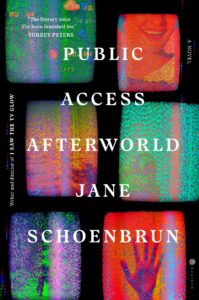
Jane Schoenbrun, Public Access Afterworld
(Hogarth)
This book is awesome! Jane Schoenbrun is already well-known for their films, and this book is just as awesome as their growing ouevre. In Public Access Afterworld, two lonely suburban teens see something strange in the static late one night as the nation finally makes the switch from analogue to digital and become obsessed with uncovering the meaning behind the disturbing images. Their search takes them on a journey that leaves one a fugitive and the other missing, presumed dead. A decade and a half later, a content moderator at a tech company comes across the same staticky messages, linked to hundreds of disappearances and underpinned by a vast conspiracy. So good!!!! And also full of Austin references, which was nice, since I live there. And complaints about Austin, which was also nice, since sometimes I would rather not live here. –MO
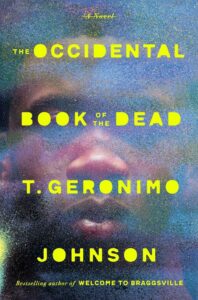
T. Geronimo Johnson, The Occidental Book of the Dead
(William Morrow)
This is the literary crime epic of the year, possibly of the century. T. Geronimo Johnson has woven an emotional powerhouse, a complex conspiracy thriller, a searing indictment of policing, a startling coda on the limits of reform, and a metatextual commentary on the nature of confession. There’s also some Sliding Doors/Rashomon/Usual Suspects layered storytelling. The Occidental Book of the Dead centers around a Black policeman in Atlanta (named Atlantis in the novel, which is full of evocative word play, such as calling racists “rascals”). He’s best friends with his white partner, married to a white schoolteacher, and secret lover of white pop music, all while teaching rookies to crack heads over broken windows in the neighborhood he called home as a child. After making it a decade on the force, his close proximity to the shooting of a white teenager by another officer begins to cause problems up the ladder, putting him in the cross-hairs of internal affairs and leading to a snowballing series of falsehoods, all resulting in two radically different versions of the same bare-bones tale, both contained within the novel, which is a doorstopper. To describe all this novel’s merits and layers and callbacks and complexities might take as long as it would to read the whole thing. Did I mention it’s a doorstopper? So I’ll shut up now and let you come to the same conclusion. –MO
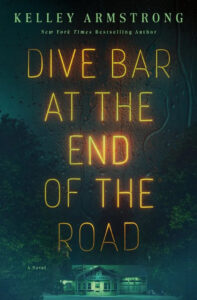
Kelley Armstrong, Dive Bar at the End of the Road
(St Martin’s)
Kelley Armstrong has been a rising voice in thrillers for years, and now she’s ready to make her name in horror. In Dive Bar at the End of the Road, five strangers end up stranded in a bar after a downed tree cuts off their detour route. Something appears to be lurking in the forest surrounding, something terrible, and each stranger has increasingly fearful encounters with the strange presence as they try to escape their predicament and get back on the road (or, at least, call for assistance in towing each of their totaled cars—the forest critter really wants everyone to have a car accident in this book). An intriguing supernatural mystery that’s also a pulse-pounding thriller, Armstrong’s latest is her best yet! –MO
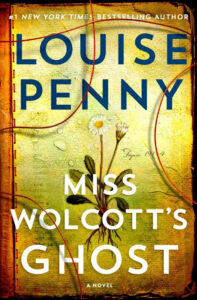
Louise Penny, Miss Wolcott’s Ghost
(Minotaur)
DROP EVERYTHING, FOLKS, BECAUSE WE’RE GOING TO QUEBEC! The new Chief Inspector Gamache series is now old enough to drink! In America. It technically was old enough to drink in Quebec five books ago. But that’s not the point. The point is… the new Chief Inspector Gamache novel is here!! I don’t care what it’s about, really, but the premise is quite fun. It’s got a decomposed compose, an Indian burial ground, the lost writings of a Victorian botanist, and a dangerous and deadly plant that no one’s seen in a hundred years. And many more things that only Penny can conjure. Let’s go, twenty one!!!–OR
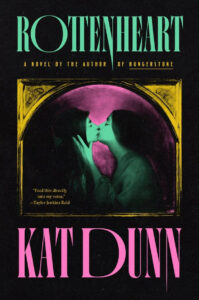
Kat Dunn, Rottenheart
(Zando)
Swounds, Rottenheart is fun! It’s a Gothic, Sapphic, and matriarchal twist on Hamlet—about a young woman, Odette, whose life is turned upside down after the death of her mother, the assumption of her family’s title by her aunt-turned-stepmother, and, you know, “the heart-ache and the thousand natural shocks that flesh is heir to.” All of this is before she experiences confirmation of her “dread of something after death”; her mother’s ghost is haunting her home—and she, stressful and needy in life, and now parasitic in her afterlife—is not happy. –OR
___________________________________
NOVEMBER
___________________________________
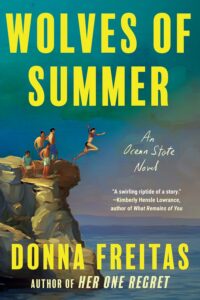
Donna Freitas, Wolves of Summer
(Soho Crime)
Donna Freitas has already proven herself one of the most fearless and fascinating writers around, especially with the suspense story Her One Regret, which addressed a taboo subject—motherhood, regretted—with compassion, understanding, and nuance. Her newest work, which I devoured in a single day despite the near-500-page length, expands on her previous book’s universe, with a glimpse into character Diana’s first case, as neighbors in a Rhode Island seaside suburb search for a missing girl, and are forced to confront their own long-buried traumas, reemerging in the wake of the preteen’s disappearance. Freitas is particularly concerned with examining the male gaze, the public nature of girlhood, and the terrifying experience of incipient womanhood on the world’s stage. Wolves of Summer should be noted as a mystery of some complexity; craftsmanship shines throughout the novel, and the denouement is perfection. –MO
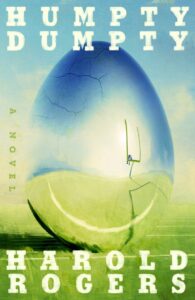
Harold Rogers, Humpty Dumpty
(FSG)
I haven’t read such a thorough condemnation of such a corrupt little town since Red Harvest. (Almost) everyone in this novel is culpable, although very few of them realize what they are even culpable of, even as the consequences of their actions spiral outwards to the public gaze, and even as the town becomes known nation-wide for both its heinous crimes and its callous attitudes. Harold Rogers sets his tale in Steubenville, Ohio, exploring the lead-up to and and aftermath of a horrific crime, to which the townspeople respond even more horrifically. Rogers’ linguistic prowess and creative talents are on full display here, but never in a way that detracts from understanding the story or its terrible underlying message. A literary tour-de-force, and a noir masterpiece. –MO
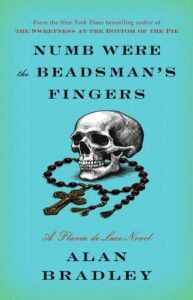
Alan Bradley, Numb Were the Beadsman’s Fingers
(Bantam)
My heart broke upon hearing of the recent passing of Alan Bradley, the author of the brilliant Flavia de Luce mysteries—not only because I will greatly miss Flavia, but also because I had the chance to meet him personally and discovered him to be as lovely as I could have hoped. Numb Were the Beadsman’s Fingers is his final Flavia novel (his twelfth!), and if ever there were a book to go out on, it’d be this one. It’s about a dead nun, a decades-old case, and a mysterious false identity. RIP to Alan Bradley, and long live Flavia de Luce. –OR
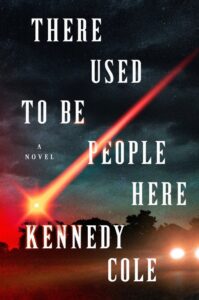
Kennedy Cole, There Used to Be People Here
(Berkley)
When a queer man dies in a gay bar restroom under, shall we say, unusual circumstances (a giant worm emerges from his mouth and leaves behind the mere husk of a body), two detectives go looking for answers, only to stumble upon a government conspiracy to cover up an alien crash site with deadly cargo. Kennedy Cole uses the language of science fiction to explore the experience of queerness as a person of color; one of the detectives is the first Black policeman in his small southern town, and he’s as drawn to the alien as he is repelled by his colleagues. A moody, atmospheric take on the first encounter thriller, with plenty of body horror thrown in (or perhaps, bursting out). –MO
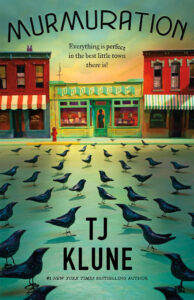
T.J. Klune, Murmuration
(Tor Books)
TJ Klune’s latest speculative romance takes us into a small town where everyone seems way too invested in the budding romance between Mike, the bookstore owner, and Sean, the lead waiter at the diner. Why does everyone want them to get together so bad? Is this a speculative universe for yaoi? Why doesn’t anyone ever leave or come back? Why aren’t there any children in town? Why does reality seem to warp at the edges of the village? And can Mike save Sean from the coming storm? Murmuration is classic Klune, and an excellent addition to the growing genre of queer fantasy. –MO
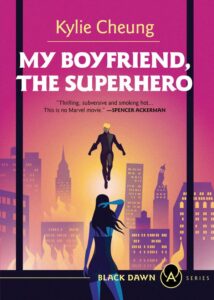
Kylie Cheung, My Boyfriend, The Superhero
(AK Press)
This short, sharp satire of superhero culture and the carceral state should be on everyone’s fall reading list, for the sex scenes alone. So steamy! And the ending is *chef’s kiss* levels of perfection. The intersection of criminology and comixology is more of a circular ven diagram than you might realize, at least before reading this book. –MO
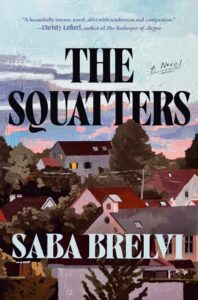
Saba Brelvi, The Squatters
(The Dial Press)
A well-to-do Muslim woman volunteering at a refuge center strikes up an uneasy connection with two of the migrants interned there, a pregnant woman and her husband, and begins helping them find shelter. After putting them up in a friend’s empty cottage, the woman and her family become the focal point for xenophobic reactionaries in the neighborhood and beyond, even as their connections with their community and their close friends begin to fray irreparably. The Squatters asks essential questions for the present day, and finds no easy answers. What do we owe to our communities, our selves, and our principles? Can a life have meaning without risk? Can words have meaning without subsequent action? And why don’t more books have references to the diggers? Read this shattering work of fiction at your own peril, for you might find yourself, too, standing up for your long-suppressed beliefs no matter the consequences. –MO
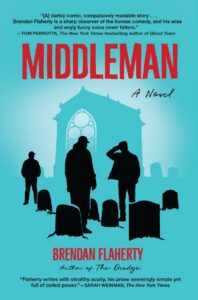
Brendan Flaherty, Middleman
(Atlantic Crime)
A middle-aged everyman struggling with family life and mounting debts gets drawn into a wild grave-robbing scheme when he moves to a small town with shadowy secrets. Flaherty is a writer on the rise, and his charms are on full display in this new novel, with a story full of big characters with subtly powerful arcs. –DM
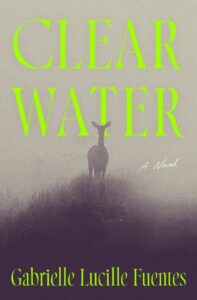
Gabrielle Lucille Fuentes, Clear Water
(Flatiron)
Gabrielle Lucille Fuentes’s new novel is eerie, atmospheric, and highly compelling. Listen to this premise, and tell me you’re not interested right away? When Alma encounters a girl in white she’s never seen before, she’s not sure what she’s seeing—is this person a vision, a ghost of one of the many girls who have vanished in her small Wisconsin town? Some people say that the girls are dangerous, others are too afraid to even wonder. But Alma, who lost her own sister in high school, is determined to find an explanation for the strange events in the town, once and for all. –OR
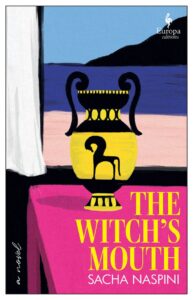
Sacha Naspini, The Witch’s Mouth
Translated by Clarissa Botsford
(Europa)
Grave robbing in Tuscany from ancient Etruscan graves has been big business since before the war, but with new regulations cracking down on antiquities smuggling elsewhere in Italy, the little band of thieves at the center of the novel face new gangs trying to muscle into their territory, renewed inquiries from weary local authorities, and internal divisions that threaten to dissolve their operation entirely. –MO
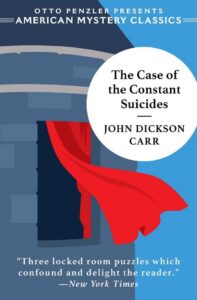
John Dickson Carr, The Case of the Constant Suicides
(Mysterious Press)
Yesssssss!!! Another JDC novel in a brand-spanking-new edition. Get this for your friend who loved the third Knives Out movie. Dr. Gideon Fell is back in another dizzying locked room mystery, investigating an obvious suicide that must have somehow been a murder. And that’s just the beginning!–OR
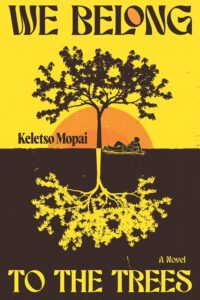
Keletso Mopai, We Belong to the Trees
(Seven Stories Press)
In immediate post-Apartheid South Africa, a ranch hand is accused of murdering a white farmer, sparking terrible rumors and increasing divisions in their remote township. Mopai uses a kaleidoscopic set of narrators to fill in the gaps and carry the truth forward to a day that can stand to hear it. –MO
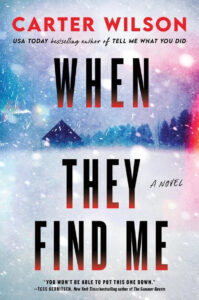
Carter Wilson, When They Find Me
(Poisoned Pen)
This is a genuine pulse pounder, about two women, both on the run (in a manner of speaking), whose families and destinies collide in the freezing, remote Colorado wilderness. Annie has been living off the grid in a small cabin with her daughter Coral, hiding out, hoping the people hunting her never find her again. And Riven, who has spent her life living off the land, away from society, arrives at this strange town thanks to her father, who swears revenge on the man who ruined his life. –OR
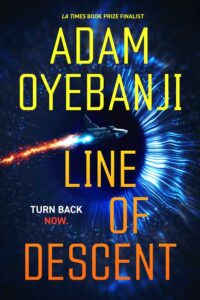
Adam Oyebanji, Line of Descent
(Saga)
This one takes place in the same world as Braking Day, Oyebanji’s mind-bending locked-space thriller of generation ships and factionalism, and functions well as a prequel. Line of Descent asks, what could motivate someone to go so far as to kill amidst the high stakes of disrupting order on a colony ship? Readers might end up surprised, but they will certainly feel satisfied. –MO

Edward Chisholm, Murder in Paris ’68: A True Story of Death and Glamour
(Pegasus Crime)
Chisholm has crafted a fascinating work of narrative nonfiction exploring a notorious French case: the Marković Affair, in which Stevan Marković, Alain Delon’s bodyguard/driver/nanny/double/Ripley-esque-shadow, was found murdered, surrounding the inscrutably cool French actor into scandal at the very peak of his career. Chisholm has written much more than a true crime account: this is an excavation of post-war France, of the rise of the New Wave, and of the tensions between old and new, artifice and authenticity, corruption and idealism, that divided the nation at the dawn of the Fifth Republic. If you like this, check out Dead Fashion Girl: A Situationist Detective Story, by Fred Vermorel, or The Big Goodbye: Chinatown and the Last Years of Hollywood, by Sam Wasson, both incredible portraits of very particular worlds, disrupted by violence, and on the precipice of enormous change. –MO
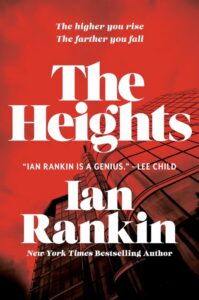
Ian Rankin, The Heights
(Grand Central/Cardinal)
Ian Rankin’s stylish, modern take on a very classic mystery premise is a fun addition to November’s literary roster. The story is set in London, in an opulent high rise apartment overlooking Hyde Park. The residents are both impossibly wealthy and glamorous. And when, one night, the nighttime concierge is found dead, they are all suspects. Wheeeee! (This book also has the distinction having a sleuth whose name made me, a silent film fan, do a double-take: Gillian Gish).–OR
___________________________________
DECEMBER
___________________________________
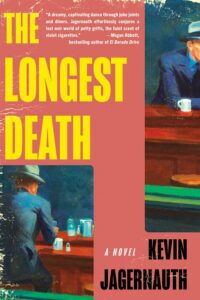
Kevin Jagernauth, The Longest Death
(Soho Crime)
Jagernauth has captured the essence of noir in this throwback to the golden age of hardboiled fiction. In a mid-sized, mid-century town in the middle nowhere, three employees of a safety deposit bank start to make plans for a heist. All three feel out of place in the stifling normality of 1950s America: Marlon and are Richard are head-over-heels in love, in dire need of big-city anonymity to be able to be together in public; their coworker Gloria wants to make her way to Hollywood. The plan seems doomed from the start, with a detective dogging the trio almost from the start, but the team of wannabe thieves are as determined as their opponents, and far more desperate. –MO
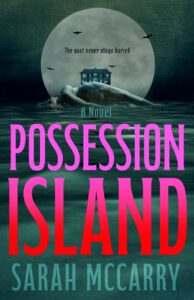
Sarah McCarry, Possession Island
(Saturday Books)
In this Sapphic ode to the power of Anne Rice, an island famed for the reclusive author of an influential lesbian vampire novel becomes the site of new intrigue when a local beauty is found immolated in her car, and suspicion falls on the author’s daughter, who happens to be in possession a large inheritance from her mother’s estate and an equally large number of enemies among the townspeople. –MO
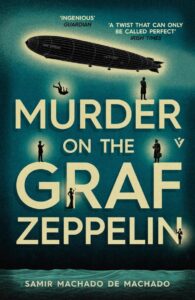
Samir Machado de Machado, Murder on the Graf Zeppelin
Translated by Rahul Bery
(Pushkin)
A Nazi zeppelin flight to Brazil becomes the scene of a murder, throwing passengers and crew alike into dissaray. On the corpse are found magazines catering to queer customers, suggesting homophobia or blackmail as the motivation behind the crime; one passenger is asked to investigate after revealing his profession as a detective, taking the opportunity to interview the travelers in a series of character sketches that paint a wide portrait of fascist society on the eve of war. Of course, all is not what it seems, with several twists and an absolutely delightful denouement. Crossing the Atlantic attached to a giant balloon was a leisurely affair, but you can easily finish this novella in an afternoon. –MO
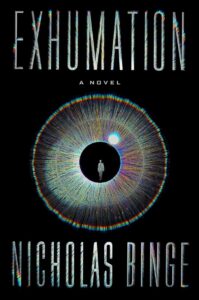
Nicholas Binge, Exhumation
(Riverhead)
Nicholas Binge’s latest high-concept horror is split between two storylines: a detective tracking down a missing woman in a strangely blank city, and two sisters conducting scientific experiment with disturbing spiritual implications. If you like China Mieville’s The City in the City, but wish it had way more twists, then this book is for you. –MO
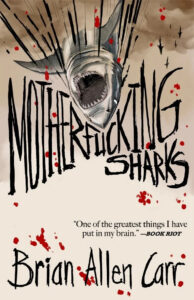
Brian Allen Carr, Motherfucking Sharks
(Clash Books)
I believe the title is self-explanatory. If you need another reason to check this out, it’s a reissue which means at least two people cared enough about a book titled “Motherfucking Sharks” to publish it. Enough said. –MO
Molly Odintz
Molly Odintz is the managing editor for CrimeReads and the editor of Austin Noir, now available from Akashic Books. She grew up in Austin and worked as a bookseller before becoming a Very Professional Internet Person. She lives in central Texas with her cat, Fritz Lang.