
The Struggle to Tell the Story of an American Cult – And the Woman Who Escaped
To tell the story of the ACMTC cult and Sarah Green, its leader's daughter, author Harrison Hill had to push way beyond his comfort zone.
In the annals of infamous American criminals and crimes, cults and their messianic leaders hold a sacred position. Unlike most violence and malfeseance, the heinous acts from on high aren’t simply known by the perpetrator, or by the locale where whatever hell rained down. Given the otherworldly bizareness of cult criminality, the most famous examples are immediately recognized by Day of Reckoning word associations: Helter Skelter, The Waco Inferno, Heaven’s Gate, and the messianic sui-homi-cide grandaddy of them all, the demand of the assembled to drink the Kool-Aid. (Technically, the cheaper alternative Flavor Aid, because every Doomsday penny counts.)
As ghastly true crime stotes go, cult leaders gone bad–naturally, the only ones anyone hears about–like Charles Manson, David Koresh, Marshall Applewhite and Jim Jones, have a unique narrative power because so much literal human power is imbued in a lone twisted individual. The people’s messiah offers salvation from fiery damnation through suffering to a group of masses who partake in their own peril (at-least somewhat) willingly, the wounded adults searching for deeper meaning in their lives, anyway. But the kids? The kids dragged into a life they never asked for, like the 250 under-18-year-olds massacred at Jonestown, are the most tragic of tales. Almost no one knows the troubles behind the secretive cult walls until its far far too late.
Sarah Green though? She knows what went on. Green was literally born into a cult run by her mother, Deborah. The well-armed paramilitary group, which first marinated in the hippie Free Love era outside Sacremento, found a home in the New Mexico desert. A far-out off-the-grid house of horror-worship where Deborah, and her loyal partner Jim, destroyed lives in their almighty name, the Aggressive Chrisianity Missions Training Corps.
By the time Sarah escaped in 1999, at the age of 26, she had not only endured years of physical and psychological abuse, she’d also participated in the murky what-amounts-to kidnapping of a baby girl from Africa. For a few years she raised Trinity as her own, until she had no choice but to flee the cult, leaving her daughter and the two sons she’d never see again behind. It would be years–after ACMTC was investigated, arrests were made and a trial was held–before Sarah fully realzied how depraved Deborah and Jim’s treatment of Trinity was. The young child had severely agonizing untreated leg injuries, but at least Trinity survived and got out. One poor young boy died a preventable death of the common flu, a victim of medical neglect of the Greens volition, left buried off a compound backroad in a dirt grave.
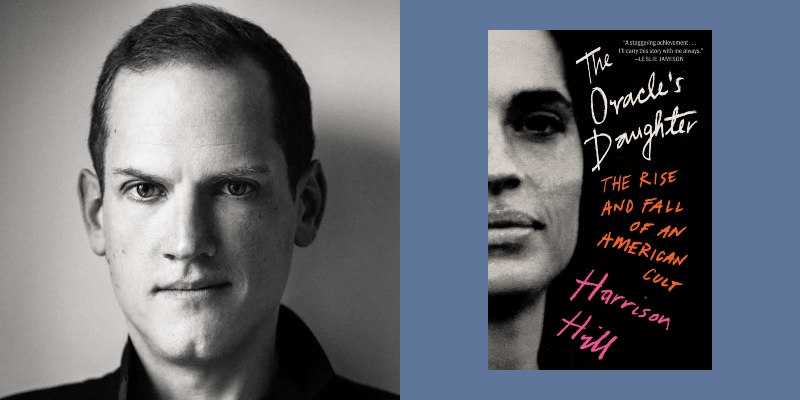
After years of searching for a permanent home and relationship, Sarah set down roots in the decidedly secular Sodom and Gomorrah known as Brooklyn. A chance sitcomy apartment-living-debacle scenario led Green to meet writer Harrison Hill, who immediately gulped down the can’t-miss story juice. An article about Green’s life in ACMTC appeared in The Cut, but Hill knew there was a lot more to be explored in the micro-and-macro world of cults. Hill expanded it into The Oracle’s Daughter: The Rise and Fall of an American Cult, an incredible new book that cast some sort of inexplicable spell over me demanding I follow its read-me now orders.
If it’s grim cult life details you’re after, be assured Hill has you covered–not spoiled here though. Absolutely pick up The Oracle’s Daughter for the harrowing nitty gritties, and you might want to hurry. “End Times” are an everyday part of the military rhetoric around the Iran War and demonology is alive and well in America. Flavor-Aid for everyone!
PATRICK SAUER: I will account for spoilers, but since this is in the acknowledgments, please explain you first heard about Sarah Green, a great New York City story in its own right…
HARRISON HILL: It really is. My brother Edward and his wife Margaret moved to Brooklyn and their apartment flooded. Their new next door neighbor came over to help clean up, a woman named Sarah Green. As often happens in New York apartment buildings, she befriended Edward and Margaret, and started telling them all about her life, revealing she had grown up in a cult run by her Mother. I’m always asking people in my life if they’ve met anyone interesting lately or heard of any stories worth pursuing…
After first asking her if she wanted to talk to me, Edward told me about Sarah. We first got together in November 2019 over beers at a divey Crown Heights bar. Sarah was very open and ready to go, launching right into her story. By this point in her life, she was married with two teenagers and really wanted to tell people what happened to her as a way to help others. Basically, ‘I was in this impossibly difficult situation and I was able to extract myself and get out, and you can too.’ I was riveted and distinctly remember leaving the bar feeling like I’d been handed this precious one-of-a-king thing I dare not drop. It was a kick-ass story, one that would eventually require me to push beyond capacities of anything I’d been capable of before, but I knew if I got out of the way it would work. That was a very good day.
PS: How far into the original article-writing process did you realize Green’s story could be a book?
HH: Early on. I could see it had legs before the article itself was published. I started working on The Cut story in 2020, which came out in June 2021, but I began putting together a book proposal while still filing drafts. I’m not someone who is always brimming with confidence, but I knew it was narratively indestructible.
PS: Did the pandemic cause problems in any way, shape or form?
HH: Covid didn’t cause problems, but it did slow everything down. From our initial meeting to around May 2020, Sarah and I didn’t talk. Then we started getting together every other week, and later on, weekly. There was about a year between the article and the book sale. Every Thursday afternoon, I’d go to Sarah’s apartment, eat her granola, and we’d pick up where we left off. It was a remarkable period that gave me a ton of material, I was already way into the research and reporting when the proposal sold.
PS: This isn’t Sarah’s memoir or a strictly first-person account, so how did you go about taking readers inside the cult from a broader perspective? And how did you verify it?
HH: Most everyone I approached who wasn’t still ensnared by the group wanted to talk, to let the world know the private nightmares that took place. Beyond first-person corroboration, there’s an extraordinary volume of legal documents and internally-generated materials. One nice thing about cults? They have to promote themselves, so there are years of ACMTC tracts and hundreds of sermons on video. During that in-between year, I watched as many hours as I could possibly take. The Oracle’s Daughter culminates in a major trial, so there’s also a substantial amount of discovery. I reviewed troves of photos, letters, emails, passport stamps, and reams of paperwork. The first-person interviews are at the heart of the book, but there is a ballast of research to back it up.
PS: In the The Oracle’s Daughter, you do an excellent job of counterbalancing the terrifying depravity and criminality by getting into the history, psychology and philosophy of (primarily) American cults. Why did you decide on this route as opposed to just going behind-the-walls of the living ACMTC hellscape?
HH: It was a personal point of emphasis to not simply write a sensationalist horror-slasher type of book, but I also came into it as a novice. I didn’t know a whole lot about cults other than what we all think we know, but was hungry to learn more and give context to ACMTC. I never wanted The Oracle’s Daughter to be strictly for devourers of true crime. I want it to appeal to general nonfiction, or even fiction, readers, and hope they have the same thrill of discovering and understanding how and why cults can be so effective as I did. My point of entry was less the existence of cults and more the human conditions around family, belief, inheritance, and belonging. Cults are intense petri dishes where those questions find expression. I knew the book would be much richer for examining the bigger historical picture, while also breaking news on what went on in what I lovingly refer to as ‘my cult.’
PS: You dispel two notions of conventional cult wisdom, can you explain why nobody ‘joins’ one and why being ‘brainwashed’ is a fallacy?
HH: The word cult is a pejorative in modern usage, so nobody would willingly go out to be part of a maligned group, standing up to announce ‘I’m joining a cult!’ It’s a gradual process. You’re handed literature or personally invited to a meeting, so you think, why not? I’ve got nothing better to do this evening. Or maybe you’re unemployed and they get you a job–the cult in Oracle’s Daughter had a benefactor who employed members in his art stores–so you decide to stay until you get back on your feet. Maybe you have addiction issues, or you’re estranged from your family, or homeless, or rudderless, any of the everyday issues people face. The cult offers some level of support and stability, so you slowly sink into the lifestyle. You may not even fully recognize it because you never joined a cult, but you are definitely in a cult.
The popular idea of brainwashing involves a guru who manages to have complete mental control over their followers, that followers have zero agency and are 100% at the beck-and-call of the charismatic leader, with Charles Manson being a prime example. Many cult scholars reject that notion and believe there’s always an element of choice at play. It’s an eerie notion to think about because it suggests there is something appealing about being in a cult, that it feels good to give yourself over to a life that from the outside, seems insane.
PS: I’ve written about white supremacist groups and on a base level, it’s easy to understand why their salespitch works, “You, white person, are getting screwed by [fill-in-the-blank minority groups],” and metastasizes so broadly. What I realized in The Oracle’s Daughter is that the much weirder Big Lies, like the kinds Deborah preached, seem to take hold in small tightknit separatist groups. Is that a key to how random people end up believing the onset of UFOs and comets require mass suicide sporting Nike Decades?
HH: One of the ways these groups thrive is by having no contact with the outside world, so members lose their standard frame of reference. Meanwhile, the goalposts keep moving, so child abuse that would’ve been unacceptable at one point, is now part of daily life. Stripping away simple pleasures, or assigning more chores, can warp a member’s sense of reality. Say you’re someone who loves to paint in the evening, but then one evening, for unstated reasons, the leader forbids painting. No one stands up and even asks why, so you and everyone else goes along with the new rule, and a bit of humanity is stripped away. Again, it happens slowly. Over time, there are no outsiders and eventually, life inside the cult becomes the way it is. No matter how crazy the rules and demands and accepted behaviors are seen by non-members.
PS: The specific details are hard to fathom or stomach, but at the same time, if you asked me to describe a random End Times cult–physical and sexual abuse, sleep deprivation, nonstop work, push-pull of a self-anointed leader, funny-scary beliefs in devils and aliens, etc.–it would be in the ballpark because ACMTC fits the stereotype, like David Koresh for example…
HH: In the broad archetypical strokes, ACMTC did check a lot of the boxes, but not the most significant one in that it was run by a woman. At the same time, the peculiarity of the abuse was continually surprising, all the different ways they punished members. Making people eat food off trays on the floor like they’re dogs is not something I’d ever considered. And the rules and proclamations were always changing and in flux, so members never knew what to expect, like from now on you can only eat peanut butter sandwiches. The strangeness is in the details. And the details here are extraordinary.
PS: One shocking aspect of physical abuse is it’s both sins of commission and omission..
HH: The withholding of medical treatments, especially for two specific children who were in desperate need, is the most upsetting stuff in The Oracle’s Daughter. It’s when you see the cult’s evil most vividly displayed. I don’t throw around the word evil lightly, but I believe the behavior of the ACMTC leaders passes the threshold.
PS: By the end of your book, I had no empathy whatsoever for Deborah, but I’m curious if Sarah talks about her Mother in different ways at different times, even though understandably, she cut her off and they have no relationship today?
HH: Naturally, Sarah has a lot of anger toward her Mom, but also a caustic biting sense of humor about it that makes her so fun to be around: Jesus Christ, I can’t believe a woman could be that crazy. Sarah got out and is living an amazing life in Brooklyn with her family, but I know there is a bottomless well of ingrained sadness. Sarah told me about testifying against Deborah, holding her to account for all the horrible things she’d done, while also still having a biological loyalty to please her. Those are two diametrically opposed imperatives. She’s permanently caught in this painful contradiction, which I find incredibly moving. I hope that talking about it has allowed Sarah to work through some of it. I think it has.
PS: As the book went along, ACMTC became more political and became at least in line with say QAnon, hard-right evangelicals, or your garden variety red-pilled Facebook Uncles, what are we to make of where they started versus where they ended up?
HH: One reason I thought this could be a book is because from the beginning, ACMTC saw themselves as emblematic warriors against what was happening in the broader, not just religious, culture. Over the decades, I recognized a change in America mirrored by the cult. A primary theme in The Oracle’s Daughter is the fringe and the mainstream have become so much closer. In the early years, the cult was seen as soooooo far out to lunch that there weren’t corollaries to normal society. Jump forward to today, and the way certain far-right evangelicals publicly preach is not that different from how ACMTC always did. The everyday militarism in the language is disconcerting, because it’s frighteningly similar to Deborah and Jim’s violent apocalyptic rants.
PS: Lastly, not in actual practice or belief, but in terms of all the years being enmeshed in research and digging into ACMTC, did you ever feel metaphorically like you were in the cult?
HH: I never felt like, ‘Oh wow, is Deborah really the prophet?’ God, no. I wasn’t drawn in like that, but did I feel like the ACMTC universe has been my universe? Totally. So while I wasn’t in the cult, I was in the world of the cult.
As disturbing as it was, it was a thoroughly rewarding experience, because the subject matter is so rich and compelling. It was a thrill to work on a book I believe will be meaningful and entertaining for readers. That being said, I do hope my next book puts in me a lighter headspace.

Patrick J. Sauer
Originally from Montana, Patrick Sauer is a Brooklyn-based freelancer who has written for a lot of publications, some of which you’ve heard of. Check out PatrickSauer.contently.com or follow him @pjsauer (https://twitter.com/pjsauer)