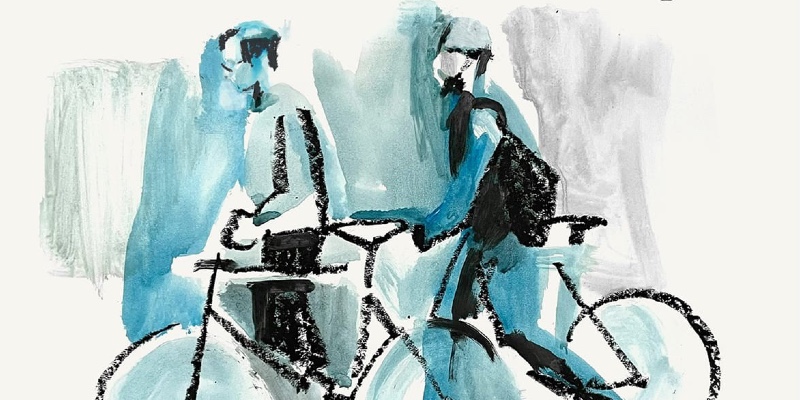
Requiem for a Brilliant Artist: On Tony Stella
Michael Gonzales on the life and career of artist and movie poster icon Tony Stella.
While social media is often a vast wasteland where hours are spent arguing over the merits of Marvel Movies compared to the latest Martin Scorsese film and other trivial pursuits, it can also be an outlet for community building and communicating with people who share similar interests. Over the years I’ve met many writers, editors and visual artists who have become real friends, including recently departed movie poster/DVD illustrator Tony Stella.
As an aficionado of the poster art since I was a boy hanging in the foyer of Harlem grindhouse the Tapia Theatre, admiring the work of Robert McGinnis (Cotton Comes to Harlem, Live and Let Die), Jack Davis (Five On the Black Hand Side, The Bad News Bears) and Frank Frazetta (The Gauntlet), I first noticed Tony’s bold illustrations on Twitter in 2020. Months later I sent him an article on “9 Vintage Movie Posters Worth a Second Look” through Twitter chat. Afterwards, he politely wrote back and that was the beginning of our years of correspondence that continued until a week before his death on May 1st. Tony was 45-years-old and reportedly died in his sleep.
Just as Tony Stella and I had become internet friends, he cultivated many such relationships, including one with Gizmoe Press (Graphic Samurai: The Art of Denys Cowan) publisher Michael Stradford, whose Facebook post on May 6th alerted me to his passing. “A brilliant, prolific artist who revitalized and enhanced the history of great cinematic movie posters,” he wrote in the post. Days later I contacted Stradford, who is also an online buddy, and inquired how he and Tony began writing one another.
“When I first saw Tony’s work, I thought he was one of the old masters,” Stradford replied via email. “I was struck by the passion and emotion he put into each painting, never phoning it in. He told me about the challenges of getting his art out there in the days of serious piracy. He was as good at illustrating vintage films like Straw Dogs or The Bride of Frankenstein as he was with more modern day films like Heat or A Spoon of Chocolate.” (The latter is the latest Rza directed action joint produced by Quentin Tarantino.)
While Tony was brilliant at capturing crime, adventure and obscure foreign films, he was also perfect at translating a family drama such as the Diahnne Carroll/James Earl Jones classic Claudine (1974), which he illustrated for the Criterion Collection release in 2020. “Using soft colors and textures, Tony perfectly captured Claudine’s softness and femininity as well as the family and the city,” writer Danielle Jackson, the scribe behind the liner notes, says. “I know he read my essay while he was preparing and the final cover illustration had the quality of a family portrait that might be in an old school photo album.”
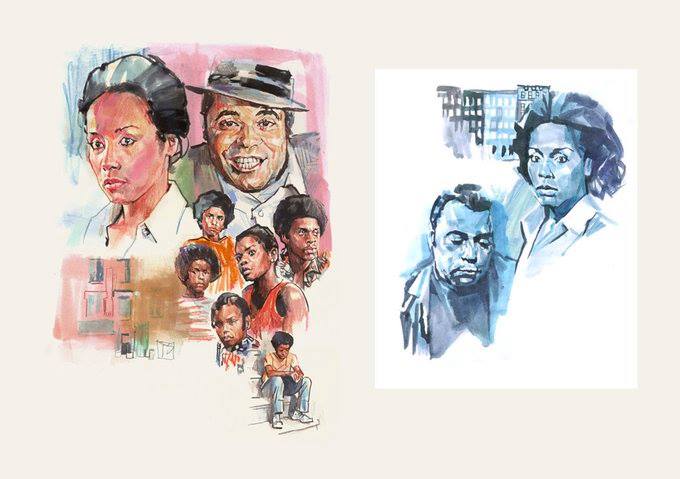 Tony Stella artwork for Claudine.
Criterion Collections art director Eric Skillman, who worked with Tony on all of his projects at the DVD company, says, “I think one of the best things about Tony as an artist was that there wasn’t one ‘typical Tony.’ He treated every film as unique and was constantly surprising.” Other Criterion Collection packages Tony illustrated include Medicine for the Melancholy and The Underground Railroad, both directed by Barry Jenkins.
“Tony and his design partner Midnight Marauder were brought in by Jenkins to do the original marketing campaign on The Underground Railroad for Amazon,” Skillman recalls. “Barry loves their work and requested that we use them for the home video release as well, which we were more than happy to do.”
Raised by Italian parents in Germany, young Tony got into music, film and art through his dad, who was a theater director. In one of his notes to me Tony compared his dad to outrageous film character Fitzcarraldo. “He was truly wild,” Tony described him. His dad, who was a lover of free jazz and counted Lester Bowie (trumpet player and co-founder of the Art Ensemble of Chicago) as one of his best friends, shared a love for music and film with his son. The first record dad gifted him was Blacknuss, a 1972 Rahsaan Roland Kirk disc; still, the free jazz sounds was too avant-garde for Tony who preferred soul, funk, hip-hop and, of course, soundtracks.
As a sickly kid who drew a lot, he loved the paintings on old funk album covers and movie posters as well as the fine artists hanging on museum walls. “My father would drag me to museums and I would always have a pen and paper with me,” Stella told Beneficial Shock in 2021. As a lover of Alberto Giacometti and Francis Bacon, Tony was first involved in the fine art world before switching to commercial illustration. “I had so many styles in my work, which is what curators in fine art scene rejected, as they didn’t know how to market me and put a stamp on me.”
Tony’s illustrations were done in various styles and mediums, often breaking the rules with their mixtures. Generously, he often allowed me to use his work to illustrate my CrimeReads essays. Even before Tony’s fine art experiences, he was happier being far away from the highbrows. In his teenage days and nights, he spent time writing graff in Berlin and America. For a brief time in the 1990s, because of his father’s work, he lived in New York City, where he met many likeminded people.
“I was all over New York,” he told me. “I became a member of the Zulu Nation and became friends with various b-boys and writers (graffiti artists).” Still, unlike other contemporary artists, Tony didn’t grow-up a fan of comic books, but he did dig the work of Howard Chaykin. “I was always more into painters and I knew so little about American comics, but I always picked his work out of the little material we got overseas,” he wrote me. In 2024 when I posted Stella’s poster of The Wanderers, a 1979 movie based on a Richard Price novel, on Facebook, Chaykin commented, “Great picture (movie), great novel, terrific poster.” When I told Tony of Chaykin’s response, he replied, “Props from the master.” Other illustrators Stella admired included Bob Peak, Averardo Ciriello and Noriyoshi Ohrai.
While I have no idea how long Tony lived in New York, he considered it “a magical time” and referred to that era as the city’s “last days of bohemia.” Certainly, it wasn’t long before gentrification forced out many creative folks and changed the landscape completely. Thankfully, Tony filled notebooks with watercolor drawings and sketches that most of his friends and fans have never seen. “I got tons of atmospheric works from that period…these are over 20 years old–moody memories rather than specific places.”
Later, Tony sent me five images from that period, pictures that look nothing like his movie poster work, but put me in mind of existential Edward Hopper. He suggested we work together on an illustrated essay about 1990s New York, what he thought “would be a beautiful collaboration.” However, Tony was always so busy with his “real” work that the project never went beyond our wishful thinking.
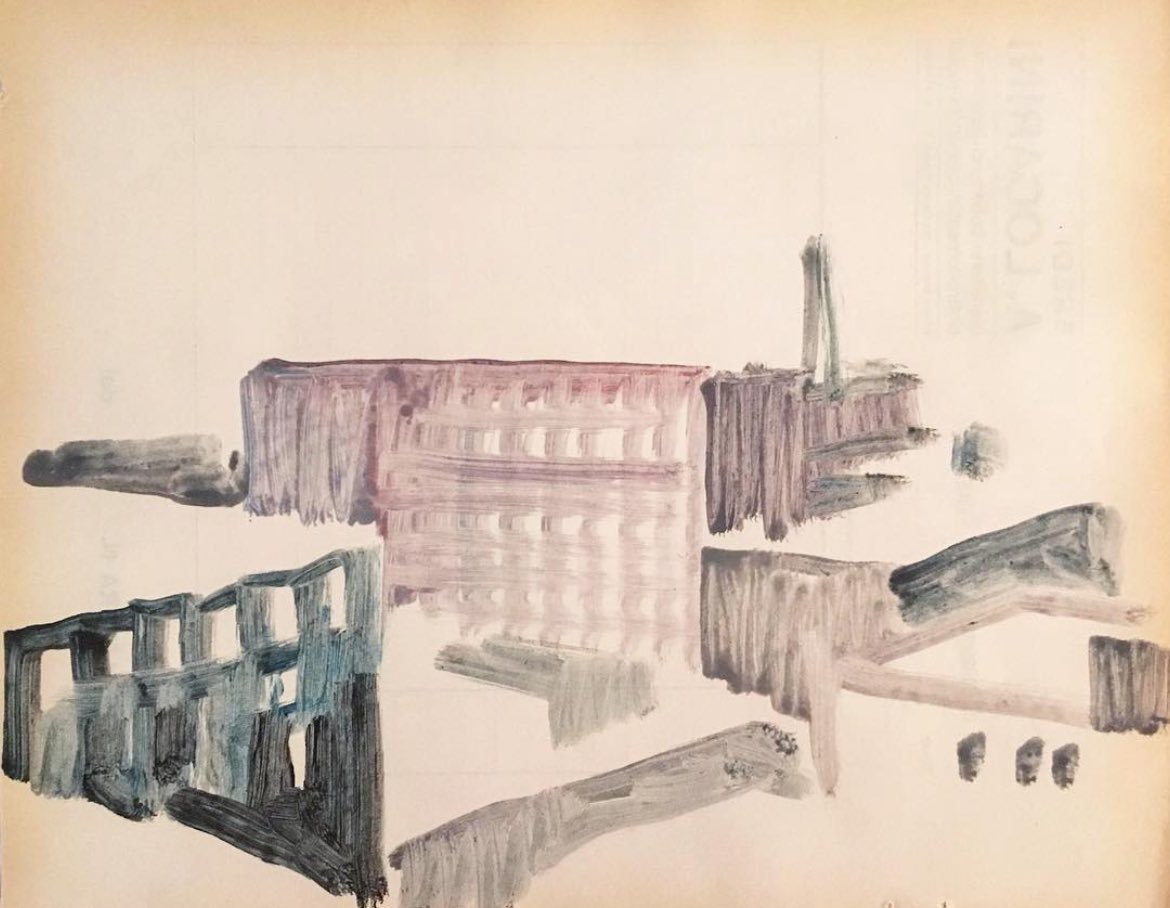 New York artwork, Tony Stella
Unfortunately, the same fate would happen with the art book of his work that he hoped to put together, but with so much brilliance in his archives, the task was overwhelming. In a Facebook post, Michael Stradford wrote, “He said the book was “a dream project…but it’s grown to such impossible proportions that I can’t even begin to start…over 600 posters and 2,000 drawings.”
One of Stradford’s favorite images is Tony’s brutal reworking of The Mechanic (1972). “That moody star portrait of Charles Bronson with the small inset illustrations at the bottom of the poster suggests both the gravity and danger of that world,” he says. “The splash of red in the upper right of the poster that mists over Bronson’s head suggests that all is not well. It’s a powerful piece of work.”
Tony Stella’s untimely death is bound to leave a deep hole in the film art profession. “I would put Tony Stella’s name on a very short list of artists who’ve had a meaningful impact on how we think about movie posters in the 21st century,” Eric Skillman says. “He was a great talent and will be sorely missed.” Indeed, the same sentiment applies to the many people that loved the generous man, his beautiful work and his frequent correspondence on social media. We’re going to miss you, buddy.
For a deeper dive into Tony Stella’s life and art, listen to this interview from Chasing Labels https://youtu.be/9xSHZrH86yA?si=uQWQ4dfChtcCz70k

Michael Gonzales
Harlem native Michael A. Gonzales is a cultural critic, short story scribe and essayist who has written for The Paris Review, The Village Voice, Wax Poetics, The Wire UK, Maggot Brain and Pitchfork. His fiction has appeared in Under the Thumb: Stories of Police Oppression edited by S.A. Cosby, Taint Taint Taint, Dead-End Jobs: A Hit Man Anthology edited by Andrew J. Rausch, Black Pulp edited by Gary Phillips and The Root. Upcoming stories will appear in The Book of Extraordinary Femme Fatale Stories edited by Maxim Jakubowski, Get Up Offa That Thing: Crime Fiction Inspired by James Brown edited by Gary Phillips, Killens Review of Arts & Letters and Obsidian Literature & Arts in the African Diaspora.