Maria DiLorenzo on Capturing the Souls of Serial Killers in True Crime and Memoir
The author of Confessions of the Green River Killer explores evil's facets in a hybrid genre
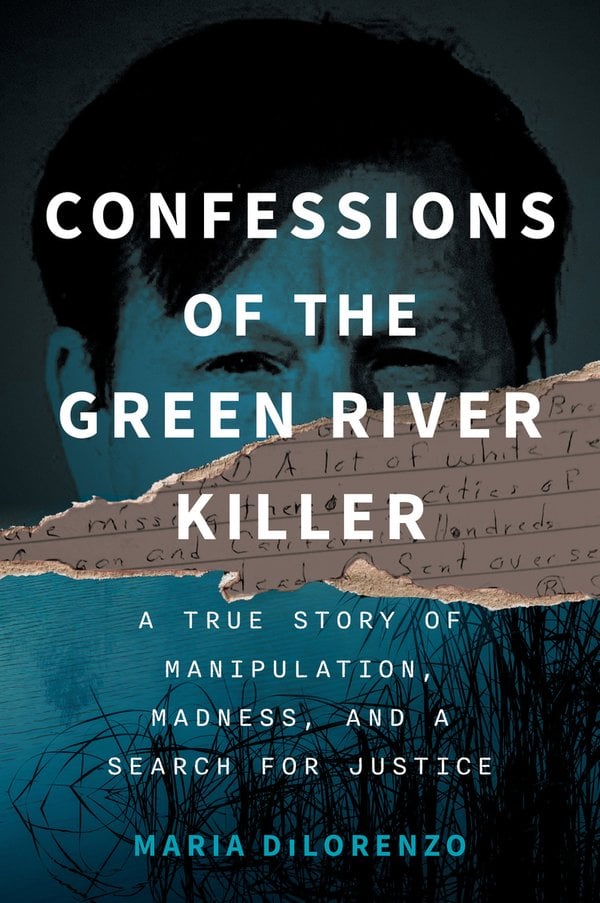
When I began communicating with Gary Ridgway, the Green River Killer, I hoped to uncover details about murders he committed he had not yet admitted to, secrets he had kept under the lock and key of his own silence for decades. What I didn’t realize at the time was that I had embarked on a quest that would spiral into the wild territories of a diabolical mind and a soul that seemed nonexistent at times. I would find myself knowing evil.
Before speaking with Gary on a daily basis, I couldn’t imagine evil as something that could impact me directly like a harsh sun. While I expected to learn more about him during our correspondence, I was not prepared for the lessons I’d be forced to learn about myself.
But after he divulged to me to killing eighty-one to ninety-one women—thirty-two to forty-two more than what he was originally convicted for—and he grabbed the reigns of our conversations, wanting to focus only on me, or rather what violence could happen to me, I had no choice but to listen if I was ever going to retrieve the information I sought. According to him, I was destined, like most women, to become a victim—a definite process of fate like a butterfly wombed in a cocoon before breaking free.
He refused to hear anything different, a story of survival. He was certain of my eventual rape and murder as he was certain of his own future locked behind walls of stone and a steel door.
If I wanted to keep him on the line, I had no choice but to learn what I could endure—psychological games with no rule book, where I played the part he assigned to me, a woman who would become a victim no matter what path I chose while he feigned concern for my safety. I must know what could happen—all of the ugly imagery from his memories and fantasies—otherwise, how could I protect myself when I walked a street alone at night? I must know the constant danger I was in, otherwise, would I ever have the instinct to run away?
It wasn’t until my communication with Gary ceased, and I spent an entire summer alone in Seattle tracing his footsteps to his “spots”—the places he once boasted about to me—that I began to understand the value of my experience, a woman who had interacted with him, a man who had been dubbed a monster in news headlines and one of the worst serial killers in US history, a man with a kill count that could still rise like a tide despite his years in custody.
I knew him only as a serial killer, while those who had known him before—family, ex-wives, ex-girlfriends—once believed in the charade of his decency. But I knew him as he was, which led to a different kind of revelation, one that casted a clear light onto his behavior and mind that would have otherwise remained dark, entrenched in shadows.
If I had not pilgrimaged into his depravity, I never would have had a front row seat to his madness. Without such knowledge, it would be impossible to see him—or anyone with a criminal mind or deviance—in a clear light. It’s that kind of understanding that could help profile those with similar sinister intentions more easily.
I am not the only one who has lived through knowing evil firsthand and has recounted the tales of it. When Ann Rule wrote The Stranger Beside Me in 1980, true crime narratives usually remained objective, strictly told in third person. However, Rule would realize that her friendship with Ted Bundy provided a deeper perspective and a hard-to-swallow truth that could never be entirely revealed through only summarizing case files: serial killers could hide in plain sight, and we could even fall for their charm, believe in their goodness, and confide in them while never knowing the brutality they are capable of or the moral compass they lack.
Ann Rule’s direct experience with Bundy adds another layer to his story, one that hits us with a reality we would rather shy away from but is necessary to feel the uncomfortable bruise of it. Rule’s friendship with Bundy forces us to conduct an inventory of the people in our lives we have decided to trust and begs us to proceed with more caution when meeting someone for the first time.
Madman in the Woods by Jamie Gehring contains a similar lesson. In her true crime memoir, she recounts her experience growing up next door to Ted Kaczynski, also known as the Unabomber. Gehring writes about innocent moments she and her parents shared with Kaczynski: family dinners, the time when he held her as a baby, and when he would arrive on her doorstep with thoughtful gifts for her, such as painted rocks and hand-crafted toys. When the truth finally came out about the crimes he had committed, it was difficult for her to reconcile the polite and quiet man she had known as a child with the murderer he had become.
Without Gehring’s fresh perspective, Kaczynski sounds more like a fictitious monster lurking in the woods rather than a real, flawed person. While such realism teaches us that anyone could be capable of anything, even those we least suspect, it provides a more complicated truth about humanity and relationships, one that would become lost if only the facts of the case were told.
Then there are writers who never form any friendship or rapport with the serial killer but become so obsessed with unmasking their identities and solving cases. These experiences are just as valuable.
Michelle McNamara details her journey trying to identify the Golden State Killer in her true crime memoir I’ll Be Gone in the Dark. Her experience provides a firsthand glimpse into the passion and dedication required for anyone wishing to solve a case and write about it. While on the surface, such an undertaking might appear easy, McNamara describes the reality of sleepless nights, dead-end leads, and sacrificed time with family all for the pursuit of justice.
As McNamara brings her journey to life, we are able to recognize that such investigative work is a process with no bounds that leads to more disappointments than successes. By recounting her own experience, she manages to bring attention to the case, ultimately leading to Joseph DeAngelo’s arrest and conviction, while also showing the reasons why we must understand how such a serial killer operates.
Without these stories—the memoir-true crime hybrid—would anyone truly understand even a fraction of evil or the inner workings of such a deranged mind? And why must we understand? For one, we must not be shielded from reality and lose ourselves in a romanticized version of it. Only then, would we become even more vulnerable to possible harm. Instead, we must tell our stories that breathe caution and scream discernment if only to try to survive this imperfect reality unscathed.
***

Maria DiLorenzo
Maria DiLorenzo received an MFA in English / creative writing from Hunter College in 2011. For several years she worked as a contributing writer for The Crime Report, and in 2020, she founded the website Beyond the Crime, which shares firsthand interviews with those incarcerated for murder to gain a deeper understanding of the criminal mind. She is one of the only journalists to extensively interview Gary Ridgway, the Green River Killer, one of the most prolific serial killers in American history. Her work in true crime has been chronicled in podcasts and documentaries, including an appearance on ABC’s 20/20. She currently resides in Staten Island, NY.