Weird Girl Lit Galore: 10 Novels Featuring Unabashedly Unhinged Female Characters
Heather Colley Recommends Penny Zang, Oyinkan Braithwaite, Rachel Harrison, Ling Ling Huang, and More
The weird girl character seems to be everywhere in literary fiction these days—and she’s only getting weirder. Since Ottessa Moshfegh’s My Year of Rest and Relaxation, whose unnamed main character drugs herself into sleeping for a year, we’ve seen women murders and serial killers, female cannibals, and, in general, a vast array of women acting strangely—often in their own worst interest. The end of 2025 and early 2026 see this trend continuing, and weird literary girls keep getting even weirder.
Many of these strange literary women have informed my own writing and inspired me to push the boundaries on the girls-behaving-badly trope. I love the odd girl, the unhinged woman, the one without redeeming qualities—and I love to write these types of characters into my fiction.
In my debut novel The Gilded Butterfly Effect, the story revolves around two weird girls, Penny and Stella, who are mirrors of one another. Stella is adept at manipulating her psychiatrist into prescribing whatever drugs Stella thinks might fix her slew of anxieties; Penny, who comes to Stella’s large American university and Stella’s sorority there, acts as a voyeuristic hanger-on who can never quite grasp where she belongs within this chaotic system.
As Stella and Penny become friends, they bring out the worst in one another’s weirdness: Penny is destabilized by Stella’s psychiatric manipulation, while Stella’s ultimate fear is becoming something like her friend: depressed and off-putting and bleak.
*

Penny Zang, Doll Parts
In Penny Zang’s Doll Parts, Nicki investigates a group of undergraduate girls who form a society that worships one of the original literary weird girls: Sylvia Plath. Simultaneously, the narrative skips to the future, where another weird girl, Sadie, is haunted by the presence of her friend Nicki—now dead.
Zang’s debut is a dark academia book replete with weird, obsessive, and ever-lingering weird girls who all navigate in some way with the terrors of girlhood.

Rachel Harrison, Play Nice
In Rachel Harrison’s Play Nice is a clever and subversive take on the classic haunted house trope. Clio is the book’s central weird girl, and she has a unique approach to the supposedly haunted house of her childhood: to monetize it as an influencer and a house-flipper.
As with the trials of many literary weird girls, Clio’s plans become her undoing.

Ling Ling Huang, Immaculate Conception
Enka is the key weird girl in Ling Ling Huang’s Immaculate Conception. Enka is marred by an increasingly toxic and fanatic obsession over the artistic talents of her friend, Mathilde.
In many ways Enka’s unhinged characteristics mirror the strange artistic world around her, which is replete with pretention, sensationalism, and sycophantism.

Oyinkan Braithwaite, My Sister the Serial Killer
Oyinkan Braithwaite returns with another complex literary take on the weird girl figure. Braithwaite’s widely acclaimed debut My Sister the Serial Killer offered a dark example of the female serial killer, and her newest book Cursed Daughters looks at many similar themes including family trauma and tangled relationships between women.
It follows Eniiyi, who must negotiate with the belief that she might be the reincarnation of her cousin.

Meredith Hambrock, She’s a Lamb!
Meredith Hambrock’s She’s a Lamb! Is a story of brutal ambition that nods to its theatrical roots in Macbeth and literary sister in R.F. Kuang’s Yellowface.
Its unhinged woman is Jessamyn, who is an example of what happens when a theatre kid grows up and turns to violence to earn her dream role. In many ways, Jessamyn’s unwavering belief in her own theatrical brilliance becomes her undoing.

Jessica Gross, Open Wide
Olive, from Jessica Gross’ Open Wide, is an extremely weird girl—she is obsessed with recording her own conversations with people, so she can in turn identify where she goes wrong with social interaction.
So it’s a perfect storm when Olive meets Theo, and her feelings for him cascade quickly into obsession—the type of obsession that involves wanting to see Theo’s internal organs and creep inside his skin.

Gemma Amor, Itch!
Itch! by Gemma Amor is a new feminist folk horror novel that will literally make your skin crawl—it’s replete with skittering insects and creeping forest figures. Josie is the novel’s weird girl. Her life becomes literally infested by insects when she moves to the dense Forest of Dean, while her mind also becomes metaphorically infested by hallucinations.

Anna North, Bog Queen
In Anna North’s Bog Queen, the literary weird girl is Agnes, a forensic anthropologist; but she’s mirrored by the body and presence of a weird girl who has been dead for thousands of years. Agnes also has a strange relationship with the bog itself—for her, the moss is a sentient creature, which helps her as she unravels the story of the dead woman in the bog.

Rebecca Novack, Murder Bimbo
Rebecca Novack’s Murder Bimbo is a darkly funny and absurdist take on the female murderer. The protagonist, who we know only as “Murder Bimbo,” restyles her online identity after she kills a politician. She creates an increasingly strange and absurd narrative to explain the murder.
Murder Bimbo is the type of weird girl whose interpretation is open to the reader—how real is her narrative? Or how fake and unhinged?
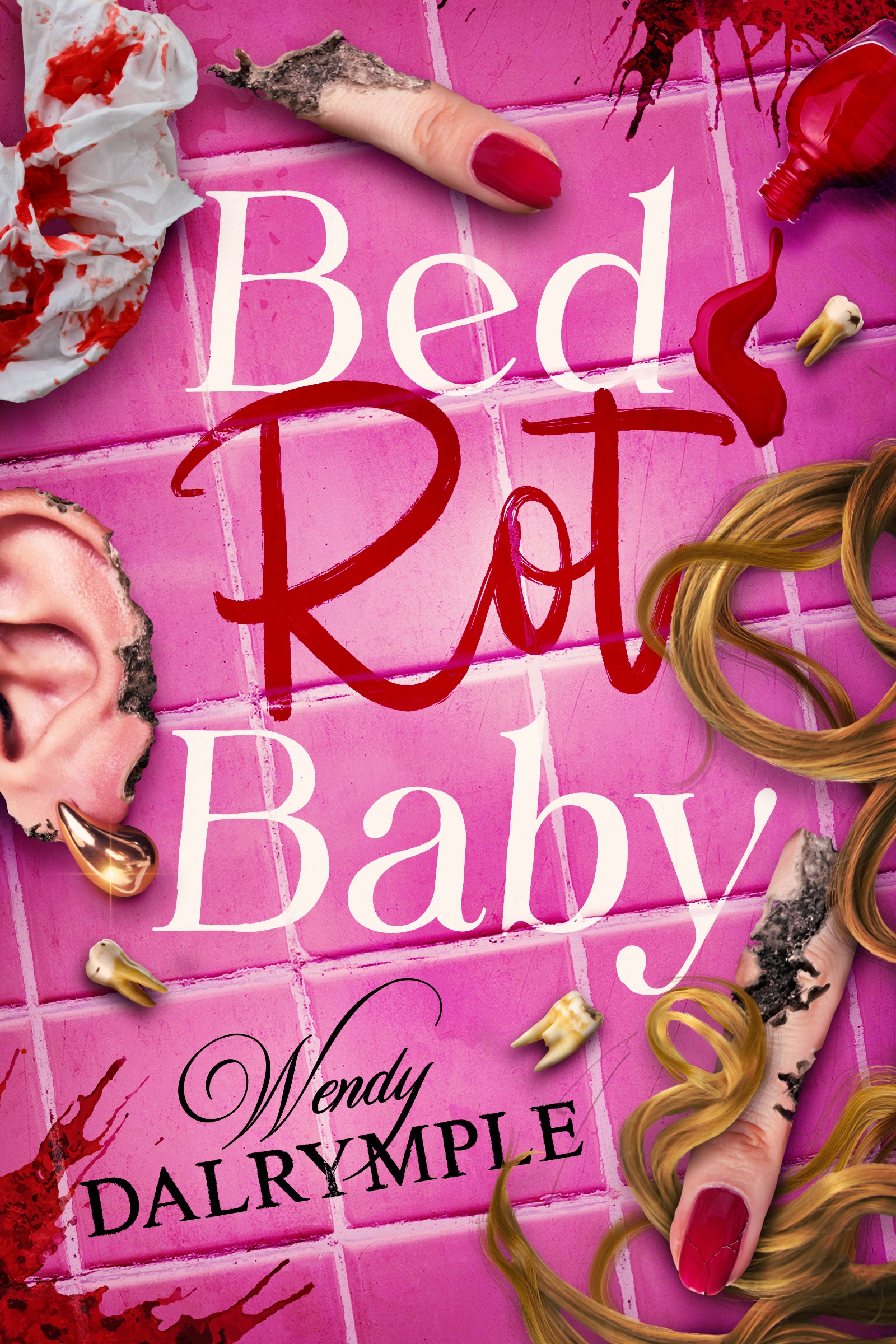
Wendy Dalrymple, Bed Rot Baby
Wendy Dalrymple’s forthcoming Bed Rot Baby combines different horror subgenres—like body horror and pink horror—for the narrative of its weird girl, Baby. Baby is assaulted by a strange woman, and begins to suspect that the assault might rot her from the inside out.
Baby takes the internet term “bed rot” to extremes; she slowly begins to decay within the confines of her room.
***


Heather Colley
Heather Colley is a PhD student in English Literature at the University of Oxford. She researches late nineteenth and early twentieth-century jazz and blues aesthetics in transatlantic modernist literature. She completed her Master’s in Modern and Contemporary Literature with Distinction at St Andrews, where she studied lyric and form in the work of mid-twentieth century African American women novelists. She received her Bachelor’s in English Literature/Creative Writing and Sociology at the University of Michigan Ann Arbor. Heather Colley’s writing won The Oxford Review of Books Short Fiction Prize, the Hopwood Award, and inclusion in the Desperate Literature anthology. The Gilded Butterfly Effect is her debut novel. She lives in Oxford, England and New York. TikTok: @phdwithpaige