
What to Watch Now: All the Money in the World (2017)
The Shakespearean saga of the Getty kidnapping.
Why this movie? Billionaire J. Paul Getty was once the richest man in the world. He was also a notorious miser—for instance, he installed a payphone in his sprawling English mansion so guests had to pay for every call they made. All the Money in the World is inspired by real events in which Getty refused to pay kidnappers’ ransom demands for his 16-year-old grandson, Paul, who was snatched off the streets of Rome. The reason for the billionaire’s refusal? If he paid a penny for this one grandchild, all the rest would be kidnapped too.
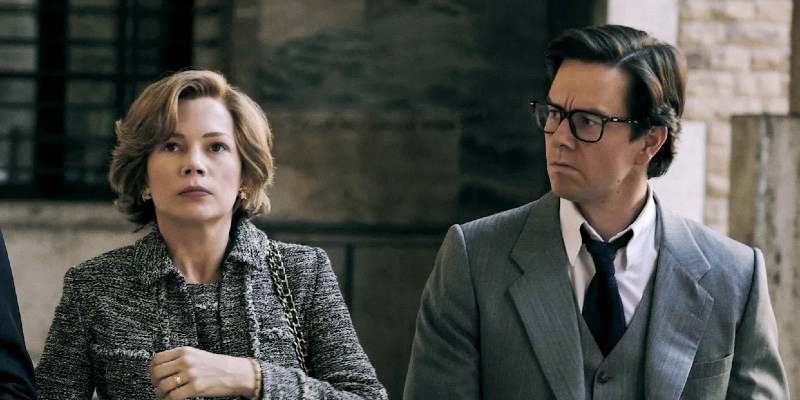
Paul’s (Charlie Plummer) mother (Michelle Williams) begs Getty to reconsider, and the film tells the story of her growing desperation, Paul’s captivity, and Getty’s obsession with money and how he came to have so much of it—including flashbacks to his ventures in Saudi Arabia. Christopher Plummer (the two Plummers aren’t related) delivers a powerful performance as Getty Sr., providing a glimpse into the mind of a man who is more attached to his ticker tape and massive art collection than to his own grandson. Michelle Williams allows you to feel a mother’s anguish as Getty—for whom the ransom amounts to a drop in the bucket—refuses to part with a dollar. And Paul is sympathetic as a frightened young man whose kidnappers become increasingly antsy.
The production was plagued by off-screen drama: Plummer was brought in to play Getty Sr., replacing Kevin Spacey in the role after Spacey was charged with sexual misconduct. Since the filming had already finished, sections of the movie had to be re-shot, leading to another scandal: the salary that Mark Wahlberg (who plays Getty’s security advisor) received for the extra work, versus the salary received by Williams. She thought everyone was working for free so she accepted an $80/per diem. Meanwhile, Wahlberg’s agents were able to negotiate a $1.5 million fee for his participation. The disparity feels like a fitting coda to a film that’s about money and its effects in the the world.
What they said: Screenwriter David Scarpa discussed the difficulties of portraying Getty as more than just a type: “[H]ow do you take that character and make him Shakespearean? It’s this sense that he’s addicted to money. The more that he makes, the poorer he feels, to the point where all of this is happening against the backdrop of the oil crisis of 1973, so he’s getting richer every day… He’s making [money] just sleeping, and yet he feels poorer… The brief high that he gets every time just passes… The question that you ask when you read about all this is, why? Why didn’t the guy just pay the damn ransom… [It’s] the power that money has, I think, as much as anything.”
Written by David Scarpa, directed by Ridley Scott. With Michelle Williams, Mark Wahlberg, Christopher Plummer, and Charlie Plummer. 135 minutes.
Streaming on multiple platforms.

Radha Vatsal
Radha Vatsal is the Film/TV Columnist for CrimeReads. She is the author of No. 10 Doyers Street and the Kitty Weeks mysteries, and her essays have appeared in the The New York Times, The Atlantic, the Los Angeles Review of Books, and elsewhere. She holds a Ph.D. in Film History from Duke University. You can find her on Instagram or email: rvatsal@lithub.com