5 Mysteries Set at Literary Events, Conferences, and Retreats
Carol Goodman recommends Laura Zigman, Anthony Horowitz, and others
It’s unsettling to realize while you’re perusing the newest titles at a book fair or listening to a panel of seemingly civilized authors that at least half of the people in the room are probably thinking of ways to murder you. But let’s face it, that’s what we mystery writers do for a living, so is it any wonder that we gravitate toward the literary conference, retreat, or book fair as perfect setting for a murder mystery?
It has everything a mystery writer could want: a group of strangers (or are they?) thrown together in a closed circle environment (country estate, island, train) who harbor a host of grudges, resentments, and jealousies. Add to that a chance for the author to air their own grievances…er…observations on the trade and indulge in a little meta-commentary and it’s hard to resist.
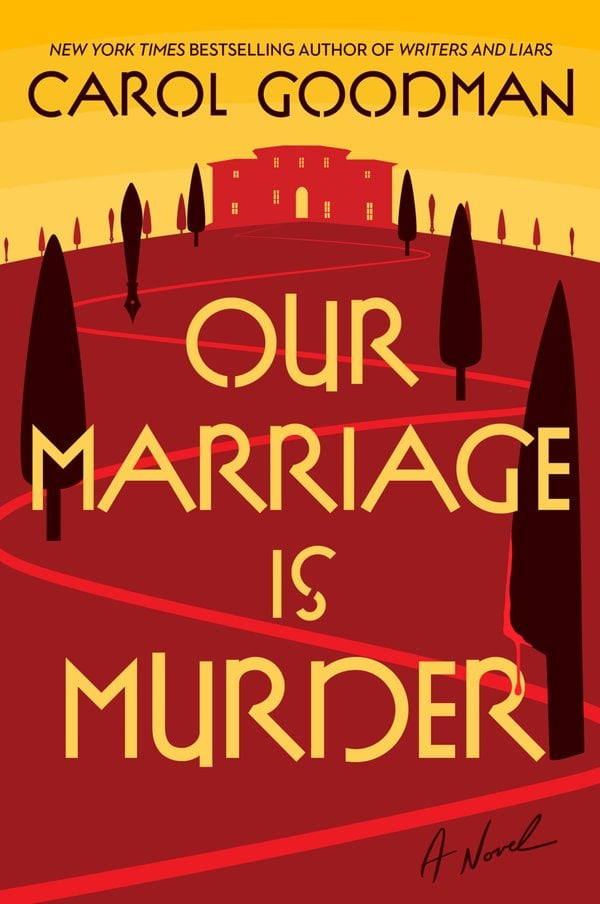
I succumb to the lure in my latest Our Marriage is Murder, in which a married mystery-writing couple attend a MurderCon in a Tuscan hilltop monastery. I had almost as much fun writing it as I had reading these mysteries set in the cut-throat world of literary gatherings.
*
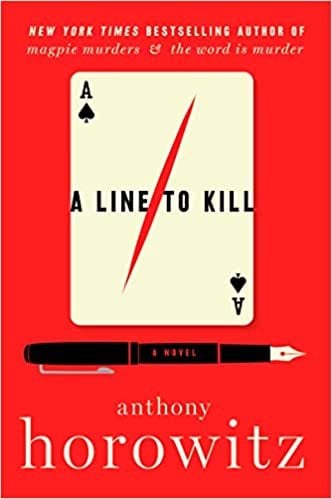
Anthony Horowitz, A Line to Kill
Anthony Horowitz is surely the master of the meta-mystery novel. In A Line to Kill, the third in his Hawthorne and Horowitz series, he places himself (or an autofiction version of himself) front and center as the hapless Watson to the enigmatic ex-Detective Inspector Daniel Hawthorne. Invited to a literary conference on the island of Aldernay, Horowitz (the character) thinks that for once he’ll be in his element with Hawthorne the fish out of water. But Hawthorne, with his superior powers of deduction, susses out the lies and machinations of this eccentric group of writers with the ruthless efficiency of a good copyeditor.
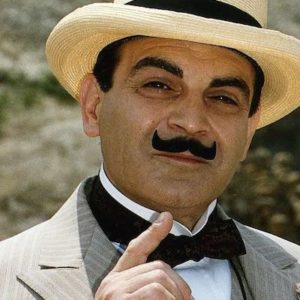
Horowitz (the writer) comically sends up the predicament of the author whose fictional detective is so popular he’s stuck with him, as Agatha Christie was with Hercule Poirot and Arthur Conan Doyle with Sherlock Holmes. Even his publisher seems to prefer Hawthorne to Horowitz!
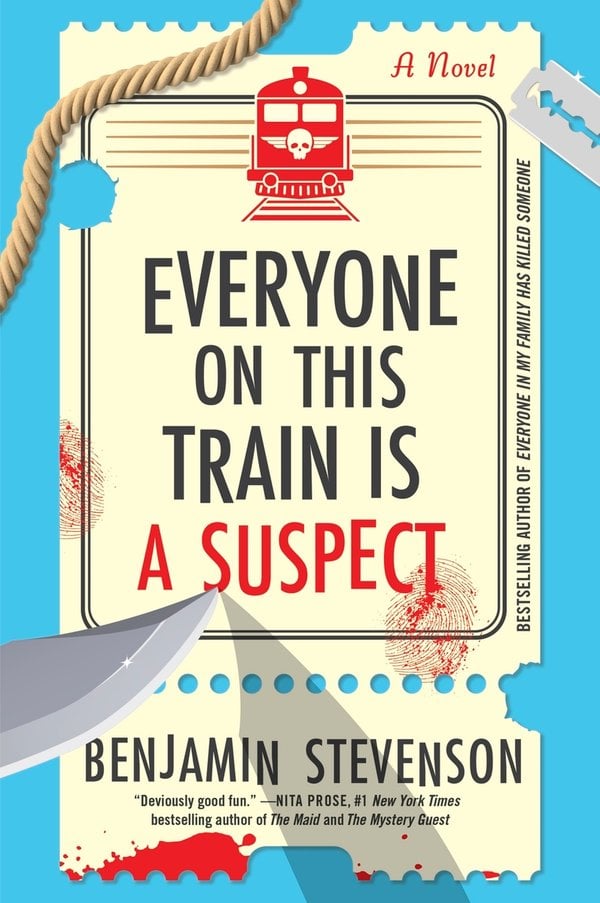
Benjamin Stevenson, Everyone on This Train Is a Suspect
Benjamin Stevenson takes meta to a new level in his Everyone on this Train is a Suspect. Ernest Cunningham, still recovering from the murderous exploits in the series debut Everyone in my Family Has Killed Someone, is seeking inspiration (the meta-joke here is that the books we are reading are Ernest’s true-crime accounts) at a crime-writing conference on board The Ghan, the legendary train that travels between Darwin and Adelaide, when, of course, murder ensues amongst his fellow crime writers. It’s part Orient Express, part Snowpiercer, the train setting creating both a hermetically sealed locked-room mystery and a hair-raising chase scene.
It’s also an extremely useful primer on the art of writing mystery novels. Introducing himself as a former writer on “books on how to write books” Ernest promises to abide by the rules of “Fair Play” as practiced in the Golden Age mysteries while also giving himself a special dispensation: “It’s not up to me what rules I break since I’m simply cataloging what happened.”
He alerts the reader as the word count approaches the point by which all the suspects have been introduced and even includes a helpful word count breakdown of the standard mystery novel which I keep tacked over my desk now and regularly share with my students
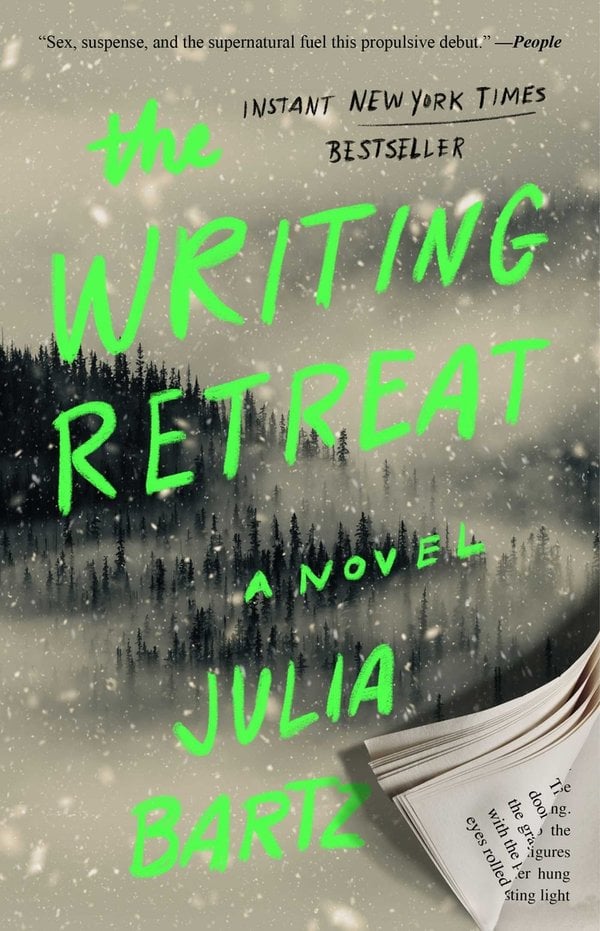
Julia Bartz, The Writing Retreat
For a more intimate setting, The Writing Retreat by Julia Bartz offers up every writer’s dream of getting to go away to a secluded estate to focus on the work, all while being fed, cosseted, and mentored by a famous writer. That’s what blocked writer Alex hopes for when she gets an invitation from her favorite writer Roza Vallo to her upstate (did I mention secluded?), possibly haunted mansion.
The only hitch is that her frenemy, Wren, is also invited. Oh, and instead of getting time to bond with the other writers and work on their craft, the writers are pitted against one another when Roza announces a competition to complete an entire manuscript that will be instantly published with support from the superstar author. Things go spectacularly and gothically wrong, but at least it’s all grist for the mill—as long as you don’t end up ground in it.
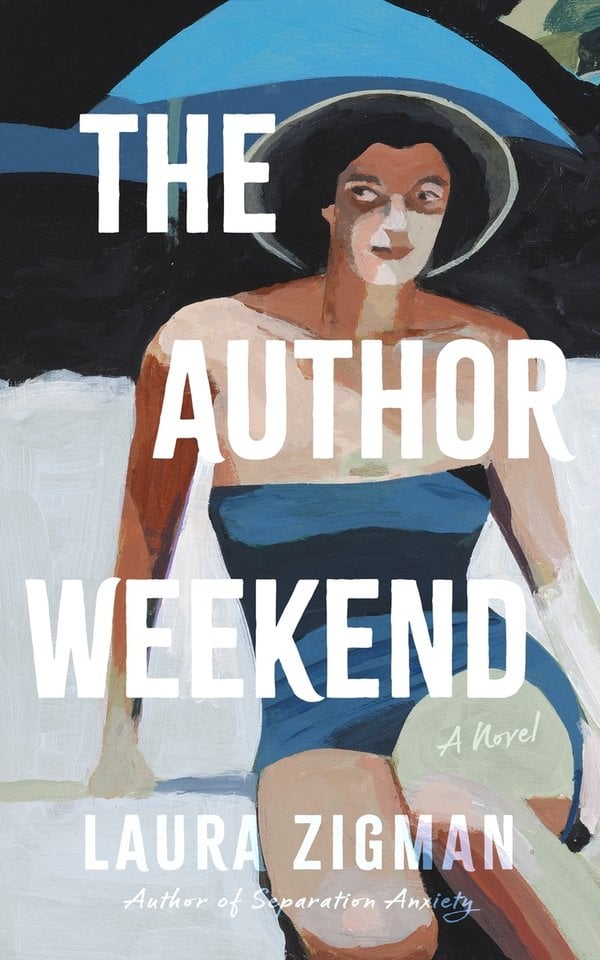
Laura Zigman, The Author Weekend
Frenemies play a prominent role in Laura Zigman’s The Author Weekend, envy apparently being the besetting sin of writers in many of these books. Bestselling mystery writer Faye Wader is inspired to throw her own Author Weekend to compete with her nemesis Abby Schuss. Zigman captures that special rivalry that exists when two writers debut together and continue to chart their successes against each another.
Faye’s assistant Jade, an aspiring writer herself, stirs the pot (and the plot) by suggesting they also invite Abby to the weekend. Complications ensue when Faye’s Number One Fan discovers a discrepancy in Faye’s origin backstory and things go precipitously downhill from there. The meta-commentary on the publishing world is at times brutal. “Nobody loves anyone in this business!” Faye’s agent exclaims. “This is publishing!”
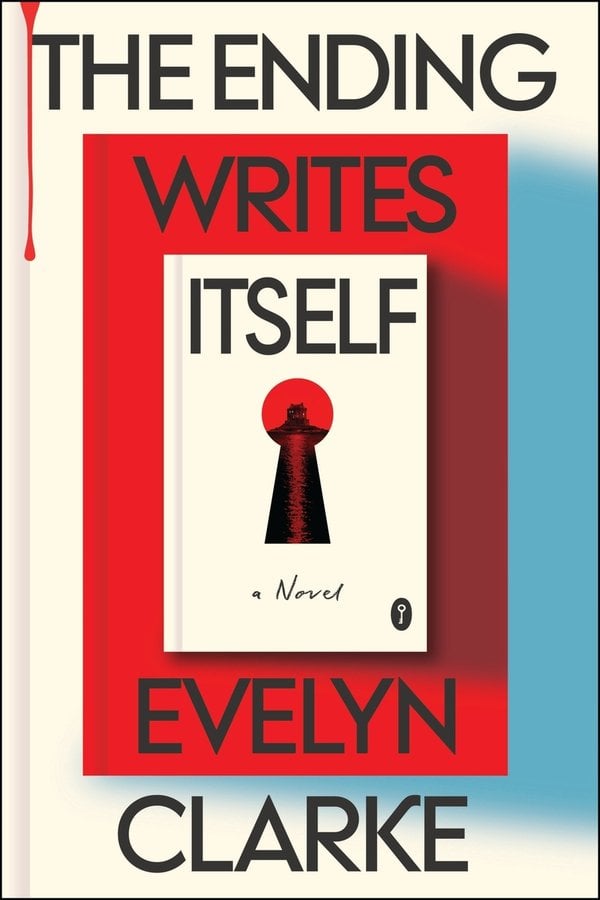
Evelyn Clarke, The Ending Writes Itself
An agent and editor incite the plot in The Ending Writes Itself by Evelyn Clarke (a pseudonym for V.E. Schwab and Cat Clarke) when they invite seven struggling writers to the island home of a bestselling reclusive author to vie against each other to complete his unfinished manuscript. A variety of authors are represented—debut, thriller, romance, young adult, sci-fi, and horror—giving us the full panoply of ways the business can be challenging.
This industry doesn’t care how hard you work, one of the writers reflects. It will break you, or you will break yourself. But then the same writer also marvels at the power of storytelling….Seeing the threads you’ve woven connecting you in real time to your readers. It’s the only time in his life that he believes in magic.
Perhaps that’s the secret allure of these books. They offer not just a salacious peak behind the scenes of the writing/publishing world but provide blueprints for the process of writing itself. And in the end, no matter how maddening, challenging, and sometimes just plain deadly the business of writing can be, there will always be people dying to do it.
***

Carol Goodman
Carol Goodman is the critically acclaimed author of fourteen novels, including The Lake of Dead Languages and