
Beyond Lupin: The Brazen Gentlemen Thieves of Fiction
They’re good guys who do bad things – classy crooks who use charm and chutzpah to relieve the rich of their jewels and treasures. As the hit Netflix series Lupin returns for a new season of outrageous heists, meet the most daring gentlemen thieves of fiction.
tk
Assane Diop has no use for weapons or threats as he plunders Parisian homes and museums. His meticulously planned heists are executed with a showman’s flair. The anti-hero of the hit Netflix series Lupin, portrayed to perfection by actor Omar Sy, Diop dons elaborate disguises, slips into fake identities, and turns on the charm as he swipes priceless gems and outwits the police.
He models his stylish crimes on the escapades of Arsène Lupin, the top-hatted, monocle-wearing creation of French novelist Maurice Leblanc. Lupin made his debut in 1905, at the height of the glamorous Belle Époque, and was featured in two dozen novels and short story collections. A skilled burglar and a master of disguise, this impish shapeshifter relishes the challenge of stealing the un-stealable and often returns the treasures he pilfers. He’s more interested in righting wrongs than living off ill-gotten gains. So is Diop – he’s determined to exonerate his father, who was wrongly accused of stealing a priceless necklace from the powerful and corrupt businessman Hubert Pellegrini.
Diop’s caper-filled quest for justice made the show one of Netflix’s most successful foreign-made franchises by the time it went on hiatus in the fall of 2023. As Lupin returns for a long-anticipated fourth season, here’s a lineup of five of the slickest gentlemen thieves of fiction:
A.J. Raffles: Lupin was France’s answer to a wildly popular English thief of fiction. In 1898, E. W. Hornung (the brother-in-law of Arthur Conan Doyle) published the first of twenty-six stories on the adventures of Arthur Raffles, a London man-about-town and star cricket player who steals to support his expensive lifestyle and keep up appearances. His speciality is cracking safes and he enlists a sidekick from his school days, Bunny Manders, as a partner-in-crime.
Despite his crooked side-gig, Raffles adheres to a gentlemanly moral code. He shudders at the thought of preying on a host or a friend, and rarely packs a gun when he sets out to steal. “It would be very awkward if anything went wrong,” he tells Manders. “One might use it, and that’s not the game at all.” He stalks the corrupt and the obscenely wealthy, reasoning that “the immorally rich” are the logical targets for a “richly immoral” thief like himself.
Hercule Flambeau: His name may sound like that of a certain Belgian detective, but Flambeau’s obsession is stealing jewels, not solving crimes. That changes after a run-in with a priest and part-time detective dreamed up by writer G.K. Chesterton. In the first Father Brown short story, “The Blue Cross,” published in 1910, the clergyman with a kindly demeanor and a keen sense of human nature foils Flambeau’s attempt to steal a religious relic.
Like Lupin, Flambeau is one of France’s most-wanted criminals – Chesterton described him as a “colossus of crime” with a long record of “ingenious and wholesale robbery.” And like Lupin, he can disguise himself and hide in plain sight, despite being over six feet tall. He is also “a startling acrobat,” wrote his creator, who “could leap like a grasshopper and melt into the tree-tops like a monkey.” Flambeau became a recurring character, appearing in more than a dozen of the fifty-three Father Brown stories, and not only reforms but eventually helps the clergyman to crack cases.
John Robie: It’s the early 1950s on the French Riviera and Robie, a wily burglar whose agility earned him the nickname “Le Chat” before he was caught and imprisoned, is forced out of retirement when a copycat makes him a suspect in new crimes. The protagonist in American travel writer David Dodge’s 1952 novel To Catch a Thief sets out to trap his doppelgänger.
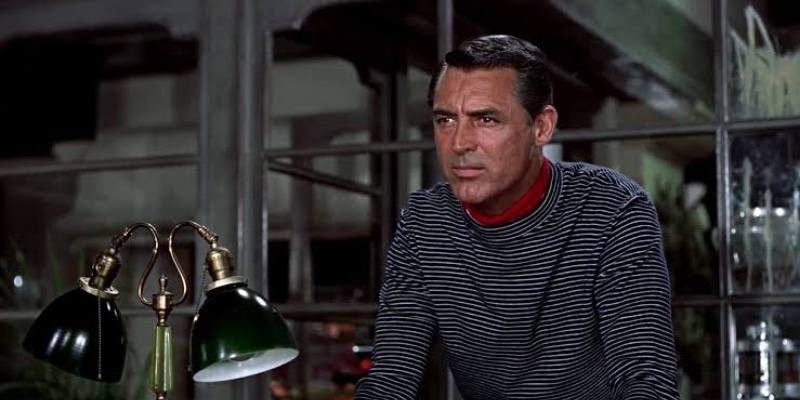
Robie is the consummate gentleman thief – dashing, clever, a master of his calling. Who better to portray him when Alfred Hitchcock brought the story to the big screen in 1955 than the king of suave, Cary Grant. “For what it’s worth,” Grant-as-Robie points out in a line added for the movie, “I never stole from anybody who would go hungry.”
Sir Charles Lytton: Peter Sellers’s hilariously inept Inspector Jacques Clouseau debuted in the 1963 movie The Pink Panther, but the real star of the blockbuster franchise’s first instalment was David Niven. He was cast as the debonaire playboy Sir Charles Lytton, who leads a double life as an elusive jewel thief known as “The Phantom.” Niven was an inspired choice – he played Raffles on screen in 1939, in one of many films to feature Hornung’s character.
The Pink Panther is reputed to be the world’s largest diamond and Lytton has come to a ski resort in the Italian Alps to steal it. The bumbling Clouseau is there to try to stop him. Niven may have enjoyed top billing as a classy crook but Sellers’s over-the-top performance stole the show and hijacked the franchise.
Danny Ocean: Frank Sinatra was the first to tackle the role of the ringleader of a gang of thieves who rob five Las Vegas casinos on New Year’s Eve in the 1960 movie Ocean’s 11. George Clooney revived the character four decades later in 2001’s Ocean’s Eleven, with Danny assembling a team of skilled crooks (an all-star cast that includes Brad Pitt and Matt Damon) to loot a supposedly impregnable Vegas vault.
The movie inspired two sequels, with the gang reuniting to steal a Fabergé egg in Ocean’s Twelve and a casino’s cash and a trove of diamonds in Ocean’s Thirteen. In each movie the targets are fellow thieves or ruthless, unscrupulous moguls. The heists are filled with Lupin-worthy disguises and deceptions and Clooney is a natural for the modern iteration of the cool, classy crook.
It’s little wonder the gentleman thief is a staple of fiction. His victims are fellow travellers who deserve to be cut down to size, or have insurance policies or pockets deep enough to absorb their losses. Admiring their audacity and cheering them on is a guilty pleasure we can all enjoy.

Dean Jobb
Dean Jobb’s latest true crime book, A Gentleman and a Thief: The Daring Jewel Heists of a Jazz Age Rogue (Algonquin Books and HarperCollins Canada), is a New York Times Editors’ Choice and a national bestseller in Canada. It’s the story of Arthur Barry, who charmed the elite of 1920s New York City while planning and executing some of the most brazen jewel thefts in history. Find him at deanjobb.com.