
5 Novels That Explore and Expand the Possibilities of Women’s Crime Fiction
Libby Klein recommends books (including one wild card) at the intersection of gender and genre
The day my editor asked me to write a Women’s Fiction series I immediately said, Yes! Followed by, what’s Women’s Fiction? Isn’t all fiction Women’s Fiction? I mean, I read everything. And it’s not like there’s a genre called Men’s Fiction. So…what are you talking about?
This begs the question, why does genre matter?
The classification of genre determines which section a book belongs in a bookstore or library. Genre also creates certain reader expectations. If you want an epic tale of love and loss during the Revolutionary War you’re probably not going to the Sci-Fi shelf. But what if it’s a Revolutionary War on Mars? Where do we put that? It depends on the primary focus.
Blending different genres adds a level of complication to the process. Is this a Romance with a murder plot or a Mystery with a love interest? The primary focus determines how we categorize the work, and sometimes it’s a fine line. That’s also the reason why it’s so hard to sell a zombie western romance in space. That bookstore section just does not exist. Also, I just realized that’s what the TV show Firefly is—and that got canceled after one season because people didn’t know what the heck it was about. So…just sayin’. It’s complicated.
So, what is Women’s Fiction and how is it different from other genres? First of all, I want to acknowledge that there are people who hate that term, and there is a push—I don’t know how strong of a push but it’s there—to rename the genre Issue Fiction, Book Club Fiction, Upmarket Fiction, Contemporary Fiction, or Character-Driven Fiction. Whatever you want to call it, those are all great descriptions of Women’s Fiction. Note that nowhere in there are the terms written by women, read by women, or only about women.
Women’s Fiction is about the protagonist (and to be fair, it’s almost always a woman) on an emotional journey, and how that journey will change her—for better or worse—by the end of the story. Everything else, be it romance, murder, suspense, or dragons comes secondary—if they’re included at all.
And they don’t have to be. At their heart, these are emotionally charged, character driven stories about personal struggle, growth, and change. When Women’s Fiction is blended with another genre, the protagonist struggles, grows, and changes while kissing a hot barista, catching the wicked cheerleader’s murderer, evading the creepy neighbor, or casting spells and riding a dragon. Kind of like a day job.
For illustration, if I were constructing a tent for a Cozy like my Poppy McAllister Mysteries, the center pole that holds up the tent would be an amateur sleuth solving a murder. That’s going to be the primary focus of the novel and where we spend the most time. Poppy’s romantic issues, her self-acceptance, personal growth, body image struggles, and reconciling with her past traumas are all side poles and come secondary to the story. B-plots if you will. They don’t have to be there at all and it would still be a Cozy Mystery.
If I wanted to reconstruct my humorous cozies and turn them into Women’s Fiction, I’d flip it. They’d still be funny. They’d have the same characters, the same setting, the same murder, but the center pole would be those emotional issues. More time would be spent on Poppy’s struggles and her personal growth and change and the murder mystery would become a side plot with a little less page time.
In my Layla Virtue Mysteries, Layla is broken. She’s a disgraced former police officer with PTSD and gaps in her memory from her last day on the force. She’s trying to reinvent herself by launching her backup career as a rock star about twenty years too late. She has issues with cops, issues with kids, issues with alcohol, and issues with women. Three annoying women from her AA group are determined to make her their best friend and she is doing everything she can to shake them. Then they get involved in the murder of the clown at a rich kid’s birthday bash.
Even though a murder happens during the day job and Layla gets involved, albeit against her will, Vice and Virtue isn’t primarily about the murder. It’s about Layla’s past trauma and why she doesn’t like or trust women. Why she’d rather be alone for the rest of her life than make friends. And how four women from different cultures, backgrounds, and generations bond over their shared struggle with addiction to form an unbreakable friendship.
Layla’s emotional journey is one of accepting that she can’t make it in this life alone, and she needs to take a leap of faith to trust again. It just so happens that along the way the women solve a murder and it’s all pretty hilarious.
Likewise, in Gimme Shelter, Layla’s world is pulled out from under her as she gets some shocking news about someone she trusted implicitly. She’s been blaming herself for a deadly ambush that destroyed her career, annihilated her reputation, and sent her to court-ordered therapy. But as her new friends from AA help Layla regain her memories, a different picture emerges, and it’s one that forces her to question everything and everyone that she thought was true.
Meanwhile, she’s struggling to navigate her father’s recent medical diagnosis and dealing with holiday pressures and expectations. The central themes in Gimme Shelter are addiction, depression, suicide, and betrayal. Somehow, it still manages to be very funny and blends dark comedy with female friendships and a very strong murder mystery of an elementary school teacher who was—according to everyone—the nicest man alive.
In a blended genre, the murder mystery/romance/suspense/fantasy plot is strong. Remove the emotional journey and self-discovery and you’ll have one fantastic and satisfying story. It just won’t be classified as Women’s Fiction. In fact, Psychological Thrillers blend perfectly with Women’s Fiction because both genres deal with the inner turmoil and trauma of relationships.
Psychological thrillers focus on the deep exploration of a character’s thoughts, fears, and perceptions while Women’s Fiction deals with the journey of change and growth through those thoughts, fears, and perceptions. Likewise, both genres frequently revolve around marriage, motherhood, and relationships. While women’s fiction explores the emotional growth within these issues, psychological thrillers highlight the hidden threats and betrayals that can occur.
So why should you care if a novel is Women’s Fiction or not? You probably don’t. Most of us just want a really good story. But I mentioned those expectations that come with different genres, and you might not even realize you have them. A romance novel comes with the expectation that the story will end with a happily ever after (or at least happy for now). You’d be pretty peeved to pick up a book in the romance section where the love interests look at each other in the last chapter and say, you know what? Never mind.
In a cozy mystery, the reader expects no violence, language or sex on the page. And you expect the amateur detective to face off against the killer at the climax before the cops arrive. If the amateur detective solves the case, tells no one, and the cops show up on their doorstep and drop an F bomb saying it’s all over, we got him! You’d feel both offended and cheated. Why did I just waste six hours reading that?! Yet no one told you the protagonist would be the one to personally take down the killer. You just expect it because that’s how it’s done in a cozy mystery. So, what are the genre expectations for Women’s Fiction?
For one thing, expect to go deeper. Expect character growth. These stories are all about self-awareness and change. No one stays the same throughout a single book or an entire series. These aren’t episodic cookie cutter novels. Expect a more intimate connection with the characters.
They’re not just going to tell you everything they struggle with—their desires, their failures, their heartbreaks, and their victories. You’re going on the journey with them. Expect to care. A well-crafted Women’s Fiction novel will wrench your heart out one minute and have you cheering for joy the next. Expect something different from what you’re used to.
In a blended-genre Women’s Fiction/Romance, the lovers might not end up together if it’s not the right decision for the protagonist. In a Women’s Fiction/Mystery, the protagonist won’t spend all their time working the crime like it’s an episode of Murder She Wrote. Time is going to be devoted to personal growth. Expect to fall in love with the genre. Whether you like your stories funny or sappy, best friends or broken relationships, fast reads with lots of action or slow burns with loads of drama there are shades of all the above in Women’s Fiction.
Here are four Women’s Fiction blends to fall in love with the genre, and one wild card that breaks the rules and follows them at the same time.
*
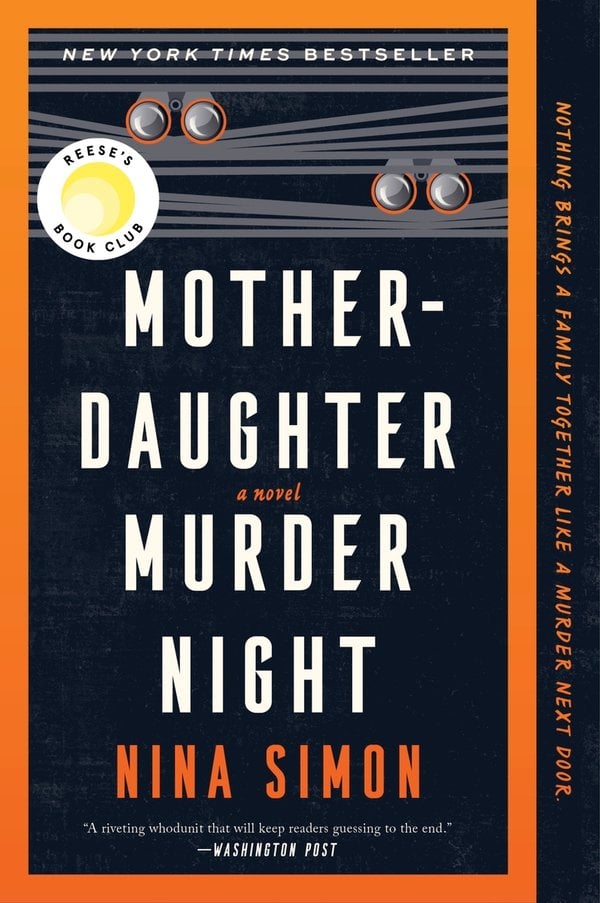
Nina Simon, Mother Daughter Murder Night
A blend of Women’s Fiction and Cozy Mystery about a grandmother-mother-daughter trio who come together as amateur sleuths to solve a murder in their coastal California town. This is a murder mystery, but the center focus is on the three generations of women and their emotional connections.
Nothing brings family together like a murder next door.
High-powered businesswoman Lana Rubicon has a lot to be proud of: her keen intelligence, impeccable taste, and the L.A. real estate empire she’s built. But when she finds herself trapped three hundred miles north of the city, convalescing in a sleepy coastal town with her adult daughter Beth and teenage granddaughter Jack, Lana is stuck counting otters instead of square footage—and hoping that boredom won’t kill her before the cancer does.
Then Jack—tiny in stature but fiercely independent—happens upon a dead body while kayaking near their bungalow. Jack quickly becomes a suspect in the homicide investigation, and the Rubicon women are thrown into chaos. Beth thinks Lana should focus on recovery, but Lana has a better idea. She’ll pull on her wig, find the true murderer, protect her family, and prove she still has power.
With Jack and Beth’s help, Lana uncovers a web of lies, family vendettas, and land disputes lurking beneath the surface of a community populated by folksy conservationists and wealthy ranchers. But as their amateur snooping advances into ever-more dangerous territory, the headstrong Rubicon women must learn to do the one thing they’ve always resisted: depend on each other.
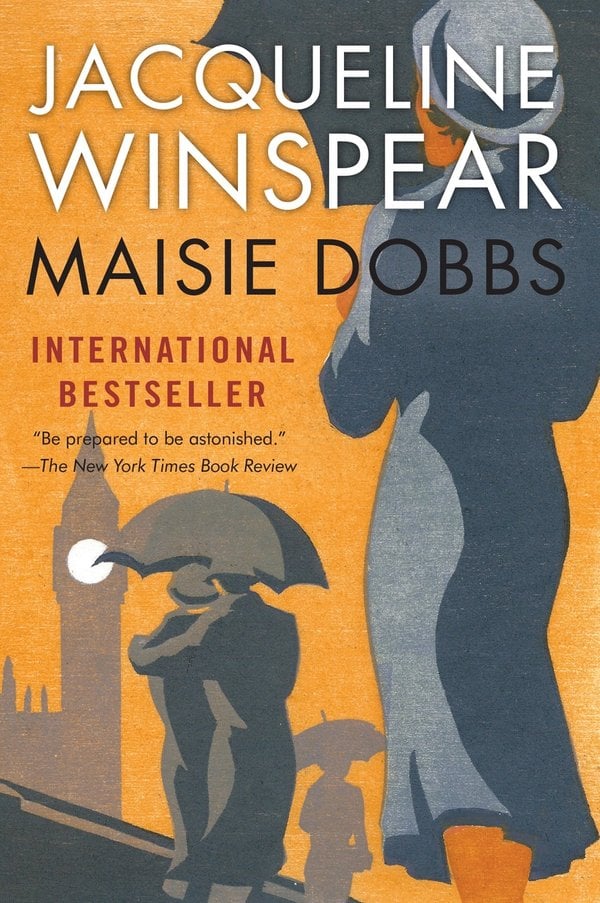
Jacqueline Winspear, The Maisie Dobbs Series
A blend of Women’s Fiction, Historical Fiction, and Mystery about a female investigator in post WWI London. The eighteen-book series focuses heavily on Maisie’s emotional growth, the role of women in society in the early nineteenth century, and the psychological effects of war.
Maisie Dobbs got her start as a maid in an aristocratic London household when she was thirteen. Her employer, suffragette Lady Rowan Compton, soon became her patron, taking the remarkably bright youngster under her wing. Lady Rowan’s friend, Maurice Blanche, often retained as an investigator by the European elite, recognized Maisie’s intuitive gifts and helped her earn admission to the prestigious Girton College in Cambridge, where Maisie planned to complete her education.
The outbreak of war changed everything. Maisie trained as a nurse, then left for France to serve at the Front, where she found—and lost—an important part of herself. Ten years after the Armistice, in the spring of 1929, Maisie sets out on her own as a private investigator, one who has learned that coincidences are meaningful, and truth elusive. Her very first case involves suspected infidelity but reveals something different.
In the aftermath of the Great War, a former officer has founded a working farm known as The Retreat that acts as a convalescent refuge for ex-soldiers too shattered to resume normal life. When Fate brings Maisie a second case involving The Retreat, she must finally confront the ghost that has haunted her for over a decade.
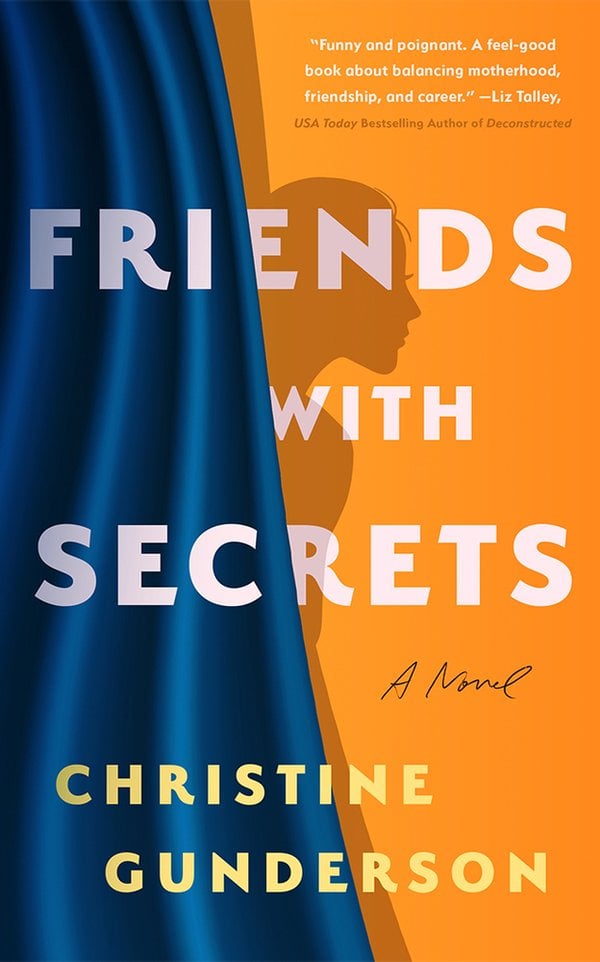
Christine Gunderson, Friends with Secrets
A blend of Women’s Fiction, Humor, and Suspense exploring themes sexual abuse, socioeconomic differences, and the complexities of modern motherhood and friendship.
What you see isn’t always what you get.
Take Ainsley. The gorgeous mother of two lives a picture-perfect life with her husband, Ben—aspiring politician and heir to a candy fortune—in suburban Washington, DC. But in reality, Ainsley has no idea what she’s doing and is terrified someone will figure out who she really is and where she came from.
Nikki’s fighting to keep afloat as a stay-at-home mother of four, subsisting on chicken nuggets and very little sleep. She’s a mess on the outside, and inside yearns for the validation—and the paycheck—of the television news career she left behind.
When a dangerous figure from Ainsley’s past becomes a coach at her kids’ school, she fears the worst and confides in Nikki, spilling every detail of her former life.
Together, they devise a plan to expose the coach and safeguard their kids. But can they protect their own lives—and their new friendship—in the process?
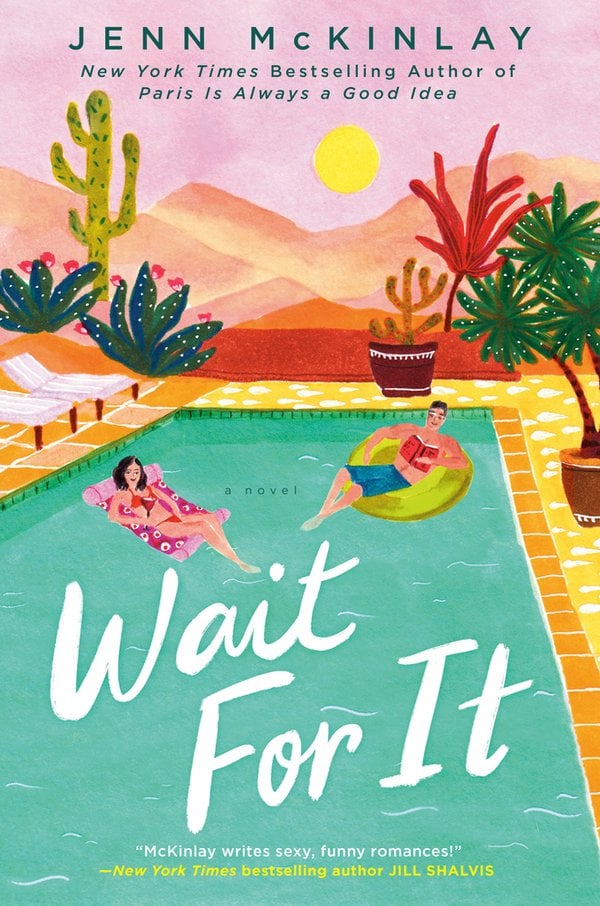
Jenn McKinlay, Wait For It
A blend of Women’s Fiction and Romance about a woman starting life over in Arizona after two divorces. Exploring themes of personal growth, resilience, mental health, stroke recovery, and overcoming trauma.
A woman looking for a new lease on life moves to Arizona where she rents a guest house on a gorgeous property with a mysterious owner—a man who teaches her about resilience, courage, and ultimately true love, in this funny, bighearted novel about hope and healing from New York Times bestselling author Jenn McKinlay.
Stuck in a dreary Boston winter, Annabelle Martin would like nothing more than to run away from her current life. She’s not even thirty years old, twice-divorced, and has just dodged a marriage proposal… from her ex-husband. When she’s offered her dream job as creative director at a cutting-edge graphic design studio in Phoenix, she jumps at the opportunity to start over.
When she arrives in the Valley of the Sun, Annabelle is instantly intrigued by her anonymous landlord. Based on the cranky, handwritten notes Nick Daire leaves her, she assumes he is an old, rich curmudgeon. Annabelle is shocked when she finally meets Nick and discovers that he’s her age and uses a wheelchair. Nick suffered from a stroke a year ago, and while there’s no physical reason for him not to recover, he is struggling to overcome the paralyzing fear that has kept him a prisoner in his own home.
Despite her promise to herself not to get involved, Annabelle finds herself irresistibly drawn to Nick. And soon she wonders if she and Nick might help each other find the courage to embrace life, happiness, and true love.

Frank Scalise, A Baker’s Divorce
Wild Card Pick—not classified as Women’s Fiction at all. You’ll find this one categorized under Humorous Fiction, but the entire story is about the protagonist’s emotional journey of self-enlightenment so I believe it fits.
A ridiculously funny tale about an aging rock star who is about to be divorced from wife number thirteen, so he embarks on a mission of self-discovery to find out just what’s wrong with him.
Why do I include in on the list? For one thing, to prove that “Women’s Fiction” can be about an emotional journey of a male Protagonist. It’s also written by a man proving that men can write “Women’s Fiction.” If you’re not familiar with Frank, he writes very gritty crime books under the name of Frank Zafiro. A Baker’s Divorce also proves that an emotional journey doesn’t have to be sappy or sobby so get that misconception out of your head right now. I laughed out loud more while reading this than I have any book in a long time.
Cal Baker is a lifelong rocker who had a number one hit in 1979. Since then, he’s managed to barely cling to a career by chasing every musical trend that looked promising. Along the way, he was married and divorced a dozen times. Now, he’s sixty-two and his thirteenth wife informs him that she wants a divorce, threatening to make it a baker’s dozen of divorces. On top of that, the timing couldn’t be worse, as he has a new record coming out soon.
This news sends Cal on a quest to discover why this keeps happening to him. He reaches out to all of his ex-wives, searching for the answer that will help him save his marriage, so he won’t have to get…A Baker’s Divorce.
***


Libby Klein
Libby Klein is author of the Vice and Virtue series and the Poppy McAllister mysteries. A member of Sisters in Crime, Mystery Writers of America, and the Women’s Fiction Writers Association, she writes out of her Northern Virginia home with her sweet black Lab named Vader, and a very naughty Persian named Miss Eliza Doolittle. Visit her online at LibbyKleinBooks.com.