

7 mysteries that focus on the motive behind crimes
Alice Openshaw recommends Louise Penny, Anthony Horowitz, Heather Young, and more
Means, motive, opportunity: they comprise the classic triad of mystery fiction. Of the three features, I appreciate motive as the real heart of a mystery story.
For two decades before I wrote my debut novel, On the Killer’s Trail, I worked in education and libraries. Prior to that, I was a psychology major and a social worker. I have always been fascinated by what makes people tick. While the success of a work of fiction in any genre may depend on the specifics, for me, its true value lies in the universal truths about human experience that it portrays and reveals. In Louise Penny’s words, “crime was deeply human.”
Here are seven novels that focus on motive in a variety of ways.
*

Agatha Christie, Five Little Pigs
No one weaves a mystery from its three strands better than the grande dame of crime fiction, Agatha Christie. In Five Little Pigs, a young woman asks Hercule Poirot to investigate the death of her father for which her mother was convicted sixteen years earlier. The evidence at trial was overwhelming and the accused woman’s defense weak.
Shortly before her own death, the mother professed her innocence to her child in a letter. Due to the passage of time, Poirot must depend on character, rather than evidence, to solve the case. He says, “[Character] is the principal interest of all my cases.” The “five little pigs” are the five people, other than the wife, who had the opportunity to kill Amyas Crane, a talented but eminently unlikeable painter.
Initially, none of the five appears to have a motive to murder him. Poirot tells one of the suspects, “the reason for murder is nearly always to be found by a study of the person murdered.” As Poirot delves into the past, he uncovers the truth about Crane’s life and learns that each of the five did, indeed, have a motive. His analysis of the behavior and motivations of several of the suspects ultimately leads him to the solution.

Louise Penny, Still Life
More than sixty years after Christie’s novel was published, Louise Penny introduces another wise Francophone inspector, Armande Gamache. He, too, investigates the murder of an artist.
The puzzle in Still Life is that, unlike Christie’s victim, Jane Neal of the idyllic Quebecois village of Three Pines was beloved by all. When Neal’s body is found in the woods, felled by an arrow, on Thanksgiving morning, Gamage asks, “who would want to kill kindness?” He later explains “most premeditated murders were about rancid emotions, greed, jealousy, fear, all repressed.”
Penny introduces us to a host of Three Pines villagers, among whom are both suspects and others who will become fond recurring characters in future books, the twenty-first of which was just published this fall.

Heather Young, The Distant Dead
Sal, a lonely sixth-grade boy, discovers the burned body of middle-school teacher Adam Merkel in the Nevada desert. Merkel had befriended the traumatized boy who came to live on a nearby ranch with his reclusive uncles after the death of his mother.
When one of Adam’s colleagues, who is dealing with her own personal issues, takes it upon herself to investigate, she uncovers secrets in Adam’s past as she also senses that Sal knows more about Adam’s death than he will admit. Her consideration of possible motives explores how the past and present are immutably intertwined.
Celeste Ng, Everything I Never Told You
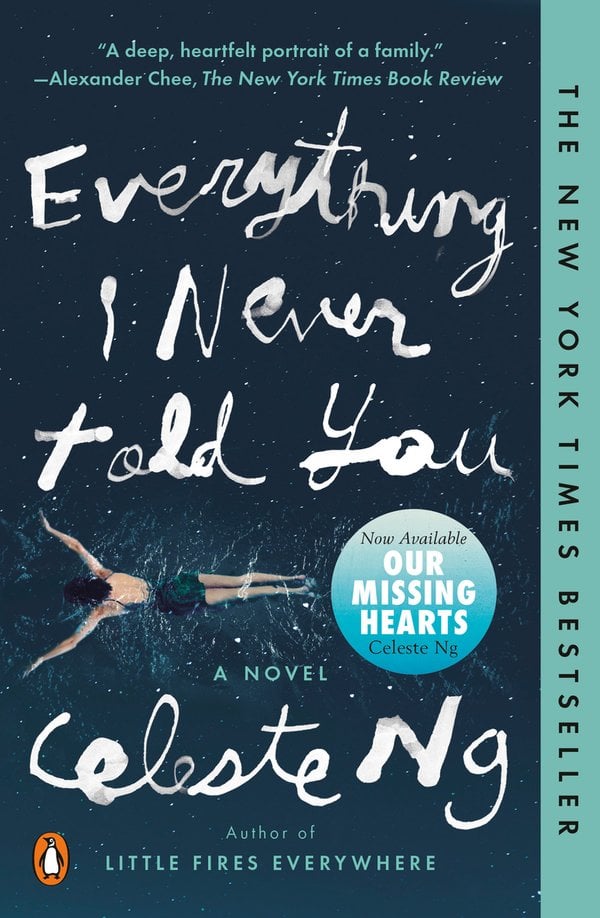
Sixteen-year-old Lydia Lee has gone missing. When her body is found in a local lake, her devastated parents need to know how and why it happened. Was it a drowning accident, suicide, or foul play?
While this moving novel is not a mystery in the traditional sense, it is an exquisite portrayal of how we are shaped by our families and our experiences and how our motives and actions arise from them. As the family’s emotions and secrets long held in silence are slowly and painfully brought to light, we learn the secrets that Lydia, her siblings, her parents, and their parents have harbored, which ultimately reveal Lydia’s fate.

John Grisham, The Reckoning
This historical legal mystery is set in a small town in 1946 Mississippi. Pete Banning is an upright, church-going model citizen and World War II hero. After returning from the Philippines and the horrors of his war experience there, he hopes to resume the life he left behind with his wife Liza and their children on their cotton farm. When he has Liza committed to a psychiatric hospital and, soon after, calmly shoots his pastor and friend, Dexter Belland, Banning refuses to defend himself, stating only, “I have nothing to say.”
Inspired by an actual case from the 1930’s in which the defendant made the same statement until his execution, Grisham keeps the reader guessing until the end why Banning is prepared to die, rather than reveal his motive.

Anthony Horowitz, The Magpie Murders
A murder mystery within a murder mystery. Editor Susan Ryeland receives the manuscript of her client, author Alan Conway’s latest mystery novel featuring detective Atticus Pund, but with the story’s ending missing.
When Conway is found dead, Ryeland concludes that the manuscript involves real-life events and that Conway’s murderer stole the final pages to avoid incrimination. Ryeland sets out to find the motive and perpetrator of Pund’s fictional mystery to find Conway’s real-life killer.
Stuart Turton, The 7 ½ Deaths of Evelyn Hardcastle
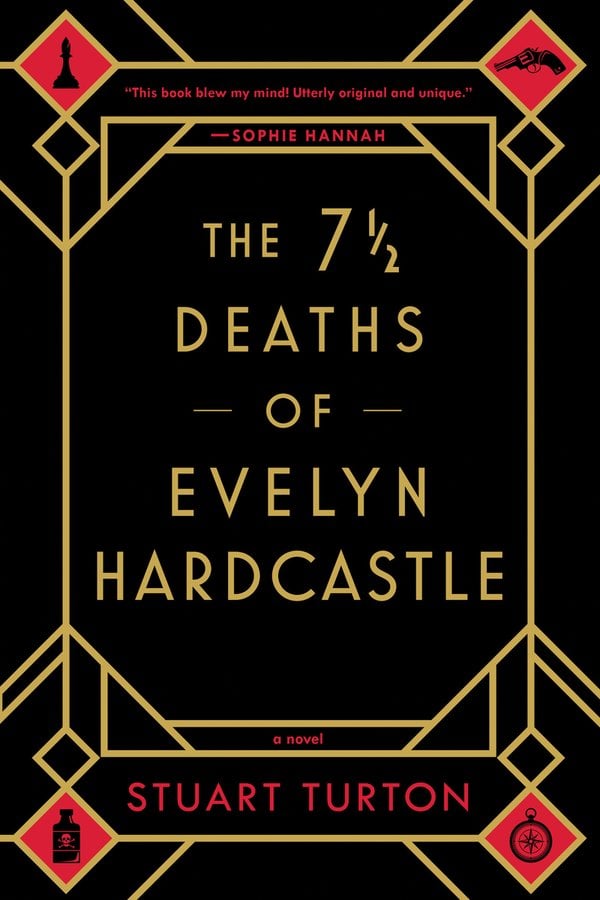
Straddling genres, this mystery borrows from speculative fiction to shift time and perspective as the protagonist investigates a murder from the viewpoints of multiple characters within the setting of a classic English country estate. Aiden Bishop wakes up at Blackheath Manor with amnesia and no knowledge of why he is there.
In each of eight days in a time loop, he finds himself inhabiting a different guest at the manor until he can solve the murder of the young heiress of the estate, Evelyn Hardcastle, who died that evening. If he cannot solve the case by the end of day eight, he is doomed to repeat the cycle with his memory wiped clean.
*
Whatever the setting or sub-genre, the key to a murder mystery is motive. As Inspector Armande Gamage put it, “My job is to find people who take lives. And to do that, I have to find out why.”
***


Alice Openshaw
Alice Openshaw has been a fan of mysteries since the age of ten, when she discovered Perry Mason books at her tiny town’s public library. She holds a BA in psychology from Middlebury College in Vermont and an MLS from Vanderbilt University. She lived in rural Maine for thirty years, where she worked as a librarian and adult literacy teacher and raised three children and an assortment of animals on a small farm. She now lives near Cape Cod, Massachusetts, with her husband and her tuxedo cat, Frankie. On the Killer's Trail is her debut novel.