
Adam Plantinga on writing gritty, tough-guy protagonists in modern crime fiction
The author of Dark Country explores the nuances of a classic character type
I’ve always been fascinated by tough, formidable protagonists, whether they’re cops, private eyes or Harlan Coben’s standalones where, say, a suburban housewife turns into an intrepid investigator. Early Robert B. Parker’s Spenser is my guy. I favor gritty settings that have something to say about the plight of the inner city—George Pelecanos and Dennis Lehane are masters at this.
I’m drawn to hard-bitten types who make questionable or even regrettable choices. I enjoy Barry Eisler, Andrew Klavan, and Richard Price. They write a crackling tale while dropping hard truths about the human condition.
So I figured I’d try my hand at such a character. His name is Kurt Argento, a former Detroit SWAT cop. He’s a throwback to a simpler time, rough around the edges but a student of the policing game who won’t ever walk away from a fight. He’s no detective, but he’s relentless with good instincts.
Most importantly, for the purpose of this piece, in the words of Robert B. Parker, he’s “tough as the rails on a picket fence.” He policed Detroit, a tough city. He says tough things. He goes up against other tough guys. It’s all toughness all the time.
So what does the modern tough guy look like? For one, he knows the neighborhoods he walks through because so does the author. George Pelecanos worked as a dishwasher, a shoe salesman, and a bartender before he wrote convincingly about the blue collar worlds of his characters in Washington D.C. Michael Connelly was a crime beat writer before introducing the world to intense, driven L.A. homicide detective Harry Bosch. I feel comfortable writing Kurt Argento because I’m a twenty-five-year city cop and have seen and heard things on the job that I will sometimes just drop right into a novel.
These worlds the modern tough guy inhabits are often like chaotic obstacle courses. It’s a dirt-under-the-fingernails journey. Think Dan Simmons’ bleak, ice-strewn Buffalo where Joe Kurtz calls home or James Lee Burke’s Dave Robicheaux in a simmering New Orleans underworld. Argento’s debut was in The Ascent, where he finds himself in a maximum security prison when the computer system goes haywire, freeing the most dangerous inmates in the state. Mayhem ensues.
The modern tough guy knows violence. Jack Reacher can head-butt a bad guy into orbit. S.A. Cosby’s Bug Montage from Blacktop Wasteland will show you your own teeth. Barry Eisler’s ultra-lethal assassin John Rain once killed a man with a bench press bar.
But these days, modern crime writers strive to make their protagonists violent but more thoughtfully so. In my novels, Argento goes against some bad actors. Violence is the only language they understand. But although I’m writing fiction, I try to make the violence have weight to it, physically, mentally, and morally.
Every fight extracts a price. Kurt Argento isn’t a Walk-Into-a-Bar-and-Take-Out-Three-Bad-Guys-Without-Getting-a-Scratch-On-Him character. He’s a Walk-Into-a-Bar-and-Take-Out-Two-Bad-Guys-but-Sustain-a-Concussion-and-a-Moderate-Stab-Wound-kind of guy. I’m interested in writing an ultra-competent hero, but not Superman. It can be hard to make Superman interesting. The modern tough guy should have vulnerabilities. Sometimes he’ll fail.
All that being said, you can overdo it with all the toughness. Writer and editor Jim Thomsen says this about a certain such book: “It’s full of look-at-me prose that distracts from the story…interminable page after page showing men brooding and smoking and staring hauntedly into the burning American middle distance. It’s like its own parody of masculine literary tropes.”
I try hard to avoid that. Don’t get me wrong, I deal in tropes. Argento is a rough man alone in the world, an ex-cop with no real home and a dead wife, trying to find his way. That’s been done before. I just try to put my own stamp on it.
The modern tough guy may not emote much but there needs to be something going on below the surface. He tends to muse on things like courage, grief, and issues of crime and punishment.
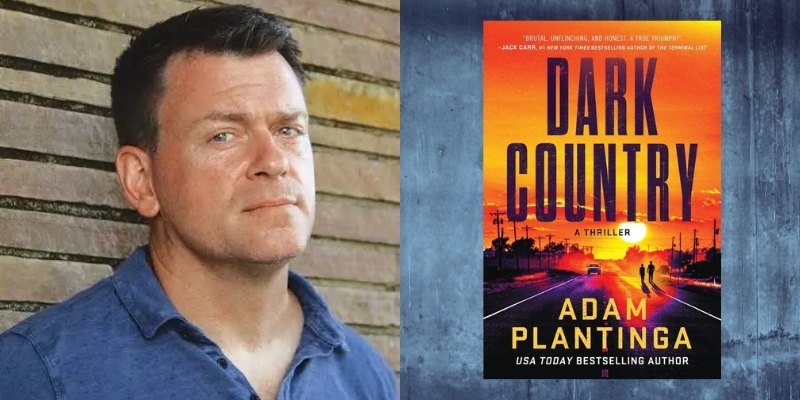
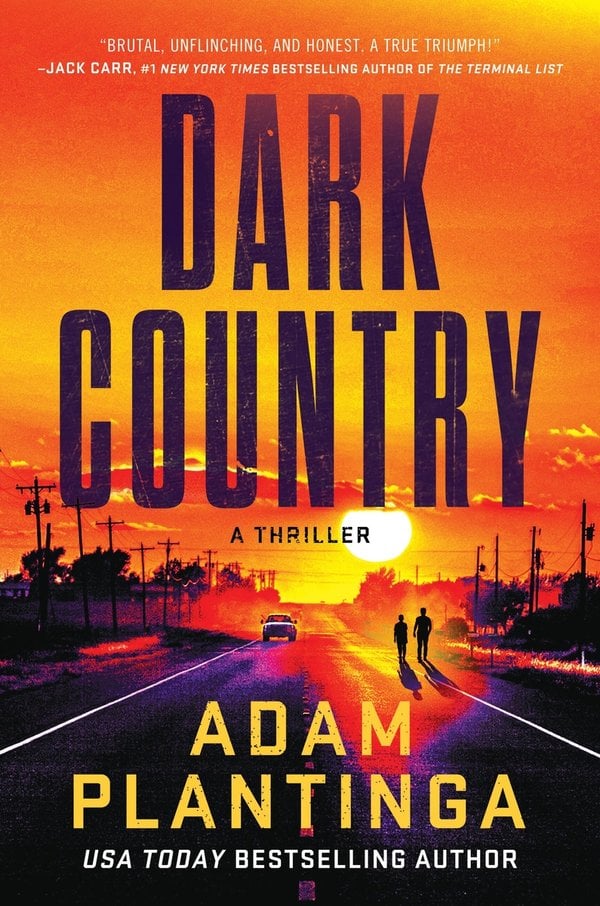
And ideally the tough guy can’t just muscle his way around. He has to adapt to the problem in front of him and puzzle his way through. He may need friends to accomplish this. Walter Mosley’s Easy Rollins has Mouse. Elvis Cole has Joe Pike. But the backup needn’t always be another tough guy. Argento’s allies in my novels have included a criminology graduate student and, in my latest book Dark Country, a seventeen-year old Syrian refugee named Majed.
What else? The modern tough guy knows how to combat-breathe: five seconds in, hold for five, five seconds out. He’s aware a car engine block is appropriate ballistic cover, but a car door is not. He’s probably lousy with computers (a notable exception to this is Gregg Hurwitz’s sublime shadow operative Evan Smoak). He can be coldly practical when he has to; in The Ascent, Argento is saddled with inferior footwear, so he borrows the shoes off a dead prison warden. Better traction for the dangers that lay ahead.
But in the end, we come back to toughness. The modern tough guy goes hard. Even when he’s tired or hurt. Even when the odds are stacked against him. He’s mission-driven and presses forward because it’s always forward. He’s got grit and tenacity in spades. If you like these kinds of stories as I do, at some fundamental level, you’re looking for the same thing I am in the modern tough guy.
Someone who, when shit goes awry, can really bring it.
***

Adam Plantinga
Adam Plantinga’s first book, 400 Things Cops Know, was nominated for an Agatha and a Macavity Award and was hailed as "the new Bible for crime writers" by The Wall Street Journal. The Ascent, a USA Today bestseller, was his fiction debut. The follow-up, Hard Town, was nominated for an Edgar Award for Best Novel. Plantinga is a sergeant with the San Francisco Police Department. He lives in the San Francisco Bay Area with his wife and daughters.