
Catherine Townsend on treating dating like detective work, and vice versa
Excerpted from How to Survive a Murder Investigation
When I was a dating columnist for The Independent in London, I would often point out the similarities between dating and detective work. I’d flag that in both scenarios, you find yourself sitting in front of a stranger—the difference being that in a potential love match, the skeletons in their closet are (hopefully) merely metaphorical, rather than decomposing in a crawl space.
The same logic works in reverse. Conducting investigative interviews is, in crucial ways, very much like being on one long and strange first date. The idea is to ask open-ended questions and to encourage the person you are trying to get information from to keep talking about themselves. If they keep talking, eventually you can find the inconsistencies in their story.
A more cynical take would be that falling in love is like one long con. When we like someone, our brain is wired to look for commonalities. And the more we like someone, the more we mimic their behavior. This works extremely well for getting someone to trust you— and that is why con artists mimic our movements, too, for less pure reasons.
But my job when I’m conducting an interview is to see the worst in people.
*
In 2010, I was living in Los Angeles, had just enrolled in PI school with Dale, and was moonlighting as a PI. State boards give credit to-ward investigative hours for police work, which is why retired police detectives can qualify as licensed private investigators. But, despite the fact that investigative journalism uses a lot of the same skill sets as detective work, journalists are given zero credit for hours worked in newsrooms.
My first encounters with law enforcement had been less than satisfactory, and I was convinced that this was because, for the most part, they didn’t trust the media. So I wanted to get some more specialized training, something that would raise my skill levels and, hopefully, my esteem in the eyes of the police departments that I was trying to sweet-talk.
Living in Los Angeles, the quintessential sunny place for shady people, is like having permanent residence inside a noir mystery painted with the rainbow neon sunsets, and traffic jams, of Grand Theft Auto V.
Dale sent me out on a lot of matrimonial surveillances, and they almost always unfolded in the same way.
Sometimes, the clients would summon me to their homes. But, following the detective manual logic on interrogations, I preferred to coax the clients into nonthreatening, neutral territory—preferably one that invoked feelings of nostalgia. I found that magic location sliding into a red leatherette booth at Bob’s Big Boy diner in Burbank at sunrise, sipping a ten-ounce mug of Big Boy medium roast, and watching the pink clouds float across an impossibly bright, Monet-meets-vaporwave California sky.
After that, things usually get complicated. The client asks me to follow their boyfriend/husband/girlfriend/married boyfriend who also has another girlfriend but has promised that they are his only mistress. (I pretend to ignore the logical fallacies of that argument.) I ask them what they hope to accomplish from a surveillance.
I’m honest: I’ll tell them that it’s expensive, uncertain, and a hell of a lot harder than it looks on TV. (If you don’t believe me, try identifying a subject described as “white man in a suit” outside a downtown office building at night from a fuzzy Facebook photo. Bonus points if it’s a rainy winter night and only a few inches of skin are visible!)
I’ll also ask them why they believe that their loved one has been unfaithful, and often they will tell me something that lets me know that they already know the truth: Maybe they have found a topless selfie of his secretary, or a scrap of lacy women’s underwear in the glove compartment of his Prius.
I try to always have these conversations over something sweet, which is why I prefer to meet at restaurants. I load the table with strawberry waffles or a banana milkshake with extra maraschino cherries, since bad news goes down easier with a heavy dose of sugar lubricant. Even Cinnabon at the mall food court is better than nothing: Studies show that our animal brains associate the smells of cinnamon and vanilla with comfort and security.
“Well, it sounds like you already know the answer,” I inevitably say. Why would you think that this is a good person, despite mounting evidence to the contrary?
Before I dig in and disrupt lives, potentially unearthing a truth that could shake the foundations of a person’s existence, I always ask the same question: Do you really want to know? Little white lies can be the glue that holds relationships together. No, you don’t look fat in those white jeans. Yes, you’re the best sex I’ve ever had.
I make a point of sliding one of my Patrick Bateman-style thick business cards across the table and making a reference to The Matrix: Would they rather take the blue pill and remain blissfully ignorant, or the red pill to see where the rabbit hole, however unpleasant, leads?
Some people have a compulsive need to know the reality, however brutal and disruptive it will be to their existence, and they will continue to pick it apart like an overeager esthetician digging out blackheads on YouTube. And then there are those who decide that for whatever reason—long marriage, double mortgage, social hierarchy, or something else—they want to stay inside the much happier bubble they have created.
Before you ask a question that could shatter your reality forever, it’s important to know which camp you fall into. Because once the bubble is pierced, it’s almost impossible to get back in—and if a person chooses to overlook a betrayal, an infidelity, or something worse, lying to themselves afterward can become a full-time job.
***


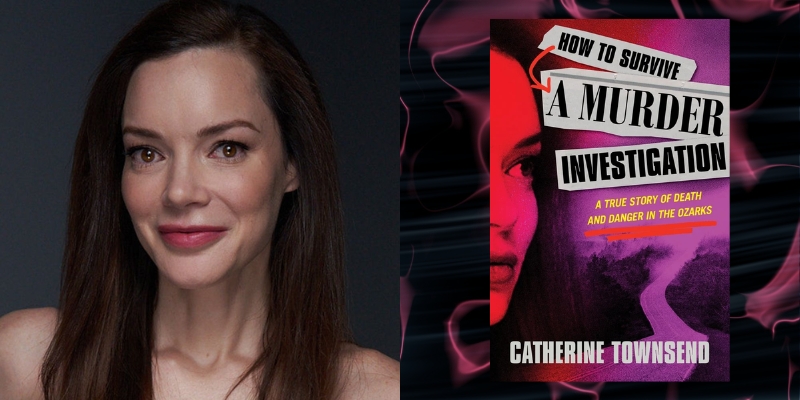
Catherine Townsend
Catherine Townsend is a journalist, private investigator, and podcaster. She is the host of the iHeartMedia podcast Hell and Gone and Red Collar. After beginning her career as a staff writer for New York Magazine, Catherine moved to London to create The Independent’s very popular “Sleeping Around” dating column. Her articles have appeared in publications including The Atlantic, Elle, New York, GQ, Marie Claire, Cosmopolitan, The Daily Mail, The New York Post, Investigation Discovery, and HuffPost. She became a licensed private investigator in 2013. She is the author of How to Survive a Murder Investigation: A True Story of Death and Danger in the Ozarks.