
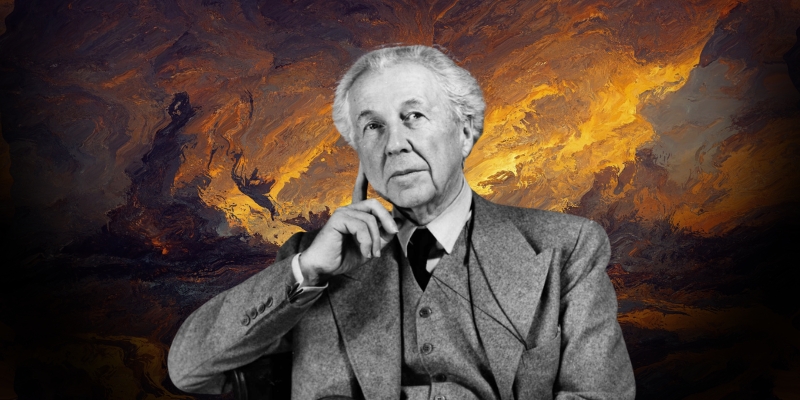
Architecture, Arson, Murder: The Night Frank Lloyd Wright's Estate Went Up in Smoke
An excerpt from The Killer and Frank Lloyd Wright: The True Story of Mass Murder in Paradise by Casey Sherman
“Ugly things happen….The best and worst of everything came to me.”
–Frank Lloyd Wright, Spring Green, Wisconsin, August 15, 1914
Uncle Jenk smelled death. The foul odor of blood and burned flesh punched through his nostrils and made him nauseous. For a brief moment, he felt like a young man again, crouched in the mud-caked trenches during the Battle of Champion Hill in Mississippi more than five decades ago, watching the bodies of his comrades from the Sixth Wisconsin Light Artillery Battery stumble and fall in ghastly heaps after getting cut down by Confederate cannon, rifle, and sword.
But this was not the Civil War, and he was not a young man of nineteen any longer. The Reverend Jenkin “Jenk” Lloyd Jones was now seventy years old, and he had worked the majority of his life to put such horrors behind him and to prevent them from happening again. Yet here he was, dragging the grotesquely injured and the dead away from Taliesin, his nephew Frank Lloyd Wright’s burning property just down the road from his own home on Tower Hill.
Uncle Jenk found himself leaning on his wooden cane while commanding as many as seven hundred local townspeople as they fought the flames that were still lifting high above the torched bungalow. Volunteers had formed a bucket brigade, hauling pails of fresh water from a tiny pond that was adjacent to the property and also from a nearby river. One survivor discovered a fire hose near the garden wall and began dousing the flames with his burned hands in a desperate effort to save the structure.
An eight-year-old girl living nearby had seen the dark plumes and at first thought they were coming from a chimney at Taliesin. But within seconds, it appeared that the whole hill wore a ruffled cap of smoke. Then she heard the screaming of men and the cries of children.
The girl climbed on her horse, Beauty, and, together with her father, rode down the hill toward the inferno. That was when she saw the beleaguered survivors, “men in sooty, bloody clothes, their faces sweat striped masks barely recognizable.”
A nearby private school run by Uncle Jenk’s sisters was being used as a makeshift triage hospital for victims suffering from severe burns and deep cuts to their limbs and skulls. An urgent call was issued to a hospital thirty-eight miles away in the city of Madison for any available doctors, nurses, and medical supplies as word of the tragedy continued to spread.
Shocked by the news, two nurses with suitcases filled with medicine and bandages climbed on the 7:00 p.m. train and rolled away from the state capital. The charred bodies of the dead, including three children, had been carried to a home a half mile away from the bungalow and covered with sheets until they could be positively identified.
“Who could have done such a thing?” Jenk asked himself. Only the devil was capable of such a hideous act. For the fire and the deaths were no accident but the work of a killer.
Jenk was one of the first people to notice the blaze and had used bells and whistles to summon legions of villagers from across the countryside. But once he had realized that the fire was no act of God but had been deliberately set, Jenk also called in John T. Williams, the newly elected sheriff of Iowa County, to form a posse along with lawmen from two other towns.
The mad rush to answer the call for assistance nearly added to the growing calamity as Sheriff Williams and his deputies were almost killed when the brakes of the speeding automobile they were traveling in failed on their way to the scene. The vehicle hit a patch of water in the middle of a dirt road and was lifted off the ground and onto two wheels, spilling one of the lawmen out of the car.
A murderer was on the loose, possibly hiding within the vast cornfields that covered the quaint, picturesque Wisconsin valley. Limping because of a shrapnel injury to his foot during the Siege of Vicksburg, Jenk moved slowly through the yellowing cornstalks with a shotgun in his wrinkled, aged hands. A devout pacifist since witnessing the carnage of the Civil War and a renowned Unitarian minister, he felt uncomfortable carrying a loaded weapon again. But he was also determined to find the man responsible for this terrible crime before others got hurt.
The posse was aided by a pack of eager bloodhounds that pressed their wet snouts down against the dry earth. The tracking dogs inhaled five times each second while their floppy ears waved across the ground, lifting the scent to their sniffers.
For three long hours, the bloodhounds barked and yipped while straining at their leashes, but the dogs found no trace of the man they were looking for amid the towering, mature cornstalks. Those men lucky enough to have survived the attack managed to provide a description of the assailant to police. A composite sketch was quickly drawn up and wired to all points along railroad lines within a radius of fifty miles from the crime scene.
During the long and fruitless search, Jenk thought about the dead and the living. He especially thought about his nephew, an architect, made famous for his ingenious designs and also infamous for the ridicule and scorn he had brought to his family and his profession.
Up to this point, Frank Lloyd Wright had led a blessed life. His extraordinary talents had provided him with great prominence and prosperity. But his most recent actions, which many deemed selfish and even cruel, had put societal mores and the sacred institution of marriage on trial. Now his critics and some of his closest friends questioned whether he was cursed.
***
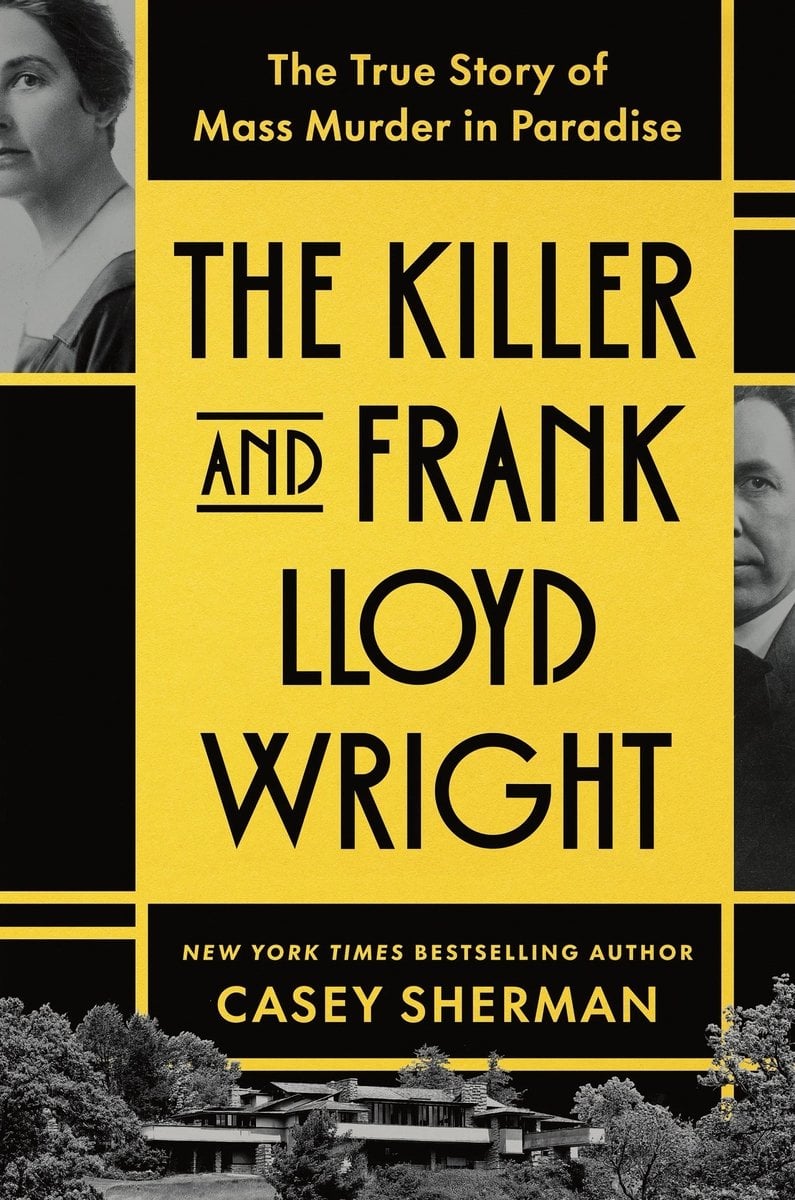

Casey Sherman
Casey Sherman is an award winning journalist and bestselling author of The Finest Hours, Bad Blood, Black Irish, and Black Dragon. He received the Edward R. Murrow Award for Journalistic Excellence as a member of the CBS Boston news team, and has been nominated for an Emmy Award. A featured guest on major television networks and news programs, Sherman has lectured at The National Press Club and the US Coast Guard Command Center in Washington, D.C. He lives in Marshfield, Massachusetts.