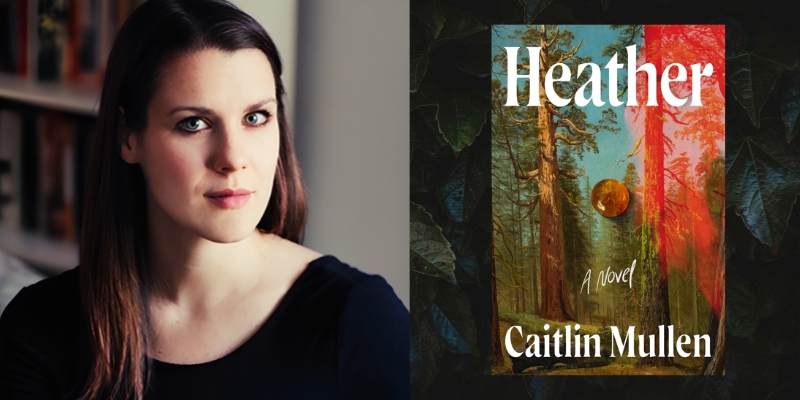
Caitlin Mullen on Folklore, the Jersey Devil, and Setting a Novel in the Pine Barrens
The author of Heather mulls what an American myth says about mothers' suffering
Like most folklore, the myth of the Jersey Devil trickled into my consciousness, rather than arriving wholesale. When did I first hear of the Jersey Devil?
It could have been during a childhood afternoon, spinning on sun scorched black rubber inner tubes on a cedar lake with a gaggle of second cousins. It’s the kind of tale you’d share in low voices, half your body submerged in water so brown and tannic your limbs disappeared into the murk. I can picture it, five or six of us, talking across the water in low voices, staring past a sun-bleached dock and a sandy rim of beach at the dark spaces between the trees.
According to legend, the Jersey Devil has made its home in the forests and bogs of the state’s extensive Pine Barrens region for hundreds of years. This ferocious regional cryptid is described as having claws, wings like a bat, a forked tail, a goat’s head and a taste for blood. It kills livestock, wrecks crops, raids chicken coops. They say if you hear it scream you’ll remember it, blood running cold, for the rest of your life.
In Jersey we’ve made a mascot of the devil over the years, named a hockey team after it, borrowed its likeness to put on bottles of craft beer, small batch hot sauce. Devil hunting is something of a pastime for visitors to the pines. There are hundreds of YouTube videos of supposed devil sightings: eyes glowing with animal aliveness in the dark woods, the outline of wings against the dusk. It makes a good yarn for camping, for embellishing over flashlights and smores.
When it decided to set my second novel in the Pine Barrens, I knew I couldn’t write it without including the Jersey Devil in some form. But, when I set out to research the devil’s origins, I found that, like a lot of things you learn as a child, I only had half the story.
*
Covering 1.1 million acres, a whopping 22% of New Jersey’s total land area, the woods and bogs of the New Jersey Pine Barrens are beautiful and menacing in equal measure. You feel something, along roads that stretch endless with no turn off in sight, no cell service, no signs telling you where you are. When you drive at night, the only car on the road, the darkness thickens and pools around you even with your high beams on. I am not surprised that at some point, people came up with a myth to explain the feeling you get there—that you are being watched even when you are alone.
The Pines are mostly flat, dense with scrub pine and Atlantic cedars, and for long stretches it is devoid of distinguishing landmarks, a topography that often feels like a film strip on loop. It makes sense that, faced with that seemingly endless expanse, you’d be heightened to the sound of your own heartbeat, that you might imagine the pulse or breath of another creature nearby that may not wish you well.
I spent a long time away from the Pine Barrens: ten years in New York before a pandemic move landed me and my young family back in New Jersey. It wasn’t until I started driving through the Pine Barrens again—cell service disappearing, the music cutting out, the directions that wouldn’t load again if you took a wrong turn— and experiencing that jolt of complete isolation that I was moved to actually research how the Jersey Devil myth came to be.
In my novel I was writing about a character who, as a teenager, finds herself unexpectedly pregnant in the 1990s and the female chief of police who is determined to find out what happened to that teenager over thirty years later. Both of these women grow up with the myth of the Jersey Devil, have heard the story as a way to warn them of the dangers in the woods. As with all folklore, the origin story of the Jersey Devil has tessellated, morphed into several variations, but the bones of it are as follows:
Centuries ago a woman named Mrs. Leeds learned she was pregnant with her thirteenth child. Overburdened and exhausted, she raged at the news of this pregnancy, allegedly cursing the unborn baby—let him be the devil!
When Mrs. Leeds was in labor the other women of the village gathered around her to help bring the baby into the world, but when it was born it was clear it was not an infant at all, but a monster: clawed, winged, vicious. It flew out the window with a scream and ever since has spent its days scaring children and adults alike. There were instances in the nineteenth and early twentieth centuries when someone would warn of a devil sighting and the schools would close because of low attendance. Industry came and went in the pines, which is now scattered with the remnants of crumbling factory buildings and abandoned railroad tracks, but all the while these acres and acres of forests were ruled by the devil’s dark whims. The myth, to many, was real.
*
As a writer and mother, what struck me most upon doing research about the Jersey Devil folklore was that at the heart of it was a birth story, and the story of a woman who felt unsafe, who needed so much that no one could give her, whose ire at her situation created something fearsome, something evil and haunting.
Myths are conjured as a way to explain things we are afraid of —in this case, perhaps noises in the woods, a sense of being watched from between the trees—but in the origins of the Jersey Devil myth I found more to be afraid of than what might be in wait in the dark. The woman writhing on the floor in unbearable pain. The woman doing the endless daily work of raising children while her husband drank himself stupid in a tavern, with no hope for reprieve.
While there is, supposedly, only one Jersey Devil lurking in the bogs and trees, there are millions of untold stories of mothers and their hardship, of women and what they have quietly endured, mothers and their resilience the face of unrelenting difficulty.
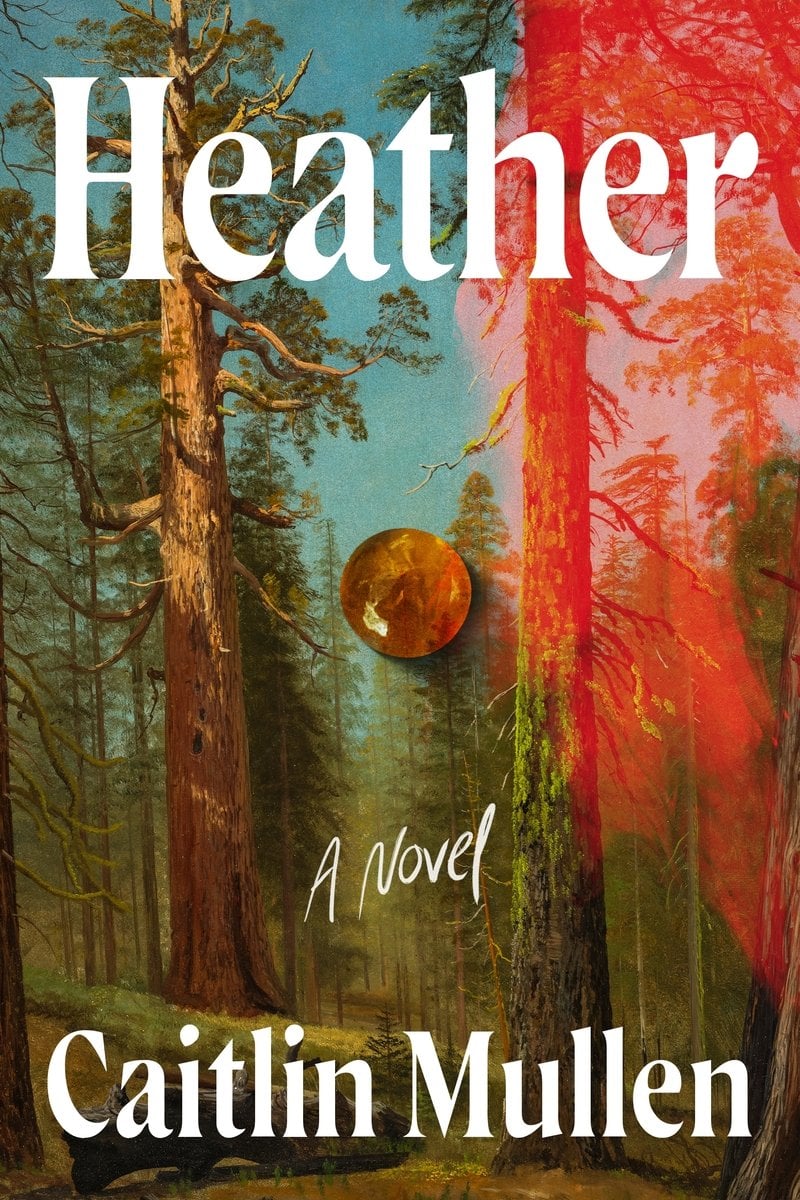
In my novel, Heather, the teenaged Annabelle Riley has grown up in the Pine Barrens with the Jersey Devil myth but isn’t told the whole story until she hears it in a history class. Another student thinks to ask what happened to Mother Leeds after the baby is born, but the legend ends with the devil.
We are left to wonder if Mother Leeds felt lighter, after her curse came true. If, when the devil flew out into the night, she felt relief. Or, did she carry some sort of grief, or guilt, for her curse? Like so many stories about women of that time, hers trails off into silence.
Ultimately the myth of the Jersey Devil is suffused through the book, but in a different, deeper way than I had anticipated when I began writing it. What came to me throughout my childhood as a bit of creepy folklore was actually just one more version of the story I was trying to tell in my novel, about what women do when all of their choices are impossible ones, when they find themselves alone in a world that is indifferent to their pain.
Underneath the tale of the Jersey Devil is a story that is much more universal, ubiquitous, and ultimately tragic: about mothers and their long-held secrets, about the way their pain radiates outward through their families, their communities. And as with any monster, the scariest aspect of it is not the creature itself, but what we see about ourselves, and the world we have created, when we dare to look it in the eyes.
***

Caitlin Mullen
Caitlin Mullen earned a BA in English and creative writing from Colgate University, an MA in English from NYU, and an MFA in fiction from Stony Brook University. While at Stony Brook, she taught undergraduate creative writing, served as an editor and contributing writer for The Southampton Review, and worked as a bookseller at WORD in Greenpoint. She grew up in upstate New York and the Jersey Shore and currently lives in Brooklyn. Please See Us is her debut novel.