Catherine Adel West on Black Girlhood, Erasure, and Learning to Fight in Literature and Life
The author of Strangers Behind Closed Doors shares how her upbringing shaped her writing
I was nine years old when I learned how to throw my first punch. A jab. Mom taught me and my little brother in the backyard of our house on the South Side of Chicago. It was July 1989, hot and sticky. I was tired but knew I had to throw that jab correctly because it was important to her. And it made sense to teach my brother how to fight.
But why me?
Because Mom knew something I didn’t, but she didn’t want to be responsible for tearing the thin membrane of innocence that had already begun to rip. Mom didn’t want to tell me that by becoming a woman, a Black woman, I was more susceptible to danger. To being taunted. Or assaulted. Or worse.
And no one besides my family would look for me. My face wouldn’t be plastered on the news like Adam Walsh. I’d be left to save myself or perish like those twenty-nine children in Atlanta a decade earlier. So, Mom, instead of scaring me and my brother, made it a game where we sparred as the grass tickled our ankles and I compensated for being left-handed in a family full of righties.
I knew the Dora Milaje was a thing. I grew up in it! All my aunties could fight. There’s even a legend in my family about my great-grandma Georgia carrying a straight razor with her wherever she went. But she lived in 1930s Chicago, so that’s probably more fact than fiction.
However, discovering stories that reflected my lived experience, where I could find women who looked like me, who could throw a punch, who could take one, who could fight a man, and win were too damn rare. I had my books Dead Dead Girls (Nekesa Afia); When No One is Watching (Alyssa Cole); and My Sister the Serial Killer (Oyinkan Braithwaite). But there weren’t enough of these stories. And then there were the stark realities from which I shielded myself.
On a nondescript Saturday night, I watched a news clip about Kierra Coles, a Black woman who left her apartment on October 2, 2018, and was never seen again. She was a beautiful, vibrant Chicago post-office worker who was three months pregnant. And apart from minute-long stories on my local news, I didn’t see any further coverage on national media outlets. I only heard about Kierra’s case on the “L” train as I rode to my job.
I had to clock in to work by 5 o’ clock in the morning. I always stayed ready on the short walk from the train to my office, remembering my left jab.
And I always called Mom when I made it to work.
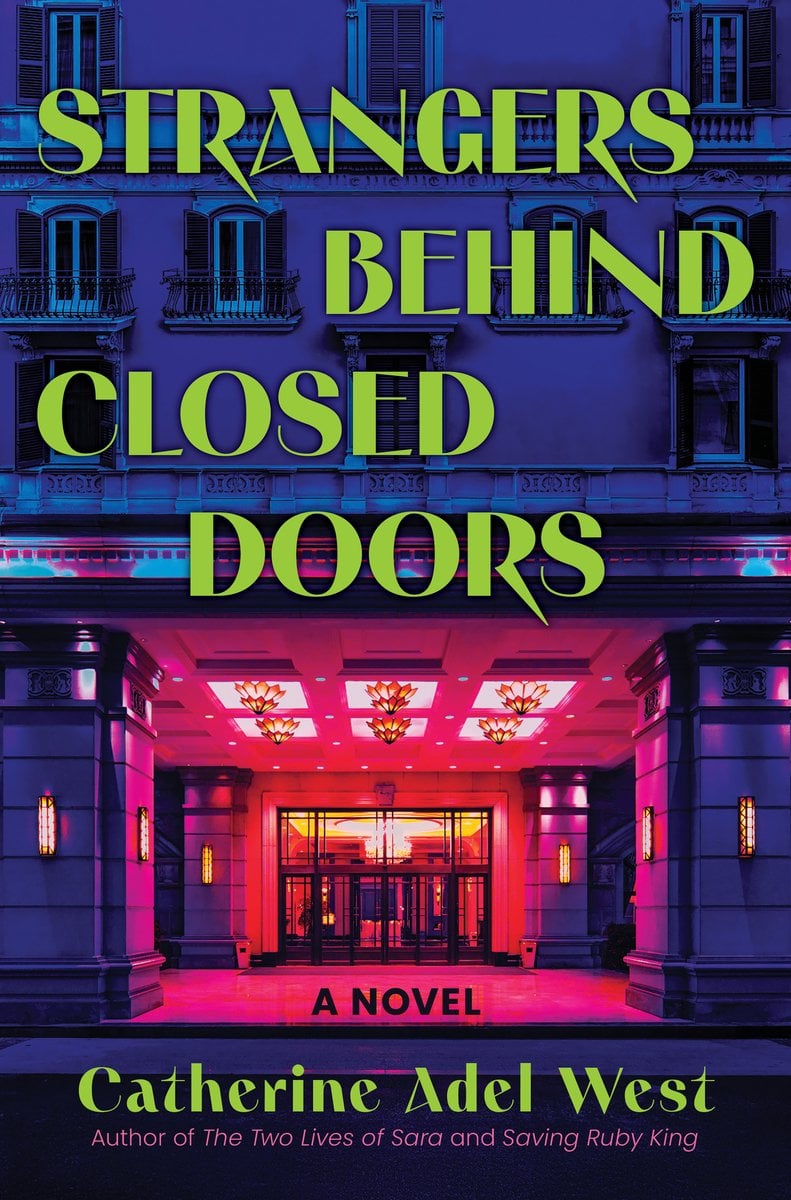
As I get older, I recognize what it means to be a Black woman in peril. It means saving yourself because no one else will. In Strangers Behind Closed Doors, Chief Concierge Giovanni Mason and beleaguered Detective Redding Stark know this too well. It pushes the pair to reluctantly team up and solve the disappearance of Giovanni’s estranged friend, Natalie Moore, another Black woman and beauty influencer with secrets of her own.
I’ve had to sit with an uncomfortable truth most of my life, seeing the tragedy of missing women framed through the singular lens via the media: the quintessential “All American Girl,” white skin, pretty, from a “good family.” I’ve witnessed the cyclical religion surrounding the ones deemed worthy to be covered when they vanish: the country holding its collective breath; the celebrating or mourning when the end of the story is revealed; and the sensationalism following the gruesome or triumphant details.
And, in waves, come my disgust and despair in equal measure every time knowing someone like Kierra or someone like me would never be granted that type of concern over our bodies or our lives or our humanity.
So Black women, in addition to nurturing their families, holding together their communities, and maintaining the moral conscience of this nation, must also choose to save themselves from harm or risk never being found should someone try and snatch them off the street.
Giovanni must choose between maintaining her status as the first Black chief concierge of The Chicago Ivory Hotel and Resort, or finding Natalie, exposing all the secrets of a place and the people who helped raise her. Meanwhile, Redding must choose between solving the cases of missing Black women or putting her family in danger of more media scrutiny after a botched case almost ruined her career.
What do you choose?
A crime thriller, one centering Black women, must include a moral dilemma arching into a broader issue. It’s never just about one thing; it’s about everything, and how it affects the ones we love the most.
It’s also about strength. It’s about fighting for what you love and what you believe is right. Yes, it takes a sharp mind, but sometimes it takes some butt-kicking too! Fight scenes and fight choreography aren’t just for Jack Reacher, Ezekiel “Easy” Rawlins, or Mitch Rapp.
It’s for Giovanni and Redding, too.
Remember, I have a great left jab. The women in my family are like the Dora Milaje. I needed to ensure Giovanni and Redding can flex their way throughout Chicago and beyond without it sounding unrealistic. Strangers Behind Closed Doors is my first published thriller, so I studied for this book like I’d study for a chemistry test. There were too many important themes to establish, too many important hurdles for my characters to overcome.
I used my journalism background and interviewed a Chicago Police Detective and the head concierge of a luxury hotel ‘cause I had to justify those student loan payments somehow. I also reread some of my favorite books like When No One is Watching.
Then I incorporated new books in my research—Razor Blade Tears (S.A. Cosby), a story with great fight scenes and social commentary, along with Speaking of Summer (Kalisha Buckhanon), a book with some unreliable narrator inspiration and a similar theme of the disinterest surrounding missing Black women.
Redding and Giovanni were born out of a need for me to see another version of Black women in literature. Most important, I created these characters to provide a remnant of closure; to do in fiction what I can’t do in real life: witness a Black woman go missing and have two people who look like her fight until she is found, no matter what that looks like.
I can’t do that for Kierra, but I can do that for Natalie.
***

Catherine Adel West
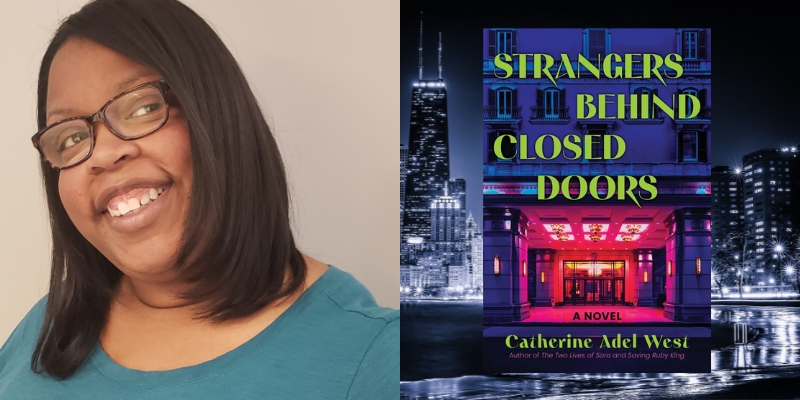
Catherine Adel West was born and raised in Chicago, where she currently resides. She graduated with both her bachelor's and master's of science in journalism from the University of Illinois, Urbana-Champaign. Her work is published in Black Fox Literary Magazine, Five2One, and Better Than Starbucks, among many others. She is the author of Saving Ruby King and The Two Lives of Sara is her sophomore novel.