
True Crime at the White House: The Most Ridiculous Burglary Plan in Presidential History
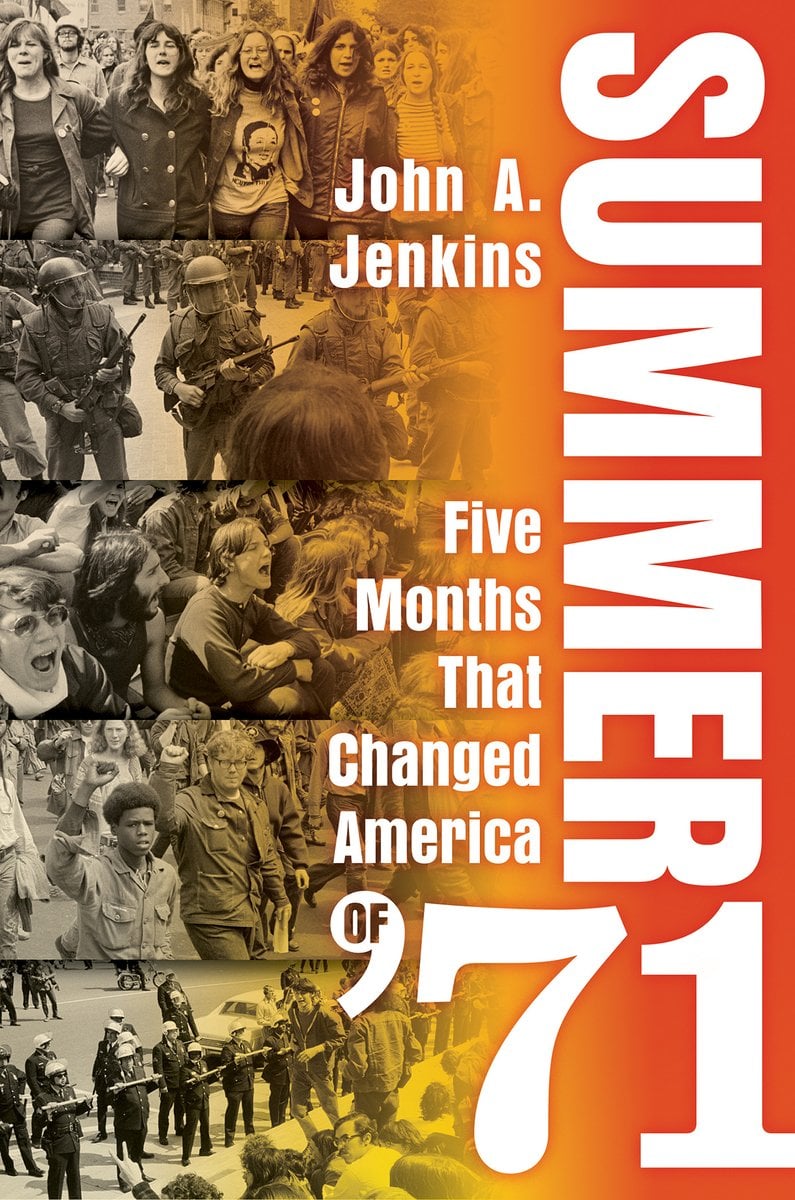
From the author of 'Summer of '71: Five Months That Changed America'
In June 1971, a former FBI agent proposed a scheme that involved setting firebombing a building and using the resulting chaos to burglarize one of Washington’s most prestigious think tanks.
The target was the Brookings Institution.
The man proposing the operation was G. Gordon Liddy.
And the reason Liddy thought the White House might approve the plan was because Daniel Ellsberg had just leaked the Pentagon Papers, a top-secret history of the Vietnam War that documented the lies about American involvement told by numerous presidential administrations.
Before the firebombing scheme, and before the Watergate burglars were caught inside Democratic National Committee headquarters a year later, there was a week in which two of America’s most powerful institutions found themselves under extraordinary pressure—and reacted in dramatically different ways.
The New York Times, defiantly publishing the secret Pentagon Papers, briefly convinced itself that it had committed the greatest blunder in modern journalistic history.
The Nixon White House, striking back at its enemies in the press, convinced itself that burglary and firebombing might be an acceptable instrument of revenge.
One of the pleasures of writing Summer of ’71: Five Months That Changed America, to be published on June 30, was discovering episodes like these: moments that feel almost too absurd to be true, yet reveal something essential about the people involved.
That summer was a pivotal, operatic season of hope and despair, missed opportunities and era-changing decisions that ultimately set the stage for Watergate and the downfall of a president.
The Pentagon Papers affair takes center stage in my book.
Every generation gets its own forbidden archive—the collection of documents that powerful people desperately want hidden, and that the public desperately wants revealed.
Today, Americans argue over the possible contents of the Epstein files. In the summer of 1971, it was the Pentagon Papers that dominated the headlines and airwaves.
Ellsberg, a RAND Corporation analyst and former Marine officer, secretly copied the classified government history of the Vietnam War and made it available to reporters at the New York Times. The documents revealed that successive administrations—Republican and Democratic alike—had repeatedly misled the American people about the war.
The Times knew immediately that it possessed the story of a lifetime.
The newspaper’s leaders also knew they might be risking everything.
Editors, reporters, and researchers worked in secrecy from a Manhattan hotel suite. Journalists feared arrest. The newspaper’s executives wondered whether publication might trigger injunctions, criminal charges, or financial ruin.
Attorney General John Mitchell struck back. His Justice Department demanded in a telegram that the newspaper stop publishing the classified documents and return them to the government.
The Times responded with defiance.
Executive editor Abe Rosenthal and his colleagues decided not merely to resist but to publicize the confrontation. Page One was remade. A giant banner headline stretched across the top of the next morning’s edition: “MITCHELL SEEKS TO HALT SERIES ON VIETNAM BUT TIMES REFUSES”
The presses began rolling. Copies flew into delivery trucks. Newsstands would soon be displaying the newspaper’s challenge to the Nixon administration for all the world to see.
Inside the Times, the mood was triumphant. Rosenthal later described the headline as “the most majestic words I’ve ever seen.”
He reflected on what it would be like if the headline read, instead: “AND TIMES CONCEDES.” “Our whole lives, not just mine, but all of our lives would have become meaningless.”
But there was a problem.
For a few glorious minutes, the newspaper believed it had produced one of the great front pages in American history.
Then everything changed.
James Greenfield, the assistant managing editor, returned with disturbing news. A spokesman for the Justice Department was telling reporters that the government knew nothing about the supposed threat.
Greenfield panicked. “Oh my God, if it’s a fraud, the whole thing is a hoax, the Justice Department never threatened us. It was some guy just calling up, some guy sending a telegram.”
The room fell silent.
Had they misunderstood?
Had they overreacted?
Had somebody sent a fake telegram?
The implications were horrifying.
Tomorrow’s edition was already on the streets. The presses were running. Hundreds of thousands of readers would soon see the newspaper proclaiming its heroic refusal to bow to the Attorney General of the United States.
What if the Attorney General had never actually threatened them?
Suddenly the scoop of the century seemed in danger of becoming the blunder of the century.
Rosenthal’s mind raced toward catastrophe.
“This is the end,” he told the editors huddled in his office. “Finished. Jump out the window, all of us. Goodbye. A hoax. The New York Times comes out with a big, brave stand and it turns out to be a hoax. We can’t stand this.”
“Where the hell is the telegram?!” Rosenthal demanded.
Someone fetched the telegram from the wire room.
Sure enough, the telegram said what it said. It looked authentic. But there was a curious sign-off at the end. The Times operator had typed back to ask who was sending. The operator on the other end typed back: THIS IS THE FBI MACHINE BUT WE’RE NOT THE FBI, WE’RE THE DEPARTMENT OF JUSTICE, USING THE FBI MACHINE.
The Times operator had replied: THANK YOU VERY MUCH.
The sender on the other end answered: YOU’RE WELCOME.
The Times operator kept the back-and-forth going, replying with a clever four-word sign-off: BI BI BYE BYE.
The anonymous sender, typing on the other end, humorously cabled back: I AM SPEECHLESS.
One of the most consequential press-freedom battles in American history briefly began to resemble a farce.
The tension in Rosenthal’s office became almost unbearable.
Then the truth emerged.
The threat was real.
The attorney general, John Mitchell, had indeed demanded that publication cease.
The Nixon administration really was trying to suppress the story.
The Times had not embarrassed itself after all.
Instead, it found itself at the center of one of the most important First Amendment battles in American history.
The case raced to the Supreme Court, which ultimately ruled in favor of the newspaper and against prior restraint.
The Times survived. It would go on to win the Pulitzer Prize for Public Service.
The White House, however, was entering a different phase of the crisis.
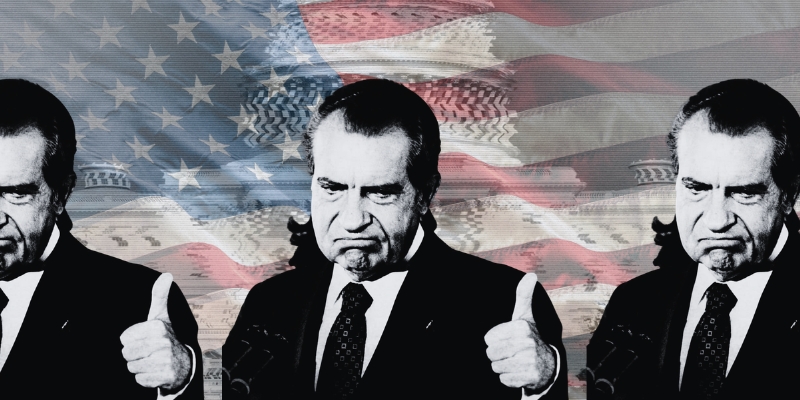
Even though the Pentagon Papers revealed little about Richard Nixon or his role in the Vietnam war, Nixon became obsessed with the leak.
Most of the deception documented in the study had occurred under earlier administrations. Yet Nixon wondered: If one cache of secrets could escape government control, what else might emerge?
His attention soon focused on the Brookings Institution, the respected Washington think tank. Nixon became convinced that Brookings had a set of the Papers and might have been involved in the leak to the Times.
The discussion that followed revealed the Nixonian instincts that later would bring down his presidency.
Nixon ordered up a Brookings burglary. “I want it implemented on a thievery basis,” he said. “Goddamn it, get in and get those files. Blow the safe and get it.”
It was a remarkable statement. The President of the United States was not insisting upon legal process. He was insisting upon burglary.
Nixon’s national security adviser, Henry Kissinger, tried to reason with him. Why break in? Kissinger asked. If Brookings possessed classified material belonging to the government, why not simply send FBI agents through the front door to retrieve the documents?
“Couldn’t we go over?” Kissinger asked. “Brookings has no right to classified documents.”
Nothing doing. Nixon wanted a black-bag job.
Enter G. Gordon Liddy, a key operative in the White House “Plumbers” operation. He was a former FBI agent with an enthusiasm for covert operations that frequently exceeded his judgment. Liddy transformed Nixon’s desire into one of the most outlandish plans ever seriously discussed in the Oval Office.
The Plumbers would buy a used late-model fire engine. They would paint it with markings to look like it came from the District of Columbia Fire Department. They would issue uniforms to their CIA-trained anti-Castro Cuban “fire crew.” Brookings then would be firebombed at night, “by use of a delay mechanism timed to go off at night, so as not to endanger lives needlessly.” The Cuban fire crew would rush to the site, empty documents from the think tank’s vaults into a van, and speed away, abandoning the fire truck.
“There would be a lot of who-struck-John in the liberal press,” Liddy figured, “but because nothing could be proved the matter would lapse into the unsolved-mystery category.”
It sounded less like a White House plan than a rejected screenplay.
The operation was never carried out. But the significance of the episode lies not in what happened. It lies in what powerful people had begun to regard as reasonable.
Under pressure, the New York Times worried that it had made a terrible mistake.
Under pressure, the White House began entertaining criminal solutions.
The Pentagon Papers did not directly cause Watergate. But the events of the summer of 1971 accelerated the mentality that produced it. Perceived leakers were deemed by Nixon and his men to be enemies of the state. Reporters no longer were truth tellers, but rather were seen as adversaries. Think tanks became targets. Extraordinary measures suddenly began to seem ordinary parts of a White House revenge playbook. It set the stage for the downfall of a president—and for events that look starkly similar to the present day.
A year later, Liddy would help organize another burglary—this one at the Watergate complex.
That operation would not end as neatly.
As you’ll read in Summer of ’71, The Pentagon Papers are rightly remembered as a triumph of journalism and the First Amendment. But they also produced one of the strangest preludes to a political scandal in American history: a newspaper that briefly thought it had been pranked, a president demanding that aides “blow the safe,” and a covert operative who responded by proposing a firebombing.
More than a half-century later, it’s difficult to overstate the importance of this and other events that happened during the fateful, world-changing five-month period spanning May through September 1971.
You can read all about it. This summer.
***

John A. Jenkins
John A. Jenkins is a multi-award-winning journalist, author, publisher, and entrepreneur. With a specialty in partisans and power, he’s written hundreds of features for major magazines in the U.S. and abroad, including The New York Times Magazine, GQ, and The Washington Monthly. A 4-time recipient of the American Bar Association's Gavel Award Certificate of Merit, one of the highest awards in legal journalism, he is the founder of Law Street Media, the most widely visited and highly engaged law-and-policy site on the web. Prior to starting Law Street, Jenkins served for fifteen years as President & Publisher of CQ Press, the leading political science textbook and reference publishers. Currently, he co-leads the predictive-AI start-up PoliScio Analytics, which he co-founded in 2022. He lives on the east coast and can be found online at JohnaJenkins.com.