Cozy, with a Side of Carnal: Birdie Horne on Writing Spicy, Open-door Sex Scenes
The author of "Don't Cross Mo Ellery" explores the radical power of erotic cozies
Sex isn’t cozy.
Wait, back up.
How about this: sex isn’t typically found in cozy mysteries. And open-door sex scenes? Where you see all the juicy details? Forget it. That’s for spicy romance and romantasy, those neighboring countries whose flags sport chili pepper emojis.
So when Mary Winn looked at the rough draft of our cozy murder mystery Don’t Cross Mo Ellery, shook her head and announced, “this needs sex,” Eden clutched her proverbial pearls and gasped.
“Hear me out,” said Mary Winn. “How’s this for an opening—’The first Chicago fire burned the city to the ground. The second Chicago fire is happening right now, between my legs.'”
It certainly was evocative, Eden admitted. But she had a follow-up question—could we also include the line “Welcome to Dick City?”
And once we got to Dick City, well. The whole thrust of the story changed.
Sex scenes in novels can definitely be narrative landmines. They can bring the story to a screeching halt, pull us out of the action, or bog down the pacing by feeling gratuitous. But isn’t that strange? Anthropologically speaking, sex is a huge motivator for human behavior. We call it a sex drive, after all. So why would a fictional plot not benefit from that kind of internalized momentum? Why does the plot so often stall just as the characters’ engines rev?
We could probably fill a short craft book with reasons, but the simplest explanation is that those scenes can focus too closely on the nitty-gritty of the positions, the setting, the body parts, and not enough on the characters who are having the sex. We’re not the first to notice this—famously, there is the Literary Review’s Bad Sex in Fiction Award, giving its dubious distinctions annually since 1993.
But we’d also argue that a good sex scene can give insight into characters and relationships that other kinds of scenes can’t. Sex scenes don’t have to be only titillating—they can be funny, tense, stressful, sexy, awkward, and yes, even cozy. They can move a plot forward because they can also move a relationship forward, or a character’s understanding of herself.
There’s an old trick to defuse writers’ block: trap your main characters in an elevator and see what they do. But wouldn’t it be more fun to throw them (consensually) in bed together and see what they do? Bonus if they DEFINITELY shouldn’t be there.
So okay, fine, turns out we’re on a bit of a crusade to normalize sex in novels. Can you blame us? We’re living through such a weird era of simultaneous puritanical attitudes (the sooner “tradwives” are no longer a trend, the better, sorry) and obsession with other people’s gender and sexuality, that an honest, funny approach to sex in fiction just feels like a relief.
Also—full disclosure, we had fun writing these scenes. This doesn’t mean it was always easy, though. Sometimes Mary Winn had to get a little (okay a lot) tipsy. More than once, she interrupted her husband’s workday to ask about the reality of certain physical logistics. Eden had to keep reminding both of us that there’s no “right” way to feel or act during sex, that it’s ultimately much more important to keep it in character.
For instance, the same character could act and feel very differently while having sex with a long-term partner versus during a drunken one-night stand, and she might have different levels of sexual swagger with a woman than with a man. Our first attempt at a scene where Mo Ellery and local government hottie Tasha jumped in the sack felt wrong—it was too earnest and overly tender for an impulsive one-night stand.
So we dug into what we knew about both characters, their foibles and anxieties and contexts, and found a way to make this new relationship funny and real, sexy and awkward, all at the same time. One character was experienced with women; the other hadn’t seen a vagina since college. For both, the vulnerability required in taking off their clothes in front of another person and figuring out how to please them created a sense of possibility that reverberated through the whole story.
As a set, the three sex scenes in the book allowed us to reveal new layers of our main character in action. Mo Ellery is not a Teflon character—she is anxious and tentative but also impulsive and trusting—by trying new things, risking emotional intimacy, and also putting herself at the mercy of characters who might wish her ill, the sex she gets herself into only raises the stakes of the mystery itself.
And it is worth saying: Mo very badly wants to be loved– a charming characteristic, but, in the midst of a murder mystery, a dangerous weakness. All she really wants is to lie in bed with a hot civil servant, wholesomely discussing manholes! (Shout-out to #manholemonday)
Because here’s the thing: sex can be cozy, too.
Which brings us back to the original question—do our open-door sex scenes, in all their ridiculous, naked glory, complicate the genre identity of Don’t Cross Mo Ellery? Sure!
Our recipe for the Mo Ellery series mixes up humor and sex and cozy mystery, and for some, that may fall outside their expectations. We think that’s awesome! We want to chat with readers about what genre means for them, and what these stories can be.
And most of all, we want our readers to have a blast piecing together the mystery and sleuthing alongside Mo’s Chicago neighborhood crew. We hope Mo feels like your most chaotic friend dishing about her crazy weekend. You know, that friend we all love even (especially?) when she makes the kinds of terrible decisions we wish we were making.
***

Birdie Horne
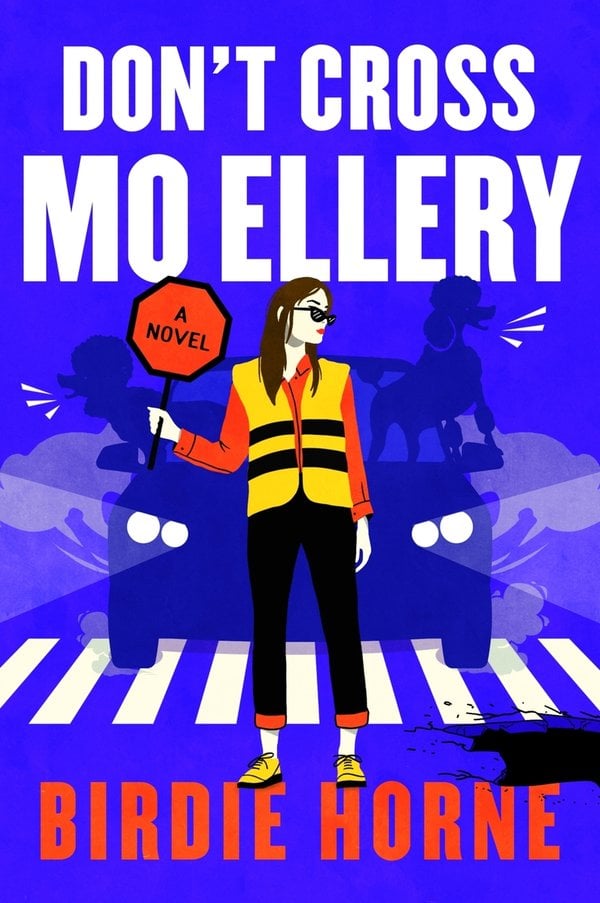
Birdie Horne is the combined pen name of former enemies Eden Robins and MW Garguilo. Over the years, they have been love rivals, co-godmothers, and neighbors across an alley in Chicago. Separately, they have published over twenty books, and together they have a resume full of the kinds of jobs that genuinely worry their parents. One of them was nominated for—and lost—Chicago Crossing Guard of the Year. Don't Cross Mo Ellery is their first outing as Birdie Horne.