Dane Bahr on Craft and Why Crime Fiction Is the Punk Complement to Literary Fiction
The author of The Dead Ringer offers advice for weathering the war of writing
Writing is hard. And if you’re not going to work hard at it you probably shouldn’t even try. Several novels in, some published, some not, and it still hasn’t gotten any easier. The adage of if you work harder at something it’ll get easier doesn’t apply to writing.
But you do get more comfortable with it. You start to learn that much of writing isn’t actually writing, but thinking about writing. Thinking about what a character might do or say. Thinking about the structure of the whole thing and working out the story, and then when you sit down to actually write the story is mostly cooked and all you are now tasked with is the easy job of getting the words right.
That last bit was tongue-in-cheek of course, because getting the words right is the art of it all. And art is hard. If I may, I’d like to share some thoughts about writing. Revelations, as minor as they may be, on how to make being a writer bearable. Because for most of the time, it’s like war. Faulkner said writing a novel is like trying to build a chicken coop in a tornado. And he’s not wrong.
But it can also be joyous. And you learn things along the way. You learn tricks. You try not to panic. You get fifty pages down and you know exactly where the thing is going. You know exactly what the characters are going to say to one another. You know exactly how to light the thing.
In fact, the thing is so perfectly rendered that you can smell it; you can hear it, because you remember nailing it before. And you are so smitten with the thing that you go out and buy some new clothes for when you accept the National Book Award because that’s how damn good it is.
And then page fifty-one comes along and the character, the same one who just the day before did exactly what you wanted, goes feral and sets the forest on fire and instead of that cerebral literary novel you thought you were writing you’re now writing a crime novel or a horror novel or a western. And you have to go back and rework your fifty perfect pages, or worse, toss them out.
How did this happen, you ask yourself? When you were a fledging writer this is when you began to panic. I don’t want to write a crime novel, you say to yourself, I don’t want to write a western. But here it is. That’s exactly what you’re doing.
To anyone writing, the literary novel (with a capital L) is the cool kids’ table, the party where all the cute girls and all the hunky boys are. The crime novel, the horror novel, the western, these are the freaks. They have their own shelves, segregated within the bookstore. Anyone who writes in this genre has started off wanting to be on those chicer shelves, and if they say they haven’t they are lying to you. I did.
But here’s a minor revelation: the “genres,” I’ve come to find, are the punk rockers of the literary world. Here’s another: literary novels are kind of boring. That’s probably not en vogue to say but it’s the truth. And so while all the literary novels are sitting around in cardigans drinking tea looking at their navels, the crime novels and horror novels and westerns are out smoking cigarettes and drag racing cars and siphoning gas and getting rowdy in dive bars.
And here’s the rub: there’s no rule saying the prose in a crime novel or horror novel or western can’t be stunning. Elmore Leonard wrote some of the most succinct and perfect prose there is and where do you find his books? Not at the cool kids’ table.
I suspect anyone reading this is either a writer or has writerly aspirations, so I’m going to give you some unsolicited advice: plot is your friend. Now, character development is also important, but never forget about plot. For some reason it has become a dirty word in writing workshops and MFA programs. Don’t buy into this pedagogy. In any book something needs to happen.
Does this mean that plot should rule tyrannically over sentence structure or poetic phrasing? No. Of course not. But something needs to happen otherwise it’ll be boring and the reader will put the book down and turn on that evil television.
Whenever I get stuck (I don’t believe in writer’s block, by the way—if someone is going to pay money for your book you need to treat it like a job and sometimes the job sucks) I take a hard look at why I’m stuck. And one hundred percent of the time it’s because something is wrong with the plot. So you back up and make changes. And making changes is editing and editing is how good writing comes out. Since I broached this subject, let’s talk about editing.
I’m forty-two and a writer now, but when I started some twenty years ago I thought writing was crafting the perfect sentence in your head so the minute it hit the page the reader is left with gold. I wanted my first draft to be equally as good as a published manuscript. I wanted to immediately share what I had written with anyone who would listen, not to receive criticism but to brag. It was all vainglory. And looking back on things I wrote when I first started makes me want to throw myself off a building.
Recently, however, I’m allowing myself to make some mistakes with the first draft. Maybe it’s because I’m older and less insecure about my image as a writer and more confident in my abilities and process, but it has made the act of going to war with the novel a hell of a lot easier. If Jimmy is a farmer and suddenly he’s thinking about being an F1 driver, even though nothing in the story would make sense for Jimmy to become an F1 driver, I’ll let Jimmy become an F1 driver. It’ll probably be edited out, but it’s the first draft, so let Jimmy drive around a bit.
Pablo Picasso said it took him four years to paint like Raphael, but a lifetime to paint like a child. Do you know what that means? It means that to emulate is easy and being original is really hard. So that’s what I’m doing, I’m letting that wild feral child write whatever comes up; I’ve started taking the hard way out.
I understand if this sounds contradictive. To be wild and free is to eschew rules and relent the patience to governor, to edit. But here’s another rub: the more you write the more you recognize pitfalls and successes. There are names (another thing I’ve learned) to stylistic approaches, and once I learned these names I had an answer to questions and my writing became better.
I use parataxis a lot. I use polysyndetic coordination. Two phrases I didn’t know when I started writing all those years ago. It sounds really lame, doesn’t it? But it’s not! It’s like finding out buttoned up Jane Doe Gentry is a tomcat in the sack, which is to say; it’s very exciting. You can create some really beautiful and moving sentences with those two styles alone. In a paragraph you can have hours, days, years pass as smoothly and quickly as blinking when working in those styles.
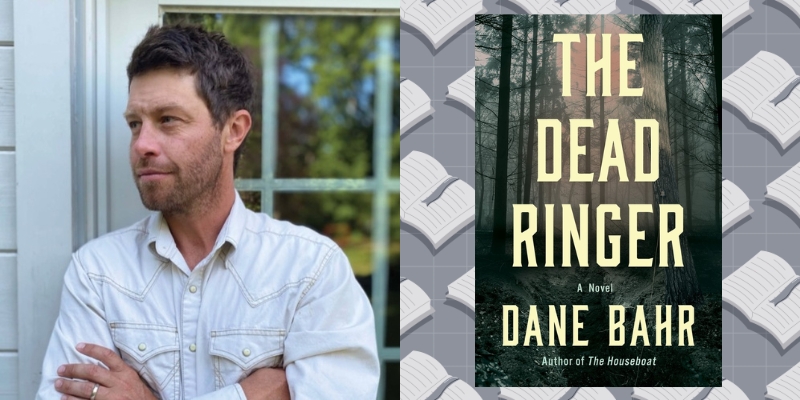
A pitfall I was once very guilty of was trying to use a ten-dollar word to make myself sound smart. It didn’t work. In fact, it did the opposite. Here’s an example of what I’m talking about. This is a paragraph from my novel, The Dead Ringer, a western.
The light was just coming on when they reached Wilsall. The Bridgers were dark and silhouetted by the paling sky. The last of the stars were dying out in twos and threes till finally there were no stars and an aurora bloomed on the horizon and the new light spilled across the plains and coppered the valley. The clouds at that early hour were lavender and orange and the sky was a faded blue and the Bridgers to the west turned orange like the clouds.
In a few sentences the narrative travelled in time. It paints a nice picture of the setting. And the “they” tells us some people are going somewhere. Where did they come from? Where are they going?
Here another from a novel I’m currently working on:
Hightower looked up at them. None of them moved. Hightower clicked his tongue and shook his head and dug into his pocket and removed a silverplated switchblade. He popped it open and sat there turning the knife in his hand, looking at the shining blade. Then he opened his hand and ran the edge of the blade across his palm. The blood welled. He clinched his fist and squeezed the blood onto the ground.
Nothing fancy, but it’s effective. Both examples use plot and polysyndetic coordination and not a single ten-dollar word. The simplistic nature of parataxis strips away any clutter and leaves the paragraph concise and lean. We want to know why Hightower is cutting himself (plot) and we learn a little more about him (character development). And this is yet another example of it taking me a lifetime to write like a child.
Both examples are from novels I started off thinking were going to be given a spot at the cool kids’ table. Then both bogged down because the plot bogged down and nothing was happening. And because I’m forty-two and a writer now, I didn’t panic. I went back and reworked and edited and reworked some more until I was happy with it.
Let’s give a quick plug for dialogue. Dialogue is tough. You have to nail the cadence. You can’t have your characters talking like people you meet at the grocery store. Some writing instructors will tell you to capture the tone and voice of how people speak. This is not good advice. The conversations you have at the grocery store are uninteresting. You have to ride a line between common language and dramatics. Dialogue is also a sneaky spot to move the book along. A lot of plot resides in good dialogue.
Here’s an excerpt from The Dead Ringer again. Benjamin Kilt is ten years old. Nick Mercy has become a bit of a mentor to the boy after the boy’s mother died:
You rob banks?
Mercy nodded. Hand to God, he said.
How come you ain’t got caught?
Cause I’m good at it.
Ain’t you worried that you will?
No, Mercy said. He sat and smoked and looked at the boy.
You kill people? Kilt asked. In the banks? Do you kill the people?
No, Mercy said. Heck, I don’t even have a gun.
Then how do you rob the bank?
I talk to them.
Talk to who?
The people at the bank. I tell them that I’m not there to steal their money, I’m there to steal the bank’s money. The bank’s money is insured, which means they’re not losing a penny and anything I take will be returned to them free and clear. All debts paid in full. God bless America.
In that short exchange we can see that Kilt is fascinated by Mercy. We see Mercy’s charm and a bit of irreverence. It’s a plain back and forth, but it’s charged up. Common but dramatic. Not to mention we know something is going to happen. The chatter about robbing a bank excites us with the possibility that this little boy might help rob a bank.
I could go on and on about the things I’ve learned over the years but I’ll stop there. It’s a small miracle that someone pays you for the words you write and that the words gets published and a team of highly competent people advocate for them and then they get put between a nice cover and get put on a nice shelf of a nice bookstore.
Writing is hard and writing is war. But we learn things. We learn tricks.
***


Dane Bahr
Dane Bahr was born in Minnesota. He lives in Washington state with his wife and sons. He is the author of The Houseboat.