Documentaries to Watch Now: Cover-Up (2025)
A documentary about Seymour Hersh and investigative reporting that unfolds like a 1970s-style conspiracy thriller.
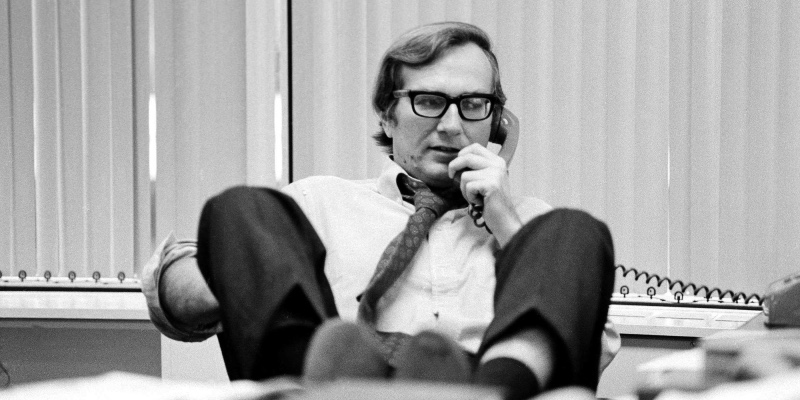
Laura Poitras (Citizenfour) and Mark Obenhaus’s (Steep) documentary on the Pulitzer Prize-winning journalist, Seymour Hersh, unfolds like a lesson in recent history. Hersh’s dogged reporting brought to light the Mai Lai massacre in Vietnam and the abuse of prisoners at Abu Ghraib. Most of us know that these horrific crimes happened, but we don’t know how or why—and what it took for these stories to be exposed. Now, with Hersh in the spotlight, we find out.
The reporter’s persistence, combined with attention to detail, a willingness to speak with anyone, and luck, leads to him uncovering events no one wanted to talk about. In one instance, a simple bluff leads to an off-hand bit of information that allows Hersh to crack open the story.
So many documentaries these days feel like the result of access—someone was in the room and had a camera and so went for it. Cover-Up is different, it’s an example of careful and considered filmmaking. In a wide-ranging interview, filmmaker and fellow journalist Poitras describes having fiction films in mind when approaching the project: “1970s paranoia thrillers, brilliant films that were very skeptical and critical of the state and state power.” Among these are Alan J. Pakula’s All the President’s Men and The Parallax View.
Later, she discusses why the subject is important: “From the very beginning, we were interested in Hersh’s reporting, but also in the patterns we could see across half a century, and particularly around atrocities, cover-ups, impunity, and the role of investigative journalism in circumventing that cycle… [O]ne of the reasons why we made this film was because we felt there’s a crisis in investigative journalism, because it’s hard, it’s costly, often comes with legal threats, and often takes a lot of time, and that’s harder to do if you don’t have the architecture to support it.”
Directed by Laura Poitras and Mark Obenhaus. With Seymour Hersh. 1 hour 58 minutes.
Streaming on Netflix.

Radha Vatsal
Radha Vatsal is the Film/TV Columnist for CrimeReads. She is the author of No. 10 Doyers Street and the Kitty Weeks mysteries, and her essays have appeared in the The New York Times, The Atlantic, the Los Angeles Review of Books, and elsewhere. She holds a Ph.D. in Film History from Duke University. You can find her on Instagram or email: rvatsal@lithub.com