
Your Orient Express Reading List: From Lonely Planet
From dozing spies and queasy aristocrats to Poirot’s omelettes, novelists have used the train as a vehicle for stories of crime, passion and subterfuge.
Downhill on the Orient Express
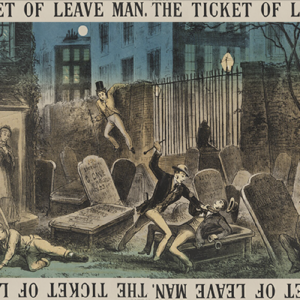
Graham Greene likened the arrival of the Orient Express into a city station to the closing moments of an overture, when ‘all the rural and urban themes of our long journey were picked up again’. This image comes from Greene’s burlesque comic novel Travel with My Aunt (1969), where all that’s on the menu between Paris and the Turkish border is marijuana and chocolate from the louche woman in the neighbouring couchette, the service having fallen on hard times. Aunt Augusta rhapsodies about caviar and Champagne and an unending party on the Orient Express in times gone by: ‘one meal ran into another and night into day’.
The Orient Express likewise gets short shrift in DH Lawrence’s Lady Chartterley’s Lover (1928): travelling to Venice to escape her husband, Constance dislikes ‘trains de luxe, the atmosphere of vulgar depravity there is aboard them nowadays’.
Whodunnit?
Vulgar depravity turns to deathly intent with Murder on the Orient Express (1934); Agatha Christie’s detective Hercule Poirot solves the crime as the train is held up by a snowstorm between Vinkovci and Brod. While the characters of this much-adapted novel are broad-brush and the narrative entirely plot led, there are fascinating insights into the reach and style of the train service: Poirot travels from Syria arriving in Istanbul at 6.55am, crosses the Bosphorus in time to catch the Simplon Express at 9am and consumes omelettes in the restaurant car in between interviews with the suspects.
Excerpted from the new book Lonely Planet Journey Orient Express
Uneasy Journeys
If Christie’s writing now seems formulaic, Eric Ambler’s The Mask of Dimitrios (1939) is the prototype of the modern psychological thriller. The protagonist is the diffident and somewhat helpless Latimer, an English novelist tracing the story of the murderous Dimitrios in order to find material for his new crime thriller; the hunter becomes the hunted as Latimer journeys from Istanbul to Paris by train. A sleeping car bound for Sofia sees our non-hero encountering the ornately polite and subtly threatening Peters in a scene that conjures both the comic awkwardness of sharing a confined space with a stranger, and the queasy morality of a world on the edge of wartime chaos. As the novel ends, Latimer speeds away from Paris on the Orient Express.
Orient Express route spotters will enjoy the fact that passengers in Graham Greene’s Stamboul Train (1932) start their journey in Ostend in Belgium, having taken the Channel Steamer. As it shifts from Ostend to Vienna to Constantinople, the novel’s emotional landscape has more in common with The Mask of Dimitrios than with Greene’s own much later Travels with My Aunt. Interspersed with anti-Semitic incidents and threaded with anxiety, Stamboul Train anticipates the horrors coming to Europe.
Quick Reads
The train has proved an irresistible setting in popular as well as literary fiction. Spy novel The Madonna of the Sleeping Cars by Maurice Dekobra (1927) was a bestseller in its time, as effervescent as an onboard cocktail quaffed by outrageous protagonist Lady Diana Manners.
The Simplon Orient Express is the backdrop for the last 100 pages of Ian Fleming’s crudely violent and sexist From Russia, with Love (1957). But there is some incidental interest in the train’s route from Istanbul to Paris via northern Greece, and a rather lovely description of the soothing effect of train travel as Bon struggles to stay awake despite ‘the lullaby creak of the woodwork in the little room’.
Veronica Henry hops on board the gravy train with lightweight romance in A Night on the Orient Express (2013), while Lindsay Jayne Ashford’s The Woman on the Orient Express (2016) gets meta, with Agatha Christie herself–escaping a broken marriage– taking a trip on the service in the footsteps of Poirot.
But the true heyday of Orient Express novels is the 1930s. And it’s hard to imagine a better evocation of the physical sensation of train travel than that in Stamboul Train: ‘In the rushing reverberating express, noise was so regular that it was the equivalent of silence, movement was so continuous that after a while the mind accepted it as stillness’.
Words by Helena Smith


Helena Smith
Helena Smith won Vogue’s writing contest; she loves reading on trains.