
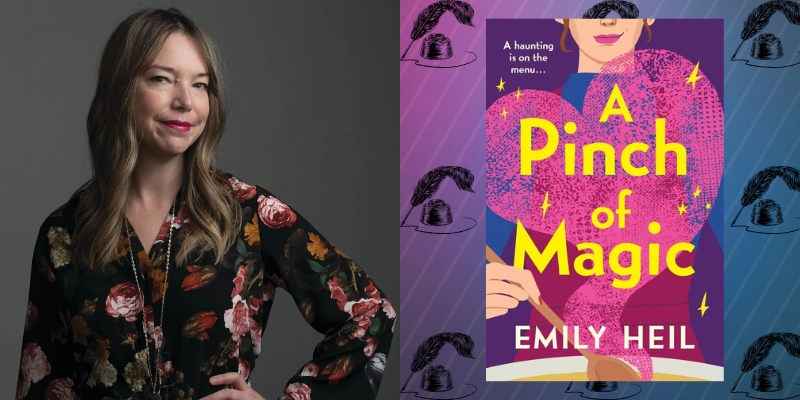
Emily Heil on the History of Belittling, Erasing, and Stealing Women's Writing
The author of A Pinch of Magic calls out sexist critics and 'bropropriators' past and present
As someone who mostly reads novels by female authors (a group Nathaniel Hawthorne once dismissed as “that damned mob of scribbling women”), and now as a card-carrying member of that cabal myself, I’ve always been fascinated by the ways in which women’s writing has been diminished.
The list of women who published under male pseudonyms is long and storied, from the Brontë sisters to George Eliot (whose name was really Mary Ann Evans). And there are famous cases of women whose work men—usually their husbands—passed off as their own. The French writer Collette is thankfully now recognized as the author of the charming Claudine books, which were originally credited to her husband.
And what of the many women who served as purported “muses” to great men? Zelda Fitzgerald was often depicted as the model on which her husband, F. Scott, based his daring flapper characters. But modern historians, and Zelda herself, believe she was more than that. “Mr. Fitzgerald,” she once wrote in a review of one of his novels, “seems to believe that plagiarism begins at home.”
I would bet a million bucks (if I were a man, I’d wager $1,190,000, but then there’s that damned wage gap) that in the vast annals of celebrated literature by white male writers, one could find books that were, in fact, written by women.
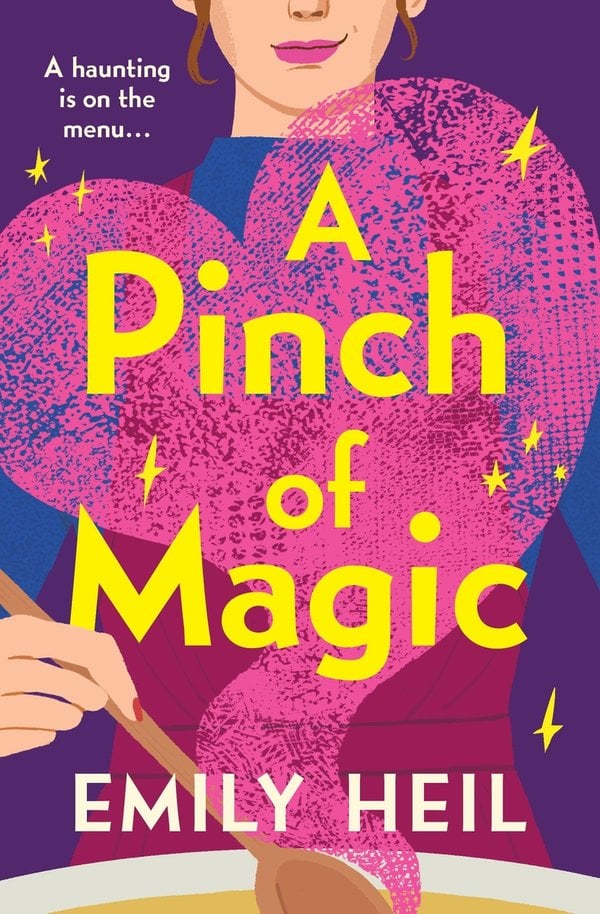
This phenomenon, which I learned about as an English major and avid reader, was a rich vein for me to tap into while writing my own debut novel, A Pinch of Magic. I didn’t set out to write a mystery, but as I worked through a central plot question, one developed.
I had conceived of a story in which a ghost appeared to a contemporary character seeking help in righting a wrong that had been done to her in lifetime. And what, I wondered, was a trespass so egregious it might make a woman angry enough to persuade her to come back from the dead?
I considered making her motivation something having to do with love or romantic revenge. But it eventually occurred to me that (spoiler alert!) the theft of a woman’s work—of her words—would be a pretty compelling reason. Heck, if a guy pulled that on me, it might make me mad enough to rile up my dusty bones some day.
In writing my ghost’s story, I reveled in creating the fictional con that her long-dead husband had perpetrated. In my story, the husband—the purported author of a famous children’s book—takes credit for his wife’s writings after stealing her manuscript just as she was sending it off and telling his publisher (and those celebrating his genius) that she had merely served as his secretary and stenographer. (The fact that she died young of Spanish flu made it even easier to pass off the lie.) Eventually, she was derisively described as “merely a footnote” in the life of a great man.
I thought her post-grave rage might resonate in modern times. These days, many women creators do get to put their names on their work. But often, their invisible labor contributes to creative works in uncredited ways. Maybe that’s a boss who borrows your PowerPoint. Or the male colleague who presents an idea in a meeting that sounds a little too familiar (the term “bropropriating” exists for a reason).
And as I have continued to consider the subject and my own fledgling career as an author, I’ve encountered even more examples of women’s literary work being erased—women writers who weren’t necessarily robbed of their authorship, but of their rightful historical significance. My blood boils not just for them, but for what we readers missed out on by not having their books given their proper due. And for what women writers who came after them missed out on by not benefiting from an already-blazed trail.
Who knows what the marketplace for fiction by women writers might have looked like if the American literary canon included The Lamplighter, an 1854 version of a runaway blockbuster. I was introduced to the book and its author, Maria Susanna Cummings, in a Substack essay by my brilliant literary agent, Erin Niumata, who described the jealousy that Cummings’ success engendered in contemporaries like Hawthorne (yes, she was the subject of his “scribbling women” rant) and Herman Melville.
“She annoyed her male counterparts and was soon erased from literary history,” Erin wrote. “For one reason only: Women loved her books.”
In her series on women writers, Erin reminded me that generations of readers were deprived of Zora Neale Hurston’s brilliant Their Eyes Were Watching God—dismissed by male critics when it was published in 1837—is only known to modern readers because of writer Alice Walker’s posthumous celebration of the book in the 1970s.
In the end of my novel, the wrong of the literary theft is righted. A centennial celebration of the man who claimed credit for writing the beloved children’s book is re-centered on the woman who actually penned it.
I enjoyed, on behalf of any woman who has had her work claimed by another, writing the story in which my ghostly character is belatedly revered and admired.
But not every woman writer gets that kind of satisfying comeuppance.
Their stories deserve to be told. And their books deserve to be read—with proper credit, of course.
***

Emily Heil
Emily Heil, the national food reporter for The Washington Post, has been a professional journalist since she got her first writing gig at her small hometown newspaper at the age of sixteen. She lives on Capitol Hill with her fellow-journalist husband and two cats and spends as much time as possible at her childhood home on the Eastern Shore of Virginia. She is the author of A Pinch of Magic.