
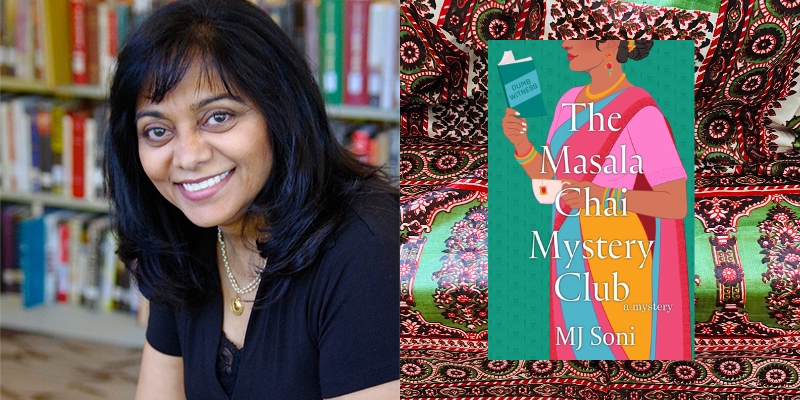
Fashion Cues and Clues: MJ Soni on Why Clothing Matters in Mysteries
From the author of 'The Masala Chai Mystery Club'
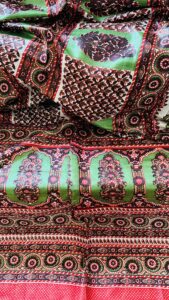
My most treasured item of clothing is my very first saree gifted to me by my grandfather when I was eighteen. It’s made of pure silk and even today feels soft and luxurious. I remember the pride in his face when he saw me wearing it for the first time. It made me feel beautiful.
My First Saree
Clothing evokes memories and emotions for us all. And it can do the same in fiction, particularly in a mystery where it serves so many purposes. Here are a few examples:
Hitchcock and Suspense
Alfred Hitchcock was known to be adamant in how he dressed the actors in his movies, such as Janet Leigh’s underwear in Psycho, Mother’s shoes in the same movie, or the intriguing under the table shot of the rich-man-poor-man contrasting pairs of shoes of the lead men in Strangers on a Train.
“He dresses a character to express psychology,” Edith Hall who worked on many Hitchcock films is quoted as saying in Stephen Rebello’s meticulously researched book Criss-Cross: The Making of Hitchcock’s Dazzling, Subversive Masterpiece Strangers on a Train.
But in novels the description of clothing has to have a purpose, it needs to be critical to the story and not filler.
Clothing to Show Character Details
A hijab, a yarmulke, or a mantilla veil may indicate a character’s religious leanings.
T-shirts with a slogan such as “I’m In Shape, Round Is a Shape,” “Haters Gonna Hate” which first appeared in the pop song “Playas Gon’ Play” by 3LW, and “Rejecting Kings Since 1776” can show a character’s sense of humor, opinion, or political leanings. But they can be too obvious, or tacky if the occasion doesn’t call for a T-shirt with a slogan, unless the character is trying to make a statement.
The queen of mysteries, Agatha Christie, was a genius when it came to describing character through clothing. In A Deadly Affair, Hastings describes Miss Oglander as follows, “The door opened, and a young woman came in. Her dark hair was neatly arranged, and she wore a drab-colored sportscoat and a tweed skirt.”
In a single sentence we not only “see” Miss Oglander but we are made immediately aware of her status, her lack of style, and possibly her desire to blend into the background.
Not only can clothing show character, it can show intent. Sloppiness at a black-tie event could be a rebellious statement, designer clothing may be an act of one-upmanship, and as Agatha Christie so aptly describes in Poirot Investigates, resilience or defiance. “She wore a flame-colored jumper, that set off the slender boyishness of her figure. On her dark head was a little hat of flame-coloured leather. Even the present tragedy could not dim the vitality of her personality.”
Clothing as Clues
The most common use of clothing in modern day forensics would be as clues, especially fibers from clothing left at a crime scene or on a victim’s body.
But clothing can also play a role in witness descriptions, real or misleading, shoe prints, and in the identification of a victim.
Once again, Agatha Christie beats us to the punch when clothing is used as deliberate obfuscation by a character to misdirect. In Lord Edgware Dies, Hercule Poirot with his usual flourish announces, “Ah! c’est peutrop, ça! It would awaken suspicion in an oyster….The woman who came to the house last night wore black. Jane Wilkinson never wears black….Let us assume, then, that the woman who came to the house last night was not Jane Wilkinson—that it was a woman impersonating Jane Wilkinson. Did that woman kill Lord Edgware?”
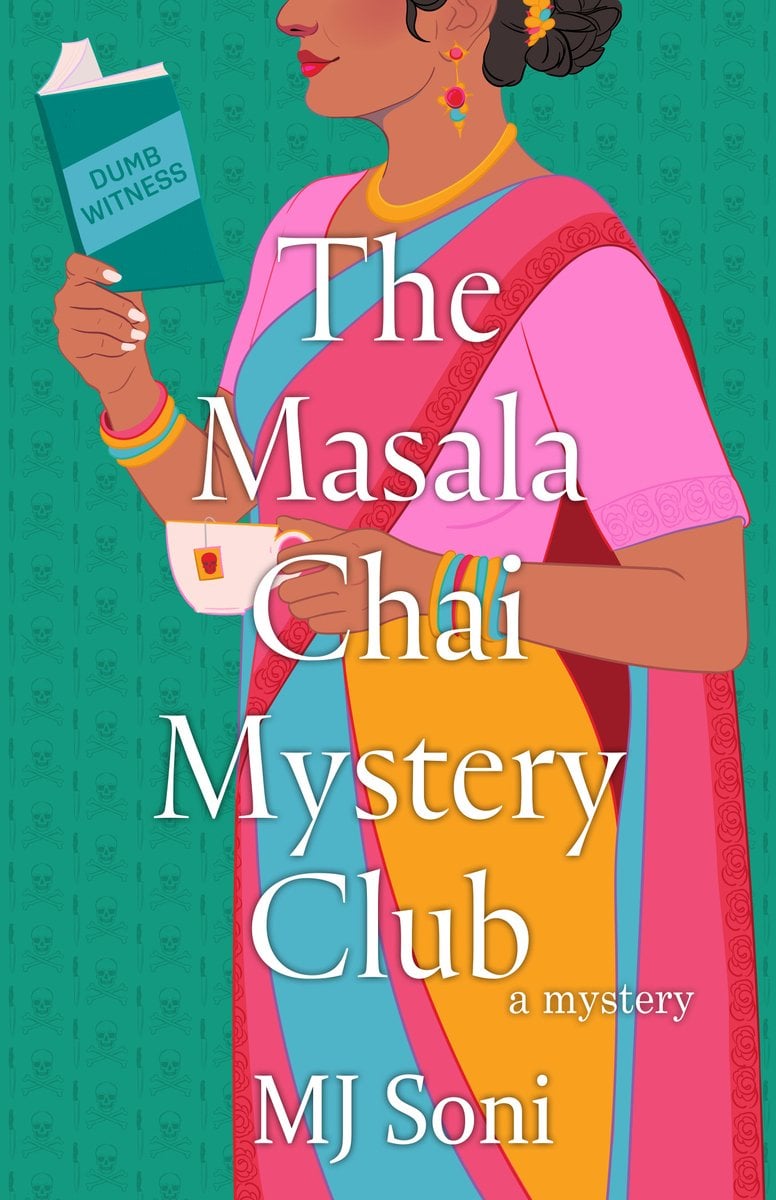
In my debut mystery, The Masala Chai Mystery Club, my protagonist, librarian Neeti Shah, wears sarees. I absolutely love sarees, they’ve been around for close to three thousand years almost unchanged, they’re made of the most luxurious fabrics, and they can be handed down through multiple generations becoming a thread binding mothers with their daughters through centuries.
But sarees, like any clothing can also show character. Neeti loves them for their beauty, but she’s also proud of her traditions and culture. She wears them because she wants to assimilate into American culture, but on her own terms.
Sarees can show status, background, or even details of the weaver. Tie-dyed Ikat sarees require patience and skill to weave such a long single piece of fabric. Paithani sarees are regal, hailing from the courts of the Peshwas from the Maratha Empire. Kanchipuram sarees originate from the temple city of Tamil Nadu where legend has it that ancient weavers crafted pure mulberry silk and golden threads to create beauty for the gods.
My silk saree is an heirloom that I plan on handing down to my daughter. And I’m sure my protagonist Neeti has such an heirloom saree in her cupboard waiting to be bequeathed to her daughter too.
Thank you for reading.
***

MJ Soni
MJ Soni’s short stories have appeared in Ellery Queen Mystery Magazine, Alfred Hitchcock's Mystery Magazine, Akashic Books, and Masthead: Best New England Crime Stories. She penned her memoir, Defying Apartheid, which captures her experiences as a young activist in South Africa, after a writing class at her local community center. She is also the author of the novel The Masala Chai Mystery Club. A lifelong fan of Agatha Christie, she now draws upon her love of the culture and cuisine of her diverse Indian, African, and American background to write heartwarming murder mysteries set largely in coastal New England. She’s a recipient of the Leon B. Burstein/MWA-NY Scholarship and a runner-up to the Eleanor Taylor Bland Crime Fiction Writers of Color Award, a Pitch Wars mentee and mentor, and a member of Crime Writers of Color, Sisters in Crime National, and Sisters in Crime–CT.