Gaslighting and Self-Doubt: Six Books That Make Us Question Those Closest To Us
Lucy Ashe explore fiction in which "care darkens into control"
‘He’s gaslighting you,’ is surely a phrase we’ve all heard countless times in recent years. A disagreement, a difference of opinion, a misalignment in the way two people remember an event: it’s too easy now to slap the term ‘gaslighting’ onto our discomfort with being challenged, and the social media trend of finding victimhood in all exchanges that we don’t like doesn’t help. But true gaslighting exists, and is far more frightening than a one-off challenge to our version of events.
Gaslighting is a psychological war of attrition. It seeps inside a person’s sense of self, their ability to trust their instincts, their recollections, and their feeling of safety. The term comes from the 1938 play Gas Light by Patrick Hamilton, in which a husband, Jack, manipulates his wife Bella into believing she is going mad in order to cover up murder and theft. Flickering the gaslights is just one method Jack uses to psychologically terrify Bella in this insightful play about insidious and deeply dangerous domestic abuse.
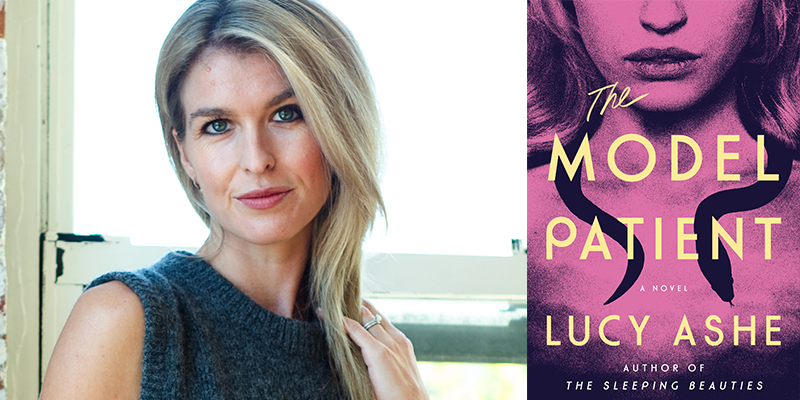
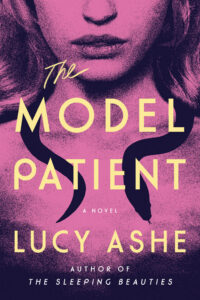
When writing The Model Patient, my psychological thriller about a housewife in 1960s London who develops a dangerous obsession with her psychotherapist, I spent much of my time researching psychoanalysis and the methods therapists use to treat their patients. Transference, the way a patient projects patterns of behaviour and emotions from their past into the therapy relationship, could, I realised, easily be manipulated and abused. And I found countless stories of this happening, a kind of medical gaslighting that can unravel a person’s psychological health. ‘That’s not happening’, a therapist says when his patient questions the dynamics of their relationship. ‘You’re doing this.’ ‘It’s your past playing out with me.’
Gradually, the person you have come to trust and depend upon has the power to make you worry you are going mad.
A therapist, a doctor, a teacher, a parent, a husband or wife—when care darkens into control, it can, for many victims, be impossible to find a way out. When the person who is supposed to love and care for you becomes the person who controls you, reality can quickly slip. And in the world of fiction, this provides fascinating reading. Authors draw us close to one character, only to jolt us into a new reality. The unreliable narrators of thrillers are, to use the term flippantly, the author’s form of narrative gaslighting—but as readers, we relish the ride.
Here are six novels that reveal how terrifying it is to have one’s sense of reality systematically dismantled by the person we are supposed to love and trust:
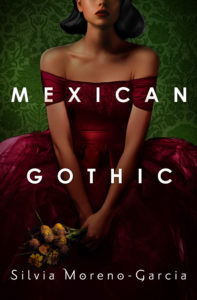
Mexican Gothic by Silvia Moreno-Garcia
In this gothic horror novel, Noemí Taboada travels to her newlywed cousin Catalina’s home in the mountains to help investigate her claims that her husband wants to poison her. When Noemí enters High Place, her intelligence and logic are weaponized against her and the Doyle family use medical claims about inherited mental stability and supernatural elements to make her question everything. The novel is part of a long tradition of gothic novels —Jane Eyre, The Mysteries of Udolpho, Rebecca—where a woman’s ability to trust her instincts begins to unravel. The isolation of the setting makes her particularly vulnerable in this beautifully written and deeply unsettling novel.

Sharp Objects by Gillian Flynn
Reporter Camille Preaker returns to the place where she grew up to investigate the unsolved murder of a teenage girl and the disappearance of another. Her own trauma and self-harm are triggered through this homecoming, particularly by facing her mother, Adora, who disguises control as care. It is in Adora’s treatment of her daughters, keeping them physically and emotionally sick, isolating them from the outside world, and feigning ignorance as a defense mechanism, that the horror resides. Gillian Flynn does not shy away from the darkest of human behaviors, and Sharp Objects is one of those books where you simply cannot look away.

My Sister, the Serial Killer by Oyinkan Braithwaite
Braithwaite’s dark comedy bends the gaslighting and self-doubt trope in unique ways, resulting in a satirical and sharp novel about societal privilege and attitudes to beauty, self-defense, and weaponized guilt. Ayoola literally gets away with murder, manipulating her sister Korede’s sense of sisterly responsibility to help her hide her crimes. Ayoola is a criminal, but she uses her beauty, her childlike charm, and her emotional blackmail of her sister to evade the justice that she deserves.
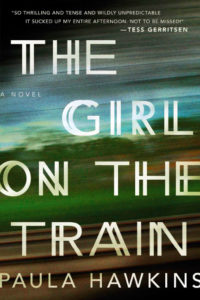
The Girl on the Train by Paula Hawkins
A classic thriller about domestic abuse, self-doubt and gaslighting, The Girl on the Train is a page-turner with the most addictive twists and turns. Tom takes advantage of Rachel’s drinking and blackouts to make her question her own reality, and when she becomes fixated on a missing-person’s case, her sense of reality and fantasy begin to warp. What makes this particularly chilling is Rachel’s trust in Tom, and how she believes his descriptions of her violent and abusive behavior during her drunken blackouts. It is a terrifying example of the way someone close to you can manipulate your weaknesses and weaponize them against you.

My Husband by Maud Ventura
The protagonist’s deep obsession with her husband dominates every page of this taut psychological novel. While not technically a crime novel, the undercurrent of fraught obsession makes this read like one, and I could not stop turning the pages. The first-person unreliable-style of an unhinged wife obsessing over every detail of her husband’s life makes for addictive reading, with an unexpected twist at the end, and this novel’s sharp examination of obsession was influential for me when writing The Model Patient. She gaslights herself with her fixations about her husband’s perceived transgressions, searching for evidence of his love or dismissal based on the smallest of clues. Hyper-fixation, extreme behaviour tracking and deep insecurity combine to make her a volatile and fascinating character.
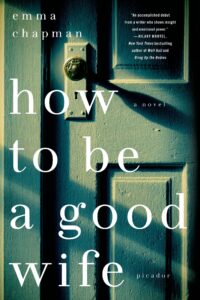
How to be a Good Wife by Emma Chapman
The gaslighting in this unsettling novel about a wife’s slow unravelling is subtle, slow and gentle, making it all the more chilling. Marta has been married to Hector for decades, and she tries hard to be a perfect wife, following a manual from her mother-in-law. But when she stops taking her medication, she starts to have flashes of memories that don’t fit with the version of her past she has believed. Her perceptions begin to shift and she suspects that her supposedly caring and loving husband has been controlling her memories. This is a novel about possessiveness, and the absolute horror of a man achieving his gratification through the subservience of his wife.
***

Lucy Ashe
Lucy Ashe is the author of THE DANCE OF THE DOLLS and CLARA & OLIVIA (shortlisted for the CWA Historical Dagger 2024), and THE SLEEPING BEAUTIES. Her latest novel, THE MODEL PATIENT, was published in April 2026. She trained at the Royal Ballet School, before changing career plans and going to St Hugh's College, Oxford University, to study English Literature. She is an English and Drama teacher.