Hilary Davidson on Writing a Crime Novel About the Public Relations Industry
The author of Every Lie I Told in conversation with Nancie Clare
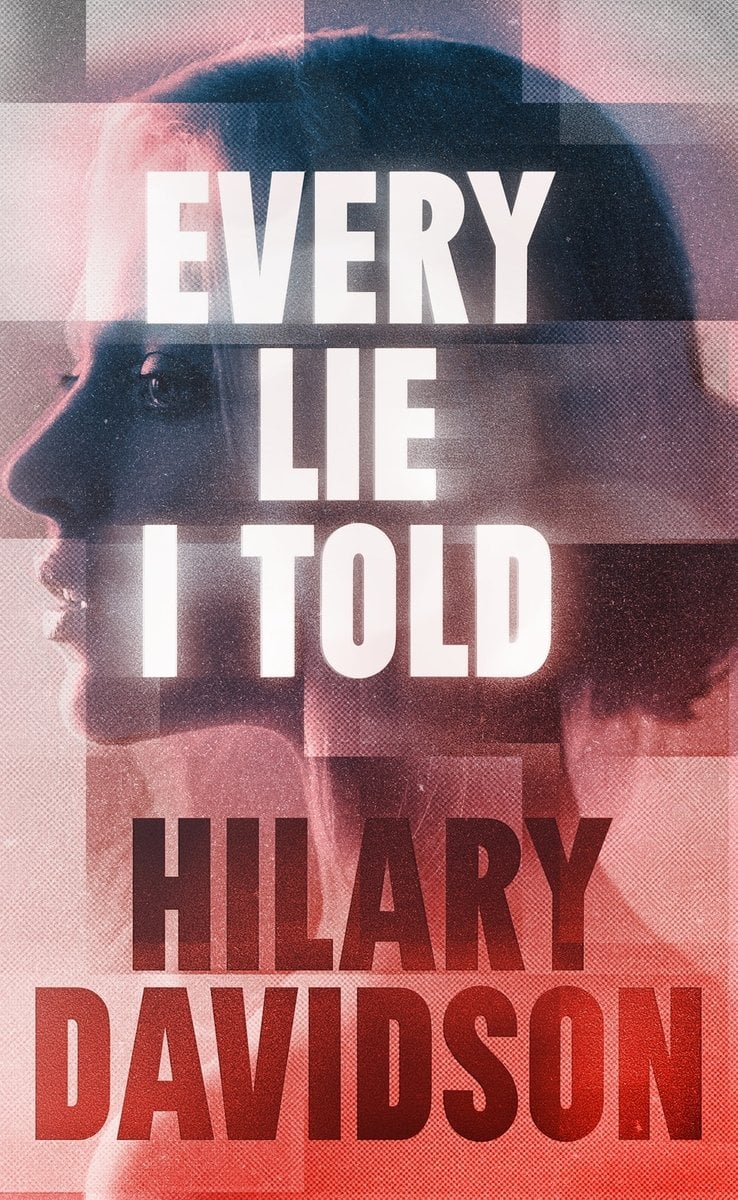
If ever there were an industry rife with the potential for duplicity and downright evil that’s tailor made for crime fiction, it’s public relations. And Hilary Davidson excavates those dens of inequity to great effect in her novel, Every Lie I Told, published June 16, 2026.
*
Nancie Clare: In the first three pages of Every Lie I Told, we learn a lot about Jackie Swift, your protagonist: She’s anxious about a presentation she’s giving the following morning. She’s anxious about her sister of whom she’s very protective and it’s that anxiety that takes her to her former boss’s townhome and to the discovery of a dead body. Can you talk about building the tension so elegantly—and quickly!
Hilary Davidson: Things happen very fast. I will put it down to me being an impatient person….I remember someone telling me that The Girl with the Dragon Tattoo got really good after two hundred pages and I remember thinking, “I’m not going to suffer through 200 pages just to wait for something to get good. I want it to be good from the start.” In terms of the process, I am a seat-of-the-pants writer. I intuitively have a strong sense of character and I know the character’s trigger points. And that was definitely true for Jackie Swift. I wanted her to be in a pressure cooker, because I believe that peels the layers away more quickly.
I wanted the reader to see Jackie at her most vulnerable; that the one person she really does love is her sister and her great fear is something happening to her. You very quickly get to know who Jackie is, how bad she is because she does not react like a good-girl kind of heroine. She reacts like a criminal who’s cornered.
You’re not following Jackie because she’s a good person. You’re following her because you’re fascinated to see what she’ll do next.
NC: You’re taking the reader on a headlong dive into the world of crisis-style, “black-box” public relations. For all of you book publicists that might be reading this interview, we don’t mean you.
HD: No. So it’s not for publicists who are, “Here’s a lovely new book or lovely new film.”
NC: You’re a journalist; I’m a journalist. Often I can look at a story and go, “Wow, somebody did a very good job spinning this.”
HD: I feel like just have to quickly shout out to Edward L. Bernays, who I talk about in the book, and who was Sigmund Freud’s nephew and who really did literally write the book on propaganda. And I name-checked him in Every Lie I Told because people have no idea how manipulated they are by the media. I want to talk about how people are manipulated because Jackie uses those skills.
NC: What drew you to the PR universe to set the story?
HD: It gave me access into some really brilliant minds, some of them really dark brains. PR people are great at manipulating the public, great at manipulating information and they’re shameless about it—for instance, the PR people who worked with Jeffrey Epstein; the PR people who have worked for certain criminals. Criminals in the spotlight have PR people to harm their detractors, to throw horrific accusations against people. They will plant stories about them in the press. And I’ve been fascinated to watch this on the one hand and realize how little people understand what’s going on behind the scenes. Most people I know seem to think that these things happen organically, and they don’t understand that much of the internet is stage managed.
I wanted to pull up that curtain and show how PR people who are masters of the dark arts do what they do. The scenario in the book is completely invented, but the things that Jackie Swift does in terms of character defamation, online manipulation, are very real tactics.
NC: You kind of hit the nail on the head of the dark art of this sort of information manipulation: It’s not exactly a lie. It really lives in that gray space, doesn’t it?
HD: Absolutely. An outright lie can be easily disproven, as opposed to character assassination, which is innuendo. In the case of Every Lie I Told, Jackie Swift has someone in particular she wants to throw under the bus for committing the murder of her former boss. She makes sure that stories start circulating. They happen to be true, but not factually relevant to this case. You’re not allowed to do this in court, but in the court of public opinion, you absolutely can. And the police aren’t invulnerable to that.
NC: Jackie is in PR because she tried to break into journalism but was unable to muscle through the wall of Nepo babies.
HD: This is something that was top of mind for me. Jackie has a huge chip on her shoulder because there’s no financial advantage in her background. Her father was in the military and ended up dying from a health condition related to his service. And then later her mother, who was a teacher, also passed away in a terrible way. Her parents were both public servants who essentially gave their lives for their country.
Coming to New York and going for jobs up against people from wealthy families, who all went to the same schools, the same equestrian camps, Jackie feels like an outsider and I think that makes the character relatable. Jackie is an amoral character. Her moral compass is broken, because she feels that she will not have any opportunities in life if she plays by the rules that have already been bent to favor the nepo babies that she’s been competing against.
NC: Jackie’s father used to tell her that she could do anything she wanted, but nothing was more important than loyalty—but to whom might be a question for her.
HD: Jackie’s father basically implanted this strong sense of loyalty. But she ends up giving her loyalty in a misplaced way.
Her former boss, Eric, the man who’s murdered at the beginning of the book, is a terrible person. He’s a master of the dark arts of PR who used his capabilities in the service of criminals and who also may have committed crimes himself in his personal life. He was a toxic person and yet he and Jackie really bonded. It wasn’t sexual; Eric treated Jackie like a daughter, and she looked on him as a father figure.
That strong sense of loyalty led Jackie to cover up his crimes. Loyalty is one of her positive qualities and yet it’s been used in such a bad way.
NC: You mentioned that Jackie is immoral and in some ways she’s unlikable and yet you write her to be sympathetic. The book is in first person, so you get to see how Jackie is taking in the cascade of events like her sister’s disappearance and the death of her former boss. Readers are on this ride with this unlikable yet sympathetic character.
HD: This really goes to the heart of the writing Every Lie I Told. When I started, the book was in the third person. This is my eighth book and over the years I’ve written books in both styles.
As I got into the book, I realized it wasn’t working. And the reason it wasn’t working was because the main character, if you judge her by her actions, is a terrible person. She’s worse than unlikeable. She’s doing terrible, very morally objectionable things. I realized that I needed to be inside the head of this character so that readers would understand why she’s doing what she’s doing, to see her motivation.
As I was writing, I was often like, “Jackie, I can’t believe you’re doing this. But at the same time, don’t stop because I also want to see where you’re going with this.”
NC: You’ve established that there are elements of Jackie’s personality that are morally reprehensible. But we should talk about her strengths. And the one that shines through everything Jackie does is her love of and her loyalty to her sister, Maddie.
HD: The relationship between Jackie and her sister, Maddie, is at the heart of the book. Jackie does have a total loyalty to her sister. They’re very different people: Jackie’s the older sister by three years and Maddie is, I would say, very driven by justice. She’s very moral. She really cares about helping people.
But Maddie takes a dark turn because her search for justice has led her to believe that there’s no justice through the legal system, which is an incredibly disturbing kind of way to think of the law if you start thinking that vigilante justice is the only avenue that’s open. And the thing I find really interesting is that maybe the worst application of loyalty in the book is, when Jackie finds a dead body, her assumption is that her sister must want her to cover up the crime.
Jackie’s approach is that she will do terrible things to help Maddie and she’ll do that because she loves and treasures Maddie, and this is how Jackie shows her love.
Love is the best reason for doing bad things. It’s so relatable.
I think the reason readers stay with Jackie is that even at her worst when she’s doing completely reprehensible things, she’s doing them out of love for her sister. I think that is a chord that keeps resonating.
NC: Jackie and Maddie’s relationship is essential to the book. Although we should mention it is more complicated than that. Every relationship between every character runs the gamut from ally to enemy to an impediment to a conduit is like a ballet.
HD: It keeps everybody on their toes, right? There’s kind of a fluidity in terms of their relationships to each other, what they need from each other. They know each other because they’ve worked together sometimes for years or they’ve had relationships that have spanned years and so there are bonds there, but they’re also on opposite sides of things sometimes. It’s complicated.
NC: I thought you really did a good job of showing that through Jackie’s point of view, every time she would come into a situation, she’s evaluating how can this person help me get what I want? As a matter of fact, it scared me a little about you. I don’t think you’re like Jackie and the other PR people, but the fact that the book seems so on point did give me a little bit of pause.
HD: If I were living this other life where I’m not just in a corner of my living room working away, I could be a terrifying force.
NC: You could be. And I say that with love and admiration. You could be as bad as any of these badasses, I think.
HD: Thank you. I think it’s every crime writer’s secret dream is like, could I be as bad as one of my characters? Yes!
NC: The story ends in an unexpected place, which we shall not say because that would ruin everything. But what I got from that was hints that Jackie Swift might be back. So are you thinking of Jackie Swift part…
HD: Two? That is such a great question because when I finished writing the book, I put it down and I did not at that point think of anything further with Jackie. But I will say in the last couple of months she has been on my mind more and more. It’s funny because there’s very much a sense of, wow, I would love to see what she does next.
NC: So would I.
***

Nancie Clare
Nancie Clare has been a Southern California-based journalist and writer her entire career. Her coverage of the crime fiction community includes being the chief interviewer for the podcast Speaking of Mysteries. During her time as Editor in Chief of LA, The Los Angeles Times Magazine, Nancie devoted each April issue to crime fiction on all its platforms. She is the author of two non-fiction books: The Battle for Beverly Hills: A City’s Independence and the Birth of Celebrity Politics (St. Martin’s Press) and In the Spirit of Beverly Hills (Assouline). She does not, however, live in Beverly Hills, but rather the wrong side of the right hill (AKA the San Fernando Valley) with her husband, dog and two cats, where she is at work on her second crime fiction novel.