
Why The Mechanic, not The Jackal, Is the Ultimate 1970s Movie Hitman
'The 'Day of the Jackal' is held up as a classic. But the 1972 Charles Bronson feature is superior in almost every way.
In the annals of hitman movies, The Day of the Jackal holds a place of special distinction.
The 1973 adaptation of Frederick Forsyth’s classic novel boasts a 91 percent critics’ rating on Rotten Tomatoes, and an enviable 88 percent audience rating. No less a luminary than Roger Ebert lauded it as a “a beautifully executed example of filmmaking … put together like a fine watch.” Others described it as a “clockwork amusement,” a “splendid film of thrilling, tense entertainment,” and a “polished and exciting thriller.”
Allow me to dissent, at the risk of controversy.
If you’re looking for a superior period assassin movie, 1972’s The Mechanic is the discerning consumer’s choice. With an intolerably unjust 50 percent on Rotten Tomatoes, The Mechanic is overdue for a reassessment of its place in the hitman canon.
Like most successful hitman stories, both Jackal and The Mechanic are competency porn. At the heart of their appeal is the viewer’s appreciation of watching someone excel at their craft. But that appeal is heightened by the nature of the craft—professional murder.
The viewer wants to root for professionalism, but since the work itself is morally dubious, the assassins must be consummate artists, so incredibly skilled that you cannot help but admire them. This dynamic runs through the entire hitman genre, at the movies, from Le Samouraï to John Wick, and in books such as Barry Eisler’s A Clean Kill in Tokyo and W.J. Weatherby’s Goliath, a 1981 novel about an attempt to assassinate the first American pope. A 2024 prestige TV remake of The Day of the Jackal threads this needle so expertly that you find yourself cheering the assassin in one episode and utterly repelled by him in the next.
From start to finish, the original Jackal is a deeply flawed movie, with some of its problems emanating from the source material and others all its own, following a high-priced assassin through elaborate preparations to assassinate French President Charles DeGaulle. The protagonist is a strange combination of magically successful and tragically inept—he cleverly throws off investigators by repainting his car after its description is exposed, then wrecks said car in a bit of unnecessarily reckless driving. He effortlessly seduces an unreceptive woman in one scene and carelessly neglects to kill witnesses to her murder in another—a mistake that leads to his downfall.
The storytelling of The Mechanic is far more effective. The Jackal doesn’t appear until 10 minutes into his namesake movie, and he doesn’t perform a notable act of violence until the 45-minute mark. The Mechanic opens with its titular killer already at work—in a gripping but wordless 15-minute sequence that skillfully showcases his intelligence, methodical approach, and strategic patience, setting the stage for the violence to come.
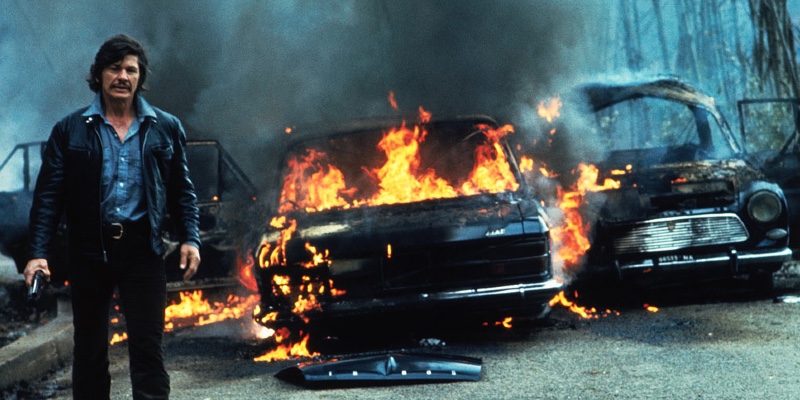
While the writing and directing are both superior to its glossier, international counterpart, star Charles Bronson is The Mechanic’s biggest advantage over Jackal. Seen here at the peak of his career, Bronson is intensely physical, visibly tough and strong, but also impressive in his ability to convey intelligence. Again and again, the camera focuses on his shrewd, calculating eyes as he approaches each job like an intricate puzzle. And that analytical instinct is not just limited to the job; we see it play out in social settings as well, with Bronson quietly observing and silently judging some truly bizarre interactions.
The Jackal’s Edward Fox turns in a performance that is deeply shallow in comparison, projecting what feels like an unearned confidence, physical foppishness combined with an aristocratic British persona, infused a blasé assumption that he is simply up to the task.
In fairness to Fox, the script does him absolutely no favors. The Jackal is enigmatic by design, which some viewers consider an asset. His real name and history are a mystery. His personality barely shows in his extremely limited interactions with other people. We see him succeed at seduction, but we can’t imagine how. There’s no spark with his sexual partner. Maybe he smells good? We’ll never know. The Jackal is only the task, and aside from the task, he is nothing.
The Mechanic gives Bronson a protégé, through whom we learn about his history with the organization that employs him. The movie leaves plenty to the imagination, especially his motivation for the decisions that lead to his undoing, but the writers give you breadcrumbs, and Bronson’s performance is emotionally resonant and suggestive of an explanation. The enigma of The Jackal is meant to be accepted as impenetrable. The mystery of Bronson’s Arthur Bishop invites reflection. The viewer is given enough to encourage speculation, but not enough to draw definite conclusions. You’ll have something to talk about after watching this movie.
Fictional assassins are often enigmatic by design—we know shockingly little about John Wick, to pick an obvious recent example. But the things we know matter. The undeniable talents of everyone involved aside, it’s hard to imagine John Wick reaching the heights of its commercial and storytelling success without the dog. The competency part of competency porn can only take you so far. You need a little heat to seal the deal.
That’s also what makes the 2024 remake of The Day of the Jackal shine. When we’re introduced to the lead character’s non-professional life, I had a pretty skeptical reaction. Do I care about the assassin’s domestic problems? Turns out the answer is yes.
The 1973 Jackal is almost an hour too long compared to the tight 95 minutes of The Mechanic, but the ten episodic hours of the 2024 Jackal are smoothly paced, allowing the assassin’s story and eventually his backstory to unfold gradually, preserving the sense of enigma while still ultimately giving viewers a three-dimensional person to love and hate. In comparison, the 1973 Jackal sometimes feels like an old-school marketing film about assassination, one that a guidance counselor might show high school students, either as a cautionary tale or an unusual “career day” feature.
The workings of a machine are interesting, but the workings of a person are compelling. The Mechanic is an underrated success at marrying the technical fascinations of the hitman genre with the sweaty, bloody, flawed human at its core. While it’s still also a ’70s movie, with all the flaws and eccentricities that entails, it’s a mile better than its more celebrated counterpart, with enduring lessons for today’s storytellers.
***
 Version 1.0.0

J.M. Berger
J.M. Berger is the author of The Pope’s Hitman, publishing October 27, 2026, from Crooked Lane Books.