

Lucy Burdette on Writing Sleuths Who Are Pregnant or New Mothers
The author of 'A Delicious Deception' shares advice for pushing detective series past parenthood
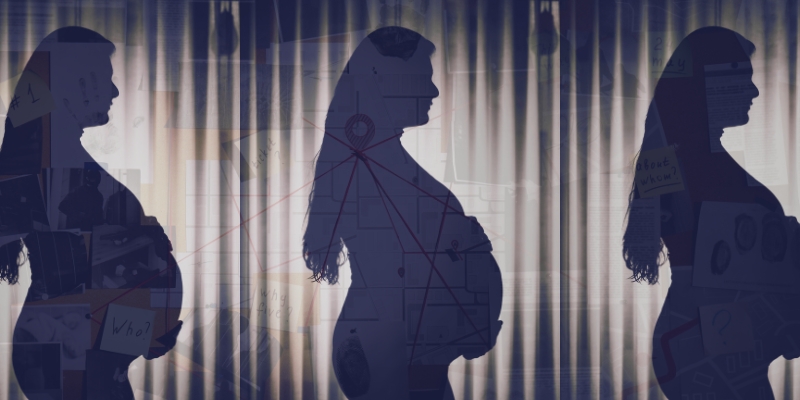
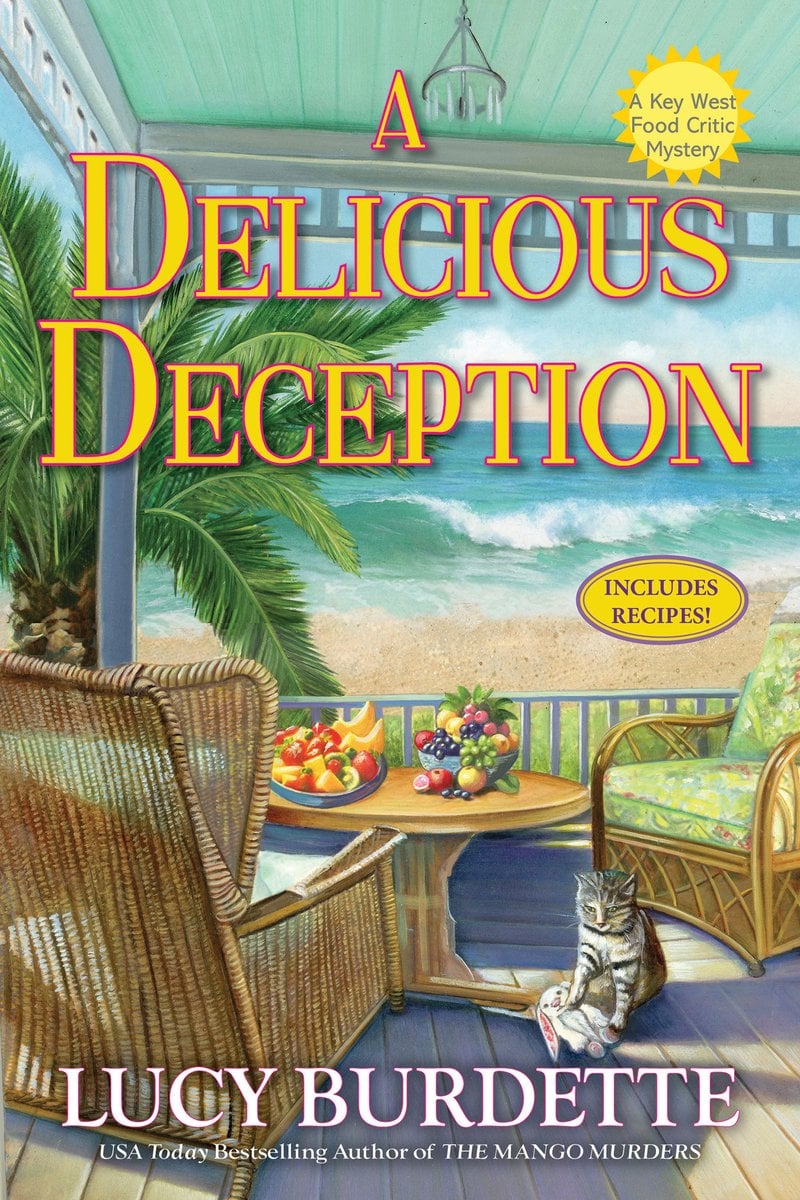
By the end of my fifteenth Key West Food Critic Mystery, The Mango Murders, my food critic sleuth Hayley Snow was pregnant. I hadn’t planned this—and to be fair, neither had she. I suspected that this might be the final book in the series, and if so, what better way to end than with the happy news of an upcoming baby?
Except the series didn’t end.
Instead, I found myself facing a new challenge: how do you write a compelling mystery starring a sleuth who’s nine months pregnant?
Hayley’s pregnancy was the logical next step in her relationship with police detective Nathan Bransford, but it raised all kinds of questions for me as a writer. What kind of mystery would justify putting a very pregnant woman in harm’s way? How could I balance Nathan’s understandable protectiveness with the independence readers expect from Hayley? And how could I make her involvement feel believable when every instinct should be telling her to protect herself—and her unborn child?
As I began writing A Delicious Deception, Hayley was struggling through her ninth month of pregnancy. She missed her autonomy, her usual spunk, and even her privacy. Everyone—from strangers in the grocery store to her husband Nathan—had an opinion about what a very pregnant woman should and shouldn’t be doing.
It was risky to write a mystery with a pregnant sleuth, especially one so close to giving birth. Hayley has always been willing to take chances, but now she was risking more than her own safety. I knew the mystery would have to draw her in for reasons she simply couldn’t ignore.
The answer came from an announcement I spotted in the local newspaper. The Monroe County (Florida) Sheriff’s Office had established a safe custody exchange site, designed to help separated parents transfer their children with as little conflict as possible. What if Hayley agreed to accompany a young mother to pick up her daughter? It seemed like the sort of favor no reasonable person would consider dangerous, and it would give Hayley a chance to feel useful again.
Hayley has never been able to walk away from someone who needs help, especially a child. But this time everything feels heavier. She’s about to become a mother herself, and every decision carries consequences for someone besides herself. She’s also wrestling with the fear that motherhood may change—or even eclipse—the identity she’s worked so hard to build as a food critic and amateur sleuth.
As I was writing, I’d just finished reading Paula Munier’s The Night Woods, in which Mercy Carr gives birth in the wilderness while fleeing armed pursuers. Surely a routine custody exchange couldn’t go that badly.
As it turned out…it could.
Curious how other mystery writers have handled the same challenge, I asked two friends who write New York Times bestselling series for their thoughts on successfully navigating a sleuth’s pregnancy.
Rhys Bowen writes the Molly Murphy series and the Royal Spyness series; both of her heroines have accomplished sleuthing while pregnant. She said:
I can’t tell you how many times I’ve asked myself what was I thinking when I got my heroines pregnant? The problem is that writing about young women in the past, when they fell in love and got married there was no birth control or at least they didn’t know about it. So pregnancies were inevitable, but then she has a baby to look after. I remember the book in which Molly Murphy has to flee to Paris with her new baby and then has a horrible mystery to solve concerning her two friends there—and every four hours she has to rush home to nurse that baby.
The problem with having a female sleuth who is also a new mother is that I have to ask myself all the time, would I put myself into danger if I was responsible for someone else’s life? So most of Molly’s cases since she had her first child have concerned her family or close friends, where she has a moral obligation to help solve the mystery. At least Lady Georgie has it slightly easier because she has a nanny.
So my advice would be, if you consider giving your heroine either a baby or a dog—don’t. Readers will write and tell you if you haven’t fed the dog for ten pages. They’ll certainly notice if you’ve left the baby lying in a crib for three chapters.
New York Times bestselling Julia Spencer-Fleming’s heroine Reverend Clare Fergusson has also been pregnant in the line of duty. Julia explained:
I decided my co-sleuth, Clare Fergusson, would get pregnant because I wanted to explore the dynamics between her and her brand-new husband, who had agreed they wouldn’t have children. It added interesting layers to her character. Clare was always reckless, and now she had to deal with the fact that anything that happened to her would also affect her unborn child.
There are, of course, the physical challenges of going after bad guys when your center of gravity has shifted and it’s hard to bend over. But the biggest change was the way other people saw her. A visible pregnancy makes some observers more protective, while others are willing to take advantage of her supposed vulnerability.
As both Rhys and Julia pointed out, the real challenge begins after the baby arrives. Writing a pregnant sleuth turned out to be manageable. Writing a new mother may prove even trickier.
I’m looking forward to finding out in Book 17.
***

Lucy Burdette
Lucy Burdette writes the USA Today Bestselling Key West Food Critic series. She is the author most recently of A Delicious Deception from Crooked Lane Books.