
Naomi Kaye on the Legacy of the Jonestown Massacre in Literature
Analyzing the myriad ways that The People's Temple tragedy has appeared in fiction
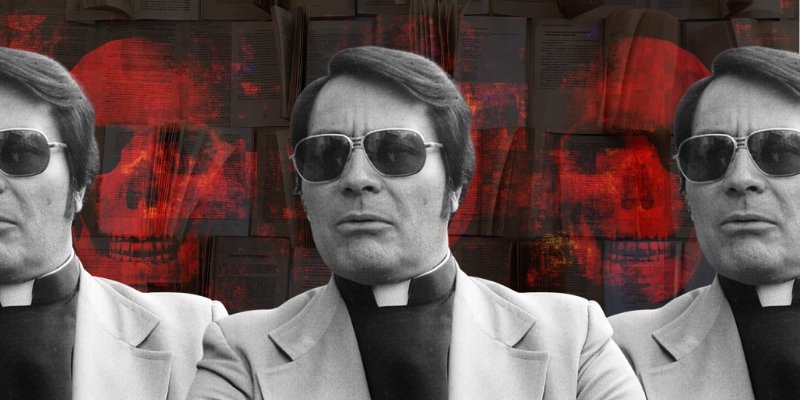
The terrible tragedy of The People’s Temple mass cult suicide and additional homicides that took place in 1978 in Jonestown, Guyana still loom large in collective memory and popular culture today. Starting in 1974, charismatic cult leader Jim Jones dispatched some loyal followers to Guyana to establish a “utopian” commune—idyllic, free of racism and capitalism, in nature—in the jungle area of a relatively sparsely populated region. By 1978, there were over a thousand residents of Jonestown ranging from infants to senior citizens, and they were subject to the abuses and whims of an increasingly erratic Jones.
On November 18 of that year, members of the cult carried out homicides of a US congressman, Leo Ryan and other members of his investigation as well as Jonestown defectors. Following this, over nine hundred people including three hundred children were forced into “revolutionary suicide” by being injected with poison or drinking poisoned powdered juice, sometimes even by their own parents. Jones himself died of a gunshot wound to the head.
Some survivors went on to tell their stories as well as eyewitnesses, so there is a fair amount of memoirs and reportage on the Jonestown massacre, as well as numerous nonfiction books and documentaries on the subject. The Jonestown massacre had such a grip on the public imagination, though, that the event continued to be represented in fiction as well.
Possibly the most noteworthy instance of the People’s Temple being heavily utilized as a plotline in fiction is in Armistead Maupin’s Further Tales of the City, the third book in his beloved Tales of the City series centered around a group of friends and their landlady in San Francisco. Maupin utilizes a fictional Jim Jones to dramatic effect. Part of the story involves protagonist DeDe Halcyon getting involved in the People’s Temple cult and going to Guyana along with her twins, and then escaping before the mass suicide.
However, Maupin adds a unique twist: that Jones, in fact, did not die in Jonestown and instead ends up in San Francisco under a false name. This was perhaps inspired by legends and rumors that Jones had several identities that he used as a cover-up.
While Maupin’s novel continues to be what is probably the most well-known fictional depiction of Jim Jones, there are other novels that explore People’s Temple and the Jonestown massacre.
In Paradise Undone: A Novel of Jonestown by Annie Dawid, the focus is on several viewpoints of fictional figures (though with a basis on real-life people) such as an elderly African-American man narrating his his experiences with Jonestown when he was young, or a passionate female follower of Jones who later grows to question her idealism and faith in his message and demands.
Jonestown by Guyana-born Wilson Harris is a fairly unusual novel in terms of its style. The novel is posed as a “dream book” focused on a Jonestown survivor that threads elements of South American history into the story of Jonestown and its locale specifically in the continent, pulling in additional themes like colonialism and indigenous religion into his literary explorations of the tragedy.
Ryan Roy’s Jonestown: A Novel explores the perspective of a father whose young child and wife are trapped at Jonestown. A defector of the cult, Neil, has his house broken into by a teenage escapee from Jonestown, prompting Neil to set out to rescue his family members.
The novel The Girl from Jonestown by Sharon Maas focuses on two female characters on two separate trajectories: one, a young journalist who recently has experienced a major personal loss returning to her home in Guyana, and the other a frightened mother looking to escape the compound. Maas is herself Guyanese-born and worked as a journalist, and brings both of these perspectives to this page-turning novel.
One common thread that all these novels at least mention and sometimes delve into is: why and how? How could so many people, particularly open-minded, well-educated and thoughtful people, get pulled in by Jim Jones’s cult and go down such a dark path?
Some of the authors, like Annie Dawid, had personal experiences with friends joining the People’s Temple and other cults and getting completely lost in them, whether cut off from prior relationships or as dark as the Jonestown death. Other authors probe how abuse and mass psychosis led otherwise clear-thinking people into a lifestyle of violence and abuse. Maas and Harris also provide some context about what locals in Guyana might have experienced or thought about the entire event.
While all of the novels about Jonestown are fictionalized works, they always leave the reader with the lingering horror of the fact that truth is in fact often stranger than fiction.

Naomi Kaye
Naomi Kaye Honova is a freelance writer based in Germany and originally from California. She's written for numerous publications, including New Lines Review, Wine Enthusiast, Lonely Planet, and Nameberry. Some of her myriad research interests include cults, the history of Disney parks, rare diseases, and the Mitford sisters.