
Noah Segan discusses his new film, 'The Only Living Pickpocket in New York'
The writer-director on working with John Turturro and making a five-borough quest film.
An old-school crook meets 21st-century villains in Noah Segan’s new film, The Only Living Pickpocket in New York, which played at the 64th New York Film Festival and releases in theaters this month.
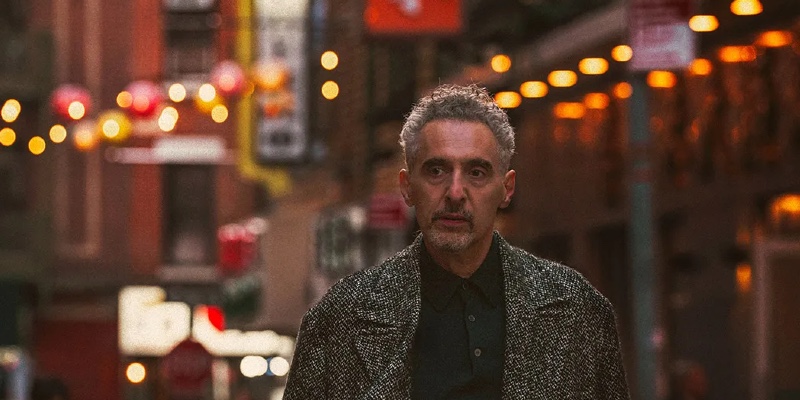
ne Harry Lehman (John Turturro) is a pickpocket trying to make a living and look after his wife, who’s in a vegetative state and requires round-the-clock care. He lives in the Bronx and rides the subway in search of opportunity—but New Yorkers no longer wear fancy watches or carry cash in their wallets. When Harry robs the wrong young man and finds himself in possession of a valuable USB drive, he sets off a chain of events that results in him racing through all five boroughs in a last-ditch attempt to make things right.
The Only Living Pickpocket in New York is a nostalgic love letter to the city—and the people and places in it that don’t usually get much screentime. The film also features a stellar supporting cast including Steve Buscemi, Tatiana Maslany, Giancarlo Esposito, and a cameo appearance by Jamie Lee Curtis.
I spoke to Segan via Zoom. Our conversation has been lightly edited for clarity and length.
Radha Vatsal: I want to start with John Turturro because he carries the film, and I’m curious—did you always know it was going to be him? Did you write the part with him in mind?
Noah Segan: You know, you don’t think John Turturro is going to be in your movie. You think, man, if my dream came true, John Turturro, or a John Turturro type, would want to be in my film. [But] there is no John Turturro type. There is just John.
I think if you’re trying to make an independent movie, a small movie, you try not to get your hopes up, you try not to get wrapped up into thinking… you sort of have to be water. You have to just go with the flow. And it’s beyond my wildest dreams, I can say, having John be in this movie.
RV: It seems like lots of dreams came true for this movie, because the rest of the cast is pretty amazing too, with Steve Buscemi, Giancarlo Esposito, and Jamie Lee Curtis, and then the younger actors as well. Can you talk about how that process worked?
NS: It was prayers and pleading and yearning and all of that. Luckily, a lot of people love to work with John [Turturro]. And his skill and his talent is really second only to how lovely a person he is, and how great a friend he is. And so, these people who he’s working with, specifically Giancarlo and Steve, are people who he’s worked with for forty years. They’ve been friends. Their kids know each other. They lived nearby one another. They have a shared history that goes beyond just being actors and colleagues.
And in a very small way that was my relationship with Jamie, who came to us because we had become friendly when I worked on the first Knives Out movie with her. And she’d become friendly with our producer, Leo, and was willing to come and play. They had never worked together—she and John. I think they had met maybe once or twice in passing, but they didn’t have a shared history together, but had a lot of mutual love and respect for one another. Similarly with Tatiana [Maslany], we had worked together ten years ago. And she and John had met in passing, and both, of course, recognized who they were, you know, game recognizes game, so to speak. And when I sent Tatiana a text message for the first time in years, she said, well yeah, John Turturro, of course. I’ll be there.
RV: So, I want to talk also about Harry’s overcoat. And I read somewhere that it’s like Alain Delon’s trenchcoat in Le Samouraï, and I think that’s right on the money. Harry wears it for what seems like eighty percent of the film. And it’s his look, his armor. Later, we learn that it has features that are relevant to his work. When you envisioned the film, did you have the sense of the lead character in some signature outfit? How did you go about choosing this coat? I mean, it’s just a coat, but it also seems like it really embodies this character.
NS: Well, I think, as you just described, it is not just a coat. And it is very much a part of [Harry’s] character. And talking about famous looks, we think of something like Le Samouraï, or even, Colombo. These great trenchcoats. I think we didn’t want to do a trenchcoat because I think that the trench coat had been discussed a lot in movies and stories. John had a lovely relationship, still does with Zegna, which is a very storied, old school, Italian, beautiful clothing company designer. And they had convinced him to walk a fashion show in Milan.
And he wore a coat that was not dissimilar from this, but it was the high fashion version. It had some sort of puffy collar, and it was exactly what you would want to see on a fashion model, at a fashion show, not necessarily what you would see, even on a pickpocket who had a couple of good nights and decided to treat himself to a good coat.
But Cailee Breneman, who’s our costumer, started working with Zegna, talking to them about a look that could incorporate the vibe of that coat. They found this fabric that’s black and white, which I thought was very evocative of Harry to have a monochrome guy in a colorful world—to talk about the duality of our environment… black and white versus color. Zegna built it for John. And there was no question that that was his look.
RV: I love that you’re telling this story of old versus new through the story of a pickpocket, and I was just curious that out of all the different types of petty criminals, why you chose a pickpocket, and then also whether you did a lot of research to understand the lifestyle and craft of pickpocketing?
NS: Well, it is very much a lifestyle. Much of the research is 19th century into the early 20th century. And it’s about the lifestyle of these people and how they negotiated with the police and how they were able to navigate their cities and often work together, work in pairs, work as couples, which, you know, is implied in this movie.
It was not a lonely profession. It was actually a profession that was about being with people and about physical objects, right? A credit card is sort of worthless. You need the cash. You need the item. And of course, we are existing in a world now that is less and less about the tactile and less and less about the physical and the analog. And so that’s how I got to the pickpocket.
And of course, the code, the honest thievery. Let’s not forget, these are bad people. These are criminals. They did have a code, they would throw the wallet in a mailbox. Not a trash can.
RV: Why is that?
NS: So that your ID and your pictures of your kids would come back to you.
RV: I didn’t realize that. I noticed that he did throw it in the mailbox, but I didn’t know that.
NS: That’s the honorable thing to do.
RV: I’ll remember that for next time! And then the film clearly takes place across multiple boroughs.
NS: All five.
RV: And it seems to deliberately avoid glamorous Instagrammy type of locations, which is so refreshing. And did you grow up in this city? How did you choose those locations and also the different subway stops?
NS: This was my first time in New York.
RV: Oh really?
NS: No, I’m a fourth-generation New Yorker. [Laughs.] Sorry, sorry. My family has been here for 130 years or something. A long time. And we shot on 26th Street, which was the street I mostly grew up on, but we also shot about a quarter mile from Prospect Park South in Brooklyn, where we were living when I was born. We shot in the Bronx where my grandfather’s from. We shot in Sunnyside, which is not far from where my brother lives in Queens. We ran the gamut, and the idea of a quest movie really excited me. I love quest movies that are microcosms. I think Tangerine is the perfect example of that.
And what better place than New York? And then once I did that, I kind of painted myself into a corner—having subway maps on the wall, looking like I was doing a conspiracy theory with red pieces of tape and string going everywhere and what train does he have to get off to get here? And that’s part of the fun.
RV: Did you work it out so that he could go from point A to point B in the amount of time that he had or were you kind of fudging the geography?
NS: No, it should be perfect if he catches every single train exactly when he needs to, which I decided in my brain is his superpower. If there is any person on earth, if there is any superhero on earth, who can make sure to perfectly navigate the MTA, it’s Harry.
RV: Well, that makes sense. And no train delays. I just have a couple more questions. What is it like to switch from acting to directing? Do you prefer one? I’m sure they both inform each other.
NS: In terms of directing, having spent so long as an actor, it’s very lucky because often directors can spend years developing a movie and writing and doing pre-production prep, and all of that. There’s really no limit. But what there is always a limit to is on-set experience. I was very lucky to have spent many years on sets. That is its own circus. Its own world that has its own set of rules and pressures and I do love it because it is the thing I associate most with making movies, because that’s where I spent most of my time.
And I’m very lucky to have had that experience. Otherwise, I’ve also been spoiled as an actor working so much with Rian [Johnson], that I have the luxury of being able to ask myself, what would you want as an actor? What kind of environment? What would I have wanted, or did I benefit from? And often, it’s just being able to laugh and meet a challenge with a joke, and create an environment people want to come back to the next day, because it’s hard.
RV: How many days did it take to shoot this film?
NS: I think it was 24 plus a couple of little pickups here and there. Yeah, short.
RV: Is the title inspired by the Simon and Garfunkel song [“The Only Living Boy in New York]?
NS: Yeah.
RV: I kept waiting for the song to come on, but I guess it didn’t. It was not the song for the movie.
NS: Luckily it’s such an iconic song, hopefully there’s something in the vibe that gets to you. It’s such a wistful song. It is a song about leaving but it’s also about leaving someone—and also it was very divisive in my house growing up because my mother claims that in 1973, Art Garfunkel stole a cab from her in the rain while she was pregnant on Wooster Street in Soho, and she’s never forgiven him.
But Paul Simon was dating some lady who lived on our block on Crosby Street, also in the mid 70s, and once helped her with her groceries. So, there’s a real dichotomy here happening between Simon and Garfunkel.
RV: Karmic balance or something. Lastly, the film shows pickpockets as a dying breed in New York City. Do you happen to know whether that’s true? Actually, watching the film has made me, as I was out and about in the subway, really aware of where my bag is or where other people’s hands are.
NS: You know, that’s a good question. I do know that it is far less prevalent than it used to be. Because people don’t carry cash, because phones are often not worth anything once they’ve been reported as stolen. People’s clothing is tighter often than it used to be, so you can’t slip in there as well. So there is less pickpocketing. Crime in general and New York has decreased… I do get a lot of anecdotal stuff about pickpocketing in Europe where I think it is far more prevalent—but that’s their problem. [Laughs.]
RV: Right! Exactly. Well, thank you.

Radha Vatsal
Radha Vatsal is the Film/TV Columnist for CrimeReads. She is the author of No. 10 Doyers Street and the Kitty Weeks mysteries, and her essays have appeared in the The New York Times, The Atlantic, the Los Angeles Review of Books, and elsewhere. She holds a Ph.D. in Film History from Duke University. You can find her on Instagram or email: rvatsal@lithub.com