
Olesya Lyuzna on the 1920s Cults of Positive Thinking That Shaped Her New Mystery
The author of Liars in Paradise explores the intersections of manifestation, magical thinking, and art
Writers are a superstitious bunch. Some require thematic tchotchkes arranged on their desk, others favor a time of day, a certain slant of light. I’m convinced that I can only draft new stories in the mornings, on my janky Alphasmart, and if I miss that time window—or try working on a different device—the mood is ruined, and the magic, kaput.
But writers aren’t the only ones in thrall to superstition. Manifestation has entered our daily lexicon, and even the most cynical, Zyn-chewing finance bro can be found chanting at Othership or starting his morning commute box breathing with a meditation app. We all crave control, some foolproof way to achieve the markers of success glimmering on our phone screens.
The law of attraction feels like a distinctly modern solution, beckoning us into a world of pretty YouTube brunettes, with their three-step process to Become Irresistible, Get Your Specific Person, Make Him Obsessed Overnight (Warning: Extremely Powerful).
But take us a century back in time, and we would be doing the exact same thing.
Does its longevity prove that manifestation works, or is it yet another scam preying on the hopeless?
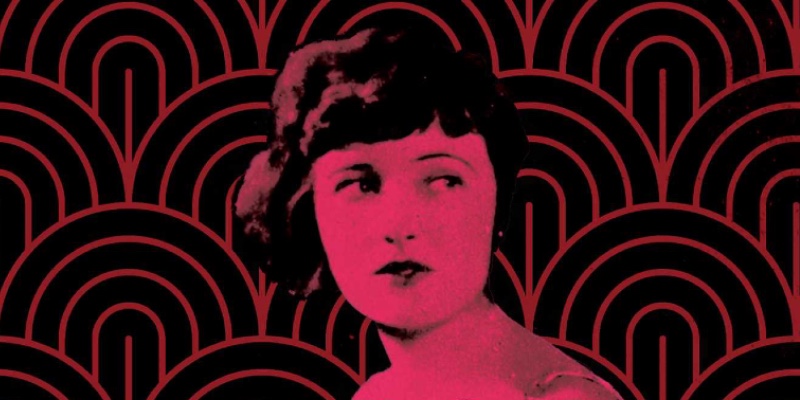
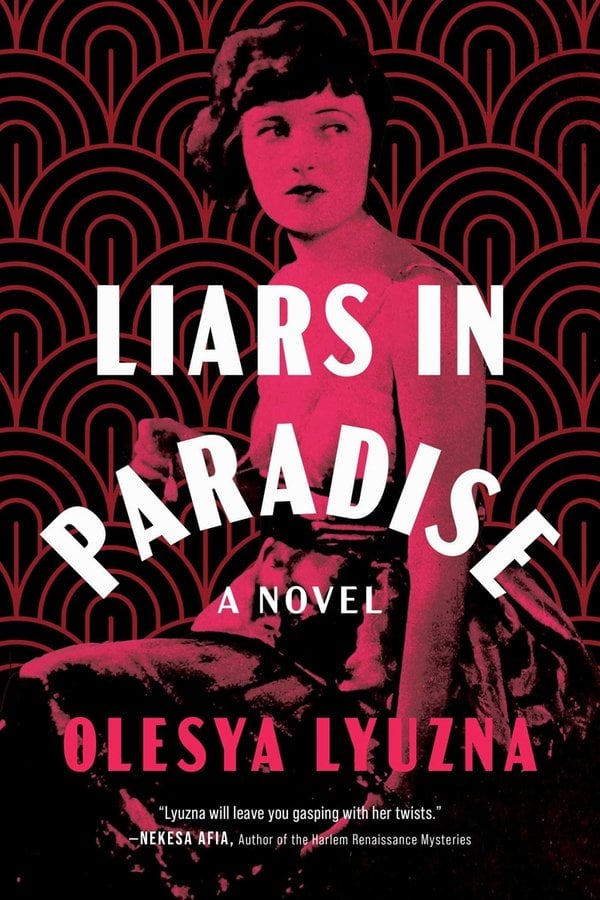
I didn’t have a clear answer when I started writing Liars in Paradise, my 1920s mystery centered around a positive thinking cult. I grew up decidedly agnostic, with a low tolerance for any kind of deception; ever since I was a kid, I’ve wanted to figure out how the rabbit came out of the hat lest the magician pull one over me. I am also someone who has listened to many hours of binaural beats and positive affirmations, and in a romantic crisis spent hundreds on psychic readings.
If I couldn’t figure out where my allegiances lay in the 2020s, I would turn to the 1920s for answers.
Into the twentieth century, we were carrying the ethos of Horatio Alger’s stories, where poor children achieved wealth through good deeds. Soldiers returned from a war of an unheard of scale, bearing injuries both visible and not. It was an age of economic prosperity, with a market that seemed to keep going up, up, up, providing endless get-rich-quick schemes (some successful, others—like Charles Ponzi’s fake land investments in Florida—not quite).
With the frenetic rise of mass media, anyone might be famous for a day, whether it’s through the glamour of cinema (Clara Bow) or the end of a gun pointed in the right direction (the Bobbed-Haired Bandit). It was an era of invention, science battling it out with religion (The Scopes Trial), as Freud’s theory of the unconscious promised that all the answers lay within.
In many workplaces, you would’ve seen Charles Mather’s motivational posters, inspired by the government’s propaganda campaign during the Great War. Over time, you might’ve started to believe them.
Before Napoleon Hill wrote his bestseller Think and Grow Rich (1937), he was a con artist. Born in a one-room cabin in Appalachia, he got his first job working for a coal magnate by arranging to hush up the death of a bellhop who was shot by the previous manager. Among his other business ventures: a lumber company charged with mail fraud; a multi-level marketing scheme at his Automobile College that incentivized students to sell courses for a commission; Hill’s Golden Rule, a magazine accused of laundering funds intended for a veteran’s charity into a fraudulent oil scheme.
He hit paydirt in 1925 with The Law of Success, an eight-volume self-help book that catapulted him into an opulent lifestyle, with a Rolls-Royce and property in the Catskills. By the time he wrote Think and Grow Rich, the ideas in the first book had evolved into a more mystical approach, centered around unwavering faith, burning desire, and autosuggestion.
If Hill’s methods promised material success, others set their sights on curing disease. Émile Coué started out as a pharmacist, where he discovered what soon became known as the placebo effect, as patients seemed to show better signs of improvement when he praised each medicine’s efficiency. Eventually, he developed the Coué method. Patients would look in a mirror, holding rosary beads in their hands, and as they ran their fingers across each bead, they would repeat: ‘Day by day, in every way, I’m getting better and better.”
Coué arrived in the United States in 1923, delivering lectures and leading clinics in twenty cities. While there were some skeptics, most American press at the time were dazzled by his methods. Following Coué’s hope that the method could treat not only physical ailments, but character defects, one wealthy businessman even donated 2,000 rosaries to California’s San Quentin Prison.
While Coué is largely forgotten today, most devotees of modern manifestation know Neville Goddard. Born in Barbados, he emigrated to New York City as a teenager, where he started his career as a dancer at the Hippodrome, a massive, sumptuous theatre now replaced by a midcentury office building and parking garage. By the early 1930s, he retired from dancing and shifted his focus to the study of mysticism. Over the next few decades, he developed a method called the Law of Assumption, arguing that in order to get your desires, you must assume you already have them.
Beyond an extensive lecture circuit, Goddard hosted a half-hour television program on a Los Angeles station in the mid-1950s. No footage survives—the tapes were erased and reused, a common practice when videotape was expensive—but the audio is still circulating today. A YouTube search for “Neville Goddard lectures” yields hundreds of videos promising abundance, luck, prosperity, most of them stamped with the same headshot of a pensive Goddard leaning slightly to the left.
There’s an individualistic flavor to these methods. Say the right words, think the right thoughts, and you, too, can get anything you want. Like our modern-day manifestation influencers, these figures inspired cult-like devotion, and yet most of their followers never met them in person.
The quest for self-mastery takes a darker turn in other stories from the 1920s. There’s May Otis Blackburn, the self-appointed High Priestess of the Divine Order of the Royal Arms of the Great Eleven. Blackburn and her daughter proclaimed themselves as witnesses of the Book of Revelation, claiming that angels were dictating a book that explained the secrets of the universe.
Believers were coerced into giving up cash and property to support their work. Some in their inner circle suffered greater damage, like Willa Rhoads, a cult “princess” whose mysteriously dead body was preserved for fourteen months in the hopes of resurrection, before finally being buried with seven sacrificial dogs under her parents’ home.
And then there’s the Aquarian Foundation, established in British Columbia by Edward Arthur Wilson, who took the name Brother XII and declared himself the reincarnation of Osiris. As time went on, he grew increasingly dictatorial, encouraging his mistress to give followers draining tasks as tests for spiritual advancement. One follower finally escaped the cellar where he’d been imprisoned and rowed to Nanaimo, where he reported his leader’s crimes to the police, who took no action.
The colony eventually deteriorated, Brother XII’s disciples filed legal action to recover their financial contributions, and their leader destroyed the whole compound in a bout of fury. After fleeing to Europe with his mistress, Brother XII is reported to have died in 1934, though rumors circulate that his death might’ve been fabricated.
Every cult leader is an unreliable narrator, and so are their disciples. In Liars in Paradise, Ginny Dugan starts out as a strong, self-possessed woman, a detective with her own agency desperate to clear her partner’s name when he’s accused of a mass shooting. But as she becomes more deeply enmeshed with Echelon, a positive thinking cult led by a Goddard-like figure named Roman Blackwell, she begins to doubt the very foundation of what makes her a good detective—her own mind.
As readers search for clues, they can’t entirely trust what they’re seeing, both because the other characters are compromised by their beliefs, and even Ginny slowly begins to slip under the cult’s influence.
Did I finally figure out my own feelings about manifestation by the end of this book? I’m not so sure. But perhaps, like the gurus and thought leaders above, every writer is also a bit of a con artist.
After all, it’s my job to convince you that whatever I conjure is real.
***

Olesya Lyuzna
Olesya Lyuzna is a historical fiction writer with a passion for queer noir. Her debut novel Glitter in the Dark was selected for a 2020 Pitch Wars mentorship by Layne Fargo and Halley Sutton. She lives in Toronto and spends her free time hosting murder mystery parties and scouring the archives for unsolved crimes.