On the Healing Power of a Really Good Grudge
Michael Gonzales celebrates the culture of holding grudges.
Someone hold my beer, ‘cause I can’t hold my tongue
But I can hold one hell of a grudge
–Grudge by Carter Faith
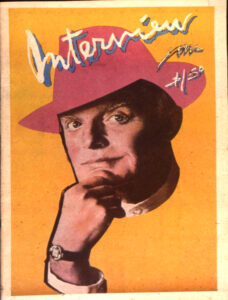
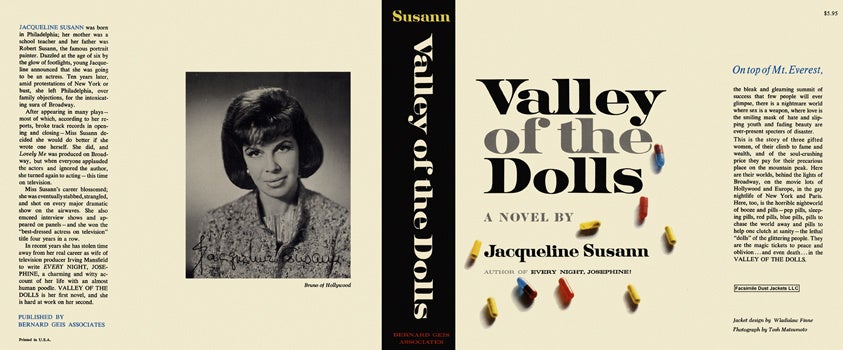
Grudges are as American as jazz and comic books. Often they lead to the feuds and beefs that fuel the plotlines of so many crime novels and movies. Still, sometimes those grudges simply simmer in your mind for years. I can recall being a TV addicted kid in the days when people had no problem airing their personal grudges on the air. Back in the dusty days of the 1960s and 1970s it wasn’t strange to see writer Norman Mailer talking smack about fellow scribe Gore Vidal, fighter Muhammad Ali taunting Joe Frazier or In Cold Blood meanie Truman Capote calling Valley of the Dolls novelist Jacqueline Susann “a truck driver in drag” on The Tonight Show with Johnny Carson. After Susann threatened to sue Capote, he apologized to truckers, but not to her. Capote later claimed that her novels weren’t writing, but simply typing. I believe that grudge should’ve been the Feud mini-series that Ryan Murphy produced instead of the one with those boring swans.
Of course, growing-up with Frances Gonzales as a mother, I learned the art of holding a grudge from the shady master who once had a falling out with my godmother after a bitter argument in the early-1970s and didn’t speak to her until the next millennium. The two women didn’t reconcile until 30-plus years later, and then decided to go on a cruise together. Over the years I’ve heard plenty of stories about people who slighted mom years before, people she believed were talking about her or others she simply “couldn’t stand,” though she might not recall exactly why.

Some folks believe that it’s unhealthy to hold a grudge for decades, but I think just the opposite. I still have a few I’ve held since childhood including the one with my 8th grade teacher Miss Barry, who accused me of plagiarizing a poem I wrote for a class assignment. Without any proof I was called a liar and a cheat. It was as though Miss Barry had completely forgotten that I had published a school newspaper on my own the year before, and simply assumed, “There was no way this kid could’ve written something so good.” Years later I documented the scarring incident in the Memoir Land essay “The Plagiarist,” but I still wish I had shown-up to one of the school reunions Miss Barry attended and waved a few of my bylines in her face.
Recently my friend Miles Marshall Lewis told me about going out for drinks with a Haitian novelist I haven’t liked since the mid-‘90s. “Hooray for you,” I texted Miles back dryly. The Novelist was a former editor I knew back when I used to write for “hip-hop bible” The Source. He carried himself as though he was better than ALL others in the office, but that superiority was just his imagination.
I recall editing with him one afternoon and, after taking a bathroom break, returned to an open email page that read: “I hate working with music journalists. They think they know everything.” Having recently left Vibe magazine after being disrespected by an editor I believed was a friend, I wasn’t having it. I informed him that if he hated working with music journalists perhaps he shouldn’t have taken a job at a music magazine. Though he claimed the note wasn’t about me, I didn’t believe him. “It doesn’t matter who it’s about, it’s rude.”
Years later I ran into Mr. Future Novelist in Prospect Park, where he was with our mutual friend James Bernard. Having not seen the dude in years, I thought he might’ve gotten nicer, but I was wrong. Swinging long dreadlocks out of his face, he asked what I’d been up to. I answered that I had started writing short fiction and he smiled. “Well, I’m sure you’re a better short story writer than you are a journalist.” Not punching him in the face was perhaps the hardest thing I ever had to do.
Another grudge that I still hold today is with the aforementioned Vibe editor who was once great friends with both me and my late girlfriend. In the beginning she helped my career considerably: got me choice assignments, had me hired as a writer-at-large and even ordered me a box of business cards. But, after taking a sabbatical in 1997, she came back with a chip on her shoulder the size of a boulder.
“I heard your work fell off,” she told me. I laughed, knowing it wasn’t true, but that was when the torture began. After giving me deadlines that were difficult to meet and refusing to run a long story I’d worked hard on, she later declined to renew my contract. Perhaps that was some Sun Tzu/Art of War or Robert Greene/49 Laws of Power bullshit, but I was crushed.
Unfortunately, months later that same person also flipped-out on my girlfriend, publicist Lesley Pitts, who always treated her like a sister, and their relationship soured. Last year that same former editor wrote a story about a disgraced celebrity, but spent a quarter of article defending herself from being labeled “a bitch” decades before.
A week after I left Vibe, competing editor-in-chief Selwyn Seyfu Hinds from The Source invited me to come over and work with him. I was paid the same money, but was treated better, my opinions were respected and more cover stories were sent my way. Within months Hinds transformed The Source into a better magazine than all their competitors (especially Vibe) and it stayed that way until he departed in 1999.
Months after Hinds departed, I began writing short fiction at the request of former Random House editor Carol Taylor, who was compiling stories for her erotica anthology Brown Sugar. That story gave me the fever to write more. Fortunately my friend Miles became the fiction editor at One World, and he accepted one of mine about a failed painter for their special art issue.
While the fee was good, I discovered that a writer with lesser name (at least in my mind) had gotten double the amount and I was pissed. I asked Miles to inquire with the Dominican editor-in-chief, who seemed to think that she was the urban mag version of Anna Wintour, why that was; the following day he called and said, “She told me to tell you that you’re lucky she is going to publish the story at all, because no one understood it except you and me.” Though I burst out laughing, my feelings were hurt. I took the money, but never wrote another word for One World.
***
My bestie Fayemi Shakur swears that my grudge holding streams from me being a crabby Cancerian (June 23rd) with a tad of Gemini stirred in, but I just hate when offenders act as though their bad behavior should be forgiven or forgotten over time. Or, in the words of Eddie Murphy in Life, I’m bothered when there are no “consequences and repercussions.” Though the offenders might reinvent themselves or become Christians, rarely are there any apologies issued. “God has forgiven me for ALL the bad stuff I did in the past,” my Born Again brother once told me. I laughed. “Well, God is in the forgiving business, but us mortals remember quite well.”
Though he and I still speak, there is a part of me that will never forgive him for either losing or stealing my 14-crates of vinyl collection in 1993. The records were stored at my grandmother’s Harlem apartment. The discs were crated by genres that included new wave (Eurythmics, Duran Duran), jazz (Miles Davis, Eric Dolphy), funk (James Brown, all of George Clinton’s groups,), rock (Pink Floyd, Living Colour), rap (Run-DMC, Public Enemy), House/Garage jams (Loose Joints, Jamie Principle) and Minneapolis sound (Prince 12-inches, Jill Jones)
When grandma moved to Baltimore in 1993 to live with mom I should have put those records in storage, but my brother assured me that he would take care of them. “I’ll store them in mommy’s basement,” he said. Days later when I called, my brother answered the phone and dropped a 10-ton whale on my head. “Yo, someone stole your records.” Knowing how much he liked to joke around, I let a few beats go by. “What do you mean?” Taking that deep breath common amongst liars, he replied, “I accidently left the moving van open and your records were stolen.”
I’d been collecting albums since I was in 4th grade when I begged mom to buy me the Shaft soundtrack by Isaac Hayes. Thinking I might faint, I sat on the living-room couch and closed my eyes. “How can somebody steal over a 1,000 albums at one time?” Perhaps more shocking was the nonchalant way he told the tall tale, as though it didn’t bother him one way or another. “I don’t know, man…it just happened.”
After slamming down the phone I vowed to never speak to the jerk again, but that’s difficult to do when then the jerk is your brother. Still, every few years those missing albums pop and crackle into my head and I’ll cut off communication with baby bro for days.
While some might view this essay as a bitter retort aimed at people who could care less with my decades old grudge or feelings about them, I think of it as a healing and cleansing process that should’ve been done years ago. Hell, I feel better already.
This essay was inspired by my former editor Eugene S. Robinson, who writes about hate in the most humorous way.

Michael Gonzales
Harlem native Michael A. Gonzales is a cultural critic, short story scribe and essayist who has written for The Paris Review, The Village Voice, Wax Poetics, The Wire UK, Maggot Brain and Pitchfork. His fiction has appeared in Under the Thumb: Stories of Police Oppression edited by S.A. Cosby, Taint Taint Taint, Dead-End Jobs: A Hit Man Anthology edited by Andrew J. Rausch, Black Pulp edited by Gary Phillips and The Root. Upcoming stories will appear in The Book of Extraordinary Femme Fatale Stories edited by Maxim Jakubowski, Get Up Offa That Thing: Crime Fiction Inspired by James Brown edited by Gary Phillips, Killens Review of Arts & Letters and Obsidian Literature & Arts in the African Diaspora.