
Prisoner of Love: On Research, Ethics, and Matters of the Heart
When intimate and private love letters are the only surviving evidence from an old trial, should a researcher include them in their book?
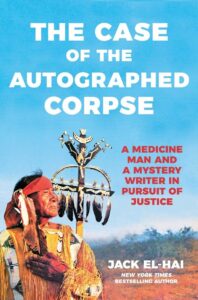
Love letters were far from my mind when I began researching The Case of the Autographed Corpse, my book about the wrongful murder conviction of Apache medicine man Silas John Edwards and his partnership with bestselling mystery writer Erle Stanley Gardner to reinvestigate the case.
It was 2018, and I was deep into Gardner’s papers in the Harry Ransom Center at the University of Texas in Austin. Gardner, the prolific author of the Perry Mason mysteries and a trial lawyer before he became a writer, had formed the Court of Last Resort in the late 1940s. It was a pioneering organization devoted to investigating cases of possible wrongful conviction, like today’s Innocence Project.
Crushed at the bottom of an archival box and bristling with rusty staples and misshapen paper clips, Gardner’s fat Court of Last Resort file about Silas John’s alleged 1933 killing of his wife Margaret caught my attention. It included rich details of the dubious evidence that police had gathered against the Apache religious leader, including a rock left next to the victim’s body that someone had scratched with Silas John’s initials.
This weak evidence, along with false claims of the prosecution about the traditions that Apache wrongdoers supposedly followed, had led an all-white jury to send Silas John to prison on a life sentence. I read a document describing a reservation policeman’s destruction of the rock and other evidence after the trial. Was it all gone? I worried that none had survived into the twenty-first century.
Several years later in my research, I asked staff at a regional office of the U.S. National Archives in Riverside, California, if they had any records on Silas John. The answer was yes, and I received scans of those records in a few weeks.
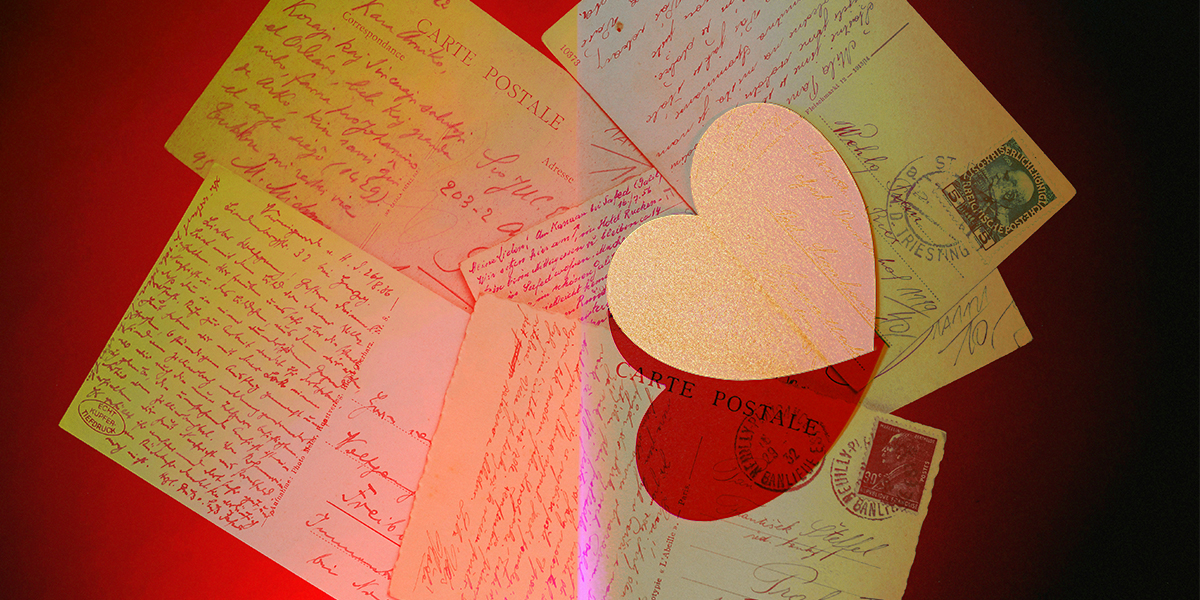
That’s when I saw the love letters. I read them many times to understand how important they were.
Used against Silas John in his trial, the letters had passed between him and Belle James, the younger cousin of his murdered spouse, Margaret Edwards. Margaret had long believed that Silas John was having an affair with Belle. The letters show she was right.
The correspondence ran for several months during the summer of 1932, the year before Margaret’s killing. The prosecutors in the murder trial argued that the letters established Silas John’s motive to kill his wife – to prevent her from interfering in his relationship with Belle. In court Silas John counterargued that this assertion, in the context of the other evidence, made no sense: if he planned to spend his future with Belle instead of with Margaret, why would he have left his initials on a rock at the crime scene, as the prosecution alleged, boosting his chances of being convicted and sentenced to years in prison?
- ••
Silas John’s romance with Belle began when she accompanied him and Margaret on a three-week visit to Arizona’s San Carlos Apache Indian Reservation in 1932. Margaret noticed the attention Silas John paid Belle, and she grew convinced he had slept several times with the younger woman. After that, the married couple often quarreled about Belle.
In her early letters to Silas John, Belle affectionately called him her “dear friend in love” and wrote, “I want to be with you, wherever you are going to be around the world.” She wondered what Silas John planned to do about her in his life. Would he recommit to Margaret, whom he always insisted he still loved?
In her next letter, Belle told Silas John, “I won’t take anybody to be my friend again from here on till I am going to be with you some time before I get to be an old lady, ohh yeah and how.” She confessed that she dreamed of him every night.
In one of Silas John’s responses, he described in lyrical language his memories of one of their past meetings, echoing the poetic expressions of the religious prayers he wrote. “Hand to hand under the sky and top of the world. And we held with our happy moving breath,” he wrote to her. “Our footprints on the moving sands. [Our] shadow[s] moving under our body…. You looked at me and called me dear. Our happy life we could now reach…. Dear loving darly Belle, I love to be with you under the sun.”
Silas John included drawings that made visible his feelings for Belle. Still, in court and elsewhere, he declared he never intended to leave Margaret, much less murder her.
These letters are intimate, emotional, and personal. Are they too personal? I wondered if they belonged in my book. They had clearly pained Silas John when they appeared in his trial, and they surely distressed Belle, too. I could elide over them, paraphrase them, or directly quote them. Would their publication serve a purpose, and would it cross ethical boundaries?
The case of United States v. Silas John Edwards was unusual for its inclusion of love letters as evidence against a defendant charged with a serious federal crime. In Caminetti v. United States (1917), prosecutors used a man’s romantic correspondence with his girlfriend to establish his immoral intent in traveling with her across state lines, thus violating the Mann Act. After World War II, prosecutors obtained a conviction in United States v. Mildred Gillars after romantic letters the defendant sent to her Nazi lover countered her claim that she made radio broadcasts for Germany against the Allies out of fear for her life.
Later, in United States v. John W. Hinckley, Jr. (1982), the court saw evidence that the man who tried to assassinate the U.S. President wrote a love letter, never sent, to the actor Jodie Foster in which he confessed his plan to “get Reagan.”
Silas John and Belle are both long dead, unable now to feel anything about their letters. But they never intended their writing to be published for the world to see.
I eventually decided to transcribe the letters and use excerpts in The Case of the Autographed Corpse. The value of including them, I believed, outweighed the negatives.
I agree with the writer Grace Paley’s dictum that the most important task of writers is to inhabit the experiences of others. Like little else I found in my research, the love letters reveal Silas John’s flaws and character, show his expression of strong emotions, and lay bare his thinking about his marriage. Even the distinctive styles of the lovers’ cursive left on the notepaper gives insights into their feelings and personalities. I would be cheating readers, I felt, if I left the letters out of my book.
Even so, I feel lingering regret about publicly including the passages of the love letters for anyone to read. It’s not what I expected my book to include. Those passionate exchanges of thoughts were supposed to be private.
Good stories are full of surprises, though, and without the love letters my readers would miss an important understanding of Silas John’s unique tale and Belle’s role in it. Reluctantly, I stand by my decision.
***

Jack El-Hai
Jack El-Hai is an author and journalist who has written for The Atlantic, Smithsonian, GQ, Wired, Scientific American, Discover, and many other publications. His books, including The Nazi and the Psychiatrist, The Lobotomist, The Lost Brothers, and Face in the Mirror, have been translated into twenty foreign languages. He often gives lectures on writing and medical history, and Jack publishes the Damn History newsletter for readers and writers of history. Jack lives in Minneapolis, Minnesota. His latest work of nonfiction, The Case of the Autographed Corspe, is now available.