
Richard Chizmar on horror, alter egos, and ending his Boogeyman series
John B. Valeri chats with the author of Killing the Boogeyman
You can’t kill the boogeyman …
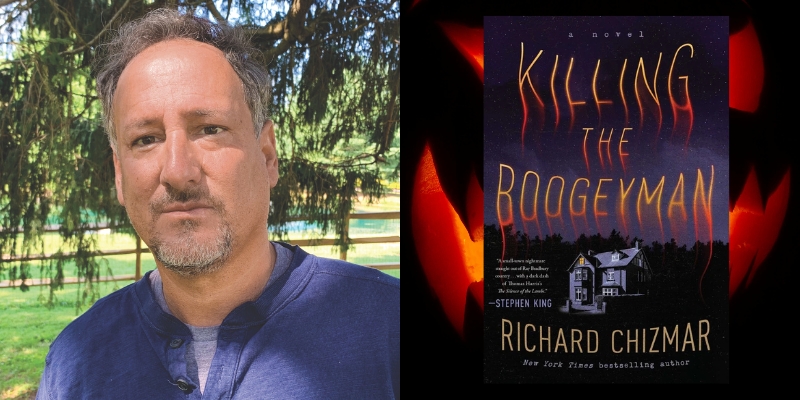
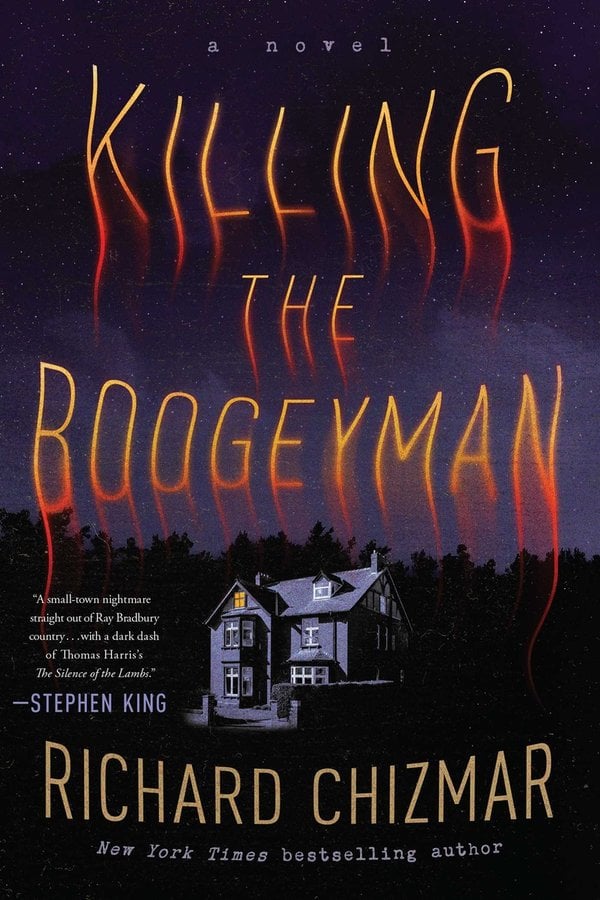
Richard Chizmar, as an unabashed Halloween fan, knows this as well as anyone—and yet that’s exactly what he intends to do in the concluding chapter of his Boogeyman trilogy, Killing the Boogeyman (Gallery Books; October 6, 2026). The book is the latest in a string of bestsellers including Chasing the Boogeyman, Becoming the Boogeyman, Memorials, and Widow’s Point: The Complete Haunting (co-written by his son, W.H. Chizmar).
His work also includes the Gwendy trilogy, two titles of which were written in collaboration with Stephen King. The founder and publisher of Cemetery Dance, Chizmar is a recipient of the Horror Writers of America’s Board of Trustees Award and has won two World Fantasy Awards and four International Horror Guild Awards.
Killing the Boogeyman is a showcase for the author’s genre-bending skills. In true meta fashion, Chizmar is the book’s beleaguered protagonist—and once again finds himself drawn into the web of childhood acquaintance, Joshua Gallagher, who he unmasked as their hometown serial killer in Chasing the Boogeyman.
Then, after achieving a level of fame with his book about the case, Chizmar became Gallagher’s unlikely confidant; some of their jailhouse conversations were sanctioned by the authorities while others were clandestine, conducted via a contraband cell phone and cementing the duo’s codependency. After surviving a series of copycat killers and facing public backlash for his role in sensationalizing the crimes, Chizmar made a vow to cut off contact with the Boogeyman and instead concentrate on rebuilding trust with his wife and children.
But when Gallagher escapes prison, Chizmar knows it’s only a matter of time before he comes calling. With his house under siege by the police, he can only wait and watch—first, when a dead body is found propped up against a tree outside Gallagher’s childhood home and then when his dear friend, reporter Carly Albright, vanishes without a trace.
Finally, a teen girl goes missing from town, the circumstances of her disappearance mirroring Gallagher’s original MO. Wanting to honor his word to his wife and community officials, Chizmar is nevertheless unable to refuse when Gallagher summons him for a third-act reunion. Will their final encounter be Chizmar’s redemption or will he become the latest victim in the Boogeyman’s master plan?
Now, Richard Chizmar talks about resurrecting the Boogeyman in a finale that puts his own character on the line …
*
John B. Valeri: Killing the Boogeyman is the third book in an unintended trilogy. What are the challenges of continuing a story that was initially conceived as a standalone? How does this book standalone while honoring its beginnings?
Richard Chizmar: The main challenge was just logistical issues such as maintaining lists of character names and dates and locations. Matters of continuity. The ongoing saga grew very organically so I definitely found myself making an effort to keep the storyline clear and precise and not too unwieldy. And thank God for those lists! Memory is a tricky thing, especially at my age.
Killing the Boogeyman picks up right where Becoming the Boogeyman ends and carries enough echoes of the first two books to stand all on its own. Thanks to my wonderful editor, Ed Schlesinger, this task was accomplished without any of those annoying “info dumps.”
JBV: Joshua Gallagher is the Boogeyman of these books (though not the only bad guy). What do you see as the quintessential characteristics of such an archetypal character? How does Gallagher both fit that mold and possess an identity that is unique to him?
RC: More than Gallagher’s overall appearance or defining characteristics, for me, it all comes down to that visceral reaction one has in Joshua Gallagher’s presence: a sense of the alien and sinister and unimaginable. Gooseflesh rises on your forearms, the tiny hairs on the back of your neck tingle and stand at attention. He even smells…different.
Now that Gallagher is imprisoned and owning up to his horrible crimes, he’s no longer hiding behind that mask of human normality. He’s a monster. The Boogeyman.
JBV: “Richard Chizmar”—your fictional alter-ego—is the protagonist of these books. How do the circumstances of the story serve to reveal his greatest strengths and vulnerabilities? What, if anything, have you learned (or come to appreciate more) about yourself through writing?
RC: That was one of my favorite things about writing the Boogeyman books: giving readers a sense of what my everyday real-life looks like, how wonderful my family and friends are, the ups and downs of the writing and publishing worlds, even introducing them to our four dogs(!)…and then also trying to be as honest as possible when it came to how I portrayed myself in relation to the fictional storyline of the murders.
Would I be frightened in this moment or would my obsession take over? Would I be properly sympathetic and respectful to what was happening or would I allow my curiosity to affect my behavior? In most cases, it was a guessing game. I’ve never lived in a small town held hostage by a serial murderer. I’ve never had my life—or the lives of my loved ones—threatened by someone I was once close to.
In light of that, I tried to be accurate and honest in my reactions, even when it didn’t necessarily shine a positive light upon myself. After all, like all the rest of us, I’m only human.
JBV: Much of the story is limited to the Chizmar property. In what ways did that force you to be more innovative in terms of developing and maintaining suspense, both internally and externally? Also, tell us about the juxtaposition of home (our “safe place”) and the insidious nature of evil/horror as it threatens that sanctuary.
RC: Most of us—whether due to illness or bad weather or simple misfortune – have experienced the feeling of being trapped in your own home. Now magnify that imprisoned feeling with being surrounded by an unfriendly swarm of media, nosy lookie-loos, disgruntled townsfolk…and oh yeah, an escaped serial killer. My family and I are truly under siege in Killing the Boogeyman, and I am responsible.
That sense of understanding and guilt permeated my every thought and action throughout the story. I’m a mess! As a result, every detail out of place, every hint at foreboding danger, no matter how minor, took on an enhanced edge.
By the end of the story, I feel like I am losing my mind. Your home is supposed to be the one place you truly feel safe. Especially nowadays with security systems and all the other modern marvels of technology. Take away that sense of safety and the world suddenly feels like it has very sharp teeth.
JBV: Speaking of juxtapositions: You balance a strong sense of nostalgia with contemporary trappings (cell phones, computers, social media, surveillance systems, etc.). How does combining the two enhance the reading experience – and particularly for those who have lived through both ages?
RC: As hinted at above, all this technology is supposed to make life easier…and safer. Yet in many instances, it does the exact opposite. It complicates things and makes them more dangerous. I like playing around with that dynamic. So much of my work is about stripping away those everyday comforts and safeguards, and demonstrating that no matter who you are, where you live, or how much money you have in the bank, life can change on the drop of a dime.
The sense of nostalgia in my stories often performs the same task. It reminds the reader of a simpler—and safer—time … before lowering the boom.
JBV: These books straddle the line between suspense and horror. How do you weigh the considerations of appealing to a mainstream audience with staying true to your genre roots? Also, please tell us about your strongest creative influences and how they can be seen, or felt, in your work.
RC: I honestly give very little thought to the audience when sitting down to write. For me, it’s all about telling the story as honestly as I can…and then hoping and praying the readers will come along for the ride. The Boogeyman books are really just good, old-fashioned campfire stories. There’s a familiar saying: every small town has a haunted house. I think the same can be said for the boogeyman. Pretty much every town has one.
My strongest creative influences are classic storytellers like Stephen King, Robert McCammon, John D. MacDonald, and a much-missed writer by the name of Ed Gorman (readers should run out and grab Ed’s books right away). These folks write with a cinematic eye and a startling clarity, and I believe I’ve learned the most from reading their work.
Ray Bradbury is another influence, particularly his fondness for nostalgia. And of course, anyone who has read the Boogeyman books can spot the numerous nods to my all-time favorite horror movie, the original Halloween.
JBV: Your son, William (aka W.H. Chizmar), is emerging as a talent is his own right as your co-author for Widow’s Point: The Complete Haunting and a debut novel, Them, now available. Tell us about the experience of witnessing his evolution as a writer. In what ways do you think you’ve inspired him—and how has he affected you in return?
RC: It’s been amazing…and a little nerve-wracking at times! Writing is a tough business, fraught with unexpected potholes and twists in the road, so it’s not always easy to sit back and watch someone you love navigate those detours. But mostly it’s been wonderful and such a gift to witness.
It feels like just yesterday that he and I would spend an entire afternoon sitting next to each other on the family room sofa poring over one of those Barnes & Noble bargain-priced coffee-table books about the mysterious and unexplained. Billy has always been a storyteller, starting with drawing his own comics when he was six or seven and interrupting my bedtime stories to revise them to his liking.
My biggest influence is raising him in an environment surrounded by books. When he was growing up, family trips to the library and bookstore were greeted with as much enthusiasm as jaunts to the toy store. Watching his journey as a writer has reenergized my own passion and reminded me of the pure joy of creating new worlds and characters.
JBV: With the Boogeyman behind you (at least for now…because they always come back), what can readers expect next?
RC: I don’t like to talk about works in progress (superstitious and all that…), but hopefully I’ll manage to surprise readers with the next book. It’s very different than the Boogeyman trilogy and I’m having a wonderful time writing it.
***

John B. Valeri
John B. Valeri is a book reviewer, author, and host of the web series “Central Booking.” He has contributed to The Big Thrill, CrimeReads, Crimespree Magazine, Criminal Element, Mystery Scene Magazine, The New York Journal of Books, The Strand Magazine, and Suspense Magazine. Visit him online and watch past episodes of “Central Booking” at JohnBValeri.com.