
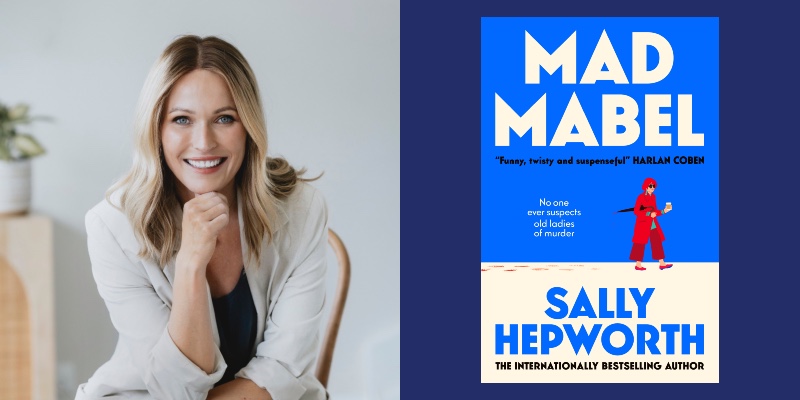
Sally Hepworth: Why I'm Fascinated by Old Ladies and Murder
"Once women reach a certain age, people start talking about them while they're standing right there. As though they’re invisible."
A few years ago, while signing books at an event, I met an elderly woman with a walking stick and a wicked sense of humour. She told me all about her neighbour. He was loud. He was rude. He let his dog bark at all hours. Finally, she informed me that she’d decided she’d have to kill him.
I laughed. She didn’t. Then she leaned forward conspiratorially
“No one suspects old ladies of murder,” she said. “Or little girls, for that matter.”
The sound you can hear is the ping that went off in my brain right then and there.
That conversation eventually became the seed of my latest novel, Mad Mabel, which follows eighty-one-year-old Elsie Mabel Fitzpatrick, a woman who was convicted of murder as a child and has spent the rest of her life trying to outrun the notoriety of that crime.
When people ask what interested me most about writing Mabel, the answer is surprisingly not murder. It’s the way we underestimate certain people.
Children and elderly women sit at opposite ends of life, but they have one thing in common: people tend to make assumptions about them. Children are innocent. Older women are sweet. Frail. Harmless. If they’re particularly outspoken, they’re eccentric. If they’re angry, they’re bitter. If they’re difficult, they’re often dismissed altogether.
Of course, anyone who has spent time with a determined grandmother knows this is complete nonsense.
Once women reach a certain age, people start talking about them while they’re standing right there. As though they’re invisible. And that’s always fascinated me as a novelist, because invisible people see things. They notice things. They hear conversations they weren’t meant to hear. They pay attention while everyone else is busy overlooking them.
It’s probably no surprise, then, that I’m drawn to books featuring older women who refuse to stay quietly in the background.
Here are a few of my favourites:
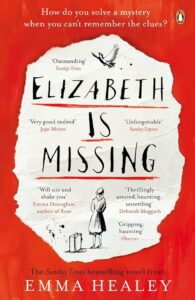
Elizabeth Is Missing by Emma Healey
I picked up Elizabeth Is Missing expecting a mystery and ended up sobbing into my tea.
Maud, an elderly woman living with dementia, becomes convinced that her friend Elizabeth has disappeared. The problem is that nobody believes her. As her memory continues to fail, Maud becomes increasingly determined to uncover the truth herself.
What I love most about this novel is the way it captures the frustration of not being listened to. Maud knows something is wrong. The people around her assume she is confused. It’s moving, clever and heartbreaking all at once.
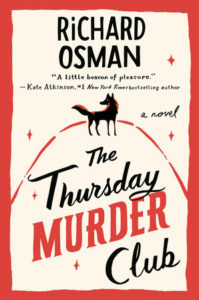
The Thursday Murder Club by Richard Osman
A group of retirees living in a retirement village meet regularly to discuss unsolved crimes before finding themselves investigating actual murders. Part of the fun comes from watching younger characters underestimate the residents over and over again. They see pensioners. The pensioners see absolutely everything.
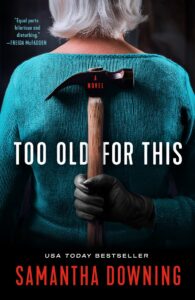
Too Old for This by Samantha Downing
I have a particular soft spot for older female protagonists who refuse to behave appropriately, which is perhaps why I enjoyed this one so much.
Lottie Jones is seventy-five years old and has no interest in fading politely into the background. When trouble arrives on her doorstep, she proves that growing older doesn’t make a person less capable—it just makes other people more likely to underestimate them.
Lottie possesses the kind of confidence that only comes from having survived several decades of life and no longer caring what strangers think. Mabel would wholeheartedly approve.
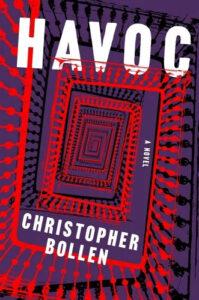
Havoc by Christopher Bollen
Maggie Burkhardt is an elderly widow living in a luxury hotel in Egypt. She spends her days observing the guests around her, quietly collecting information, noticing details, forming opinions. Which sounds harmless enough until you realise exactly what she’s doing with all that knowledge.
Christopher Bollen brilliantly exploits our tendency to view older women as background characters. Maggie is many things. Background is not one of them.

Olive Kitteridge by Elizabeth Strout
Not crime fiction, but I’d be lying if I said Olive Kitteridge didn’t influence the creation of Mabel.
Olive is difficult, funny, blunt, compassionate, infuriating and deeply human. She says the wrong thing. She judges people. She loves fiercely. She refuses to make herself smaller to make other people comfortable.
I suspect Mabel and Olive would dislike each other on first meeting and become inseparable shortly afterwards.
Throughout history, women have been labelled difficult, bossy, unstable, emotional, irrational and—of course—mad. The label often says as much about society as it does about the woman wearing it.
I wrote Mad Mabel as a celebration of women who refuse to disappear quietly. Women who have made mistakes. Women who carry secrets. Women who have survived things. Women who are still far more interesting than the world gives them credit for.
***
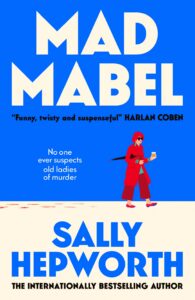

Sally Hepworth
Sally Hepworth is the New York Times bestselling author of nine novels, most recently Darling Girls. She is also the author of Uncharted Waters, published by Amazon Original stories in 2022. Several of Sally’s novels have been optioned for TV and film. Sally's novels are available around the globe in English and have been translated into over 20 languages. She has sold over one million books worldwide. Sally lives in Melbourne, Australia with her family.