
Sean David Robinson on Why Missing Person Thrillers Are Addictive (According to Science)
An exploration of Edwin Drood, American disappearances, and the neuroscience behind a mystery trope
Vanished…without a trace. It is both a powerful motif in fiction and a fascination seemingly hardwired into the human psyche. For me the very mention of a missing person with no known explanation conjures images of forest nightscapes, shadowy figures and strange glowing lights, all underscored by spooky synthesizer tritones and an oddly danceable beat (thanks, Unsolved Mysteries).
It is an inarguably compelling premise, one which packs an explosion of tension compared to the procedural regularity of a typical murder mystery. To discover a dead body and systematically smoke out the killer is a common task for a seasoned detective; it is an altogether different challenge when the person in question has simply disappeared.
So why are we, as a culture, obsessed with this trope? Just head to the thriller section of any bookstore and start reading the inside flap, and you’ll spot scores of examples. It’s an easy mistake to characterize this as a modern love affair, but our preoccupation with vanishings is much older than Gone Girl (2012) or any other modern thriller.
The Mystery of Edwin Drood by Charles Dickens (1870) is widely considered the ancestor of this trope in the canon of English Literature, with the disappearance of the titular character rendered even more mysterious by the author’s death before he could bring his serialized novel to a resolution. This paved the way for a host of writers in the early twentieth century to weave disappearance into their narratives.
Indeed, one could argue that Dashiell Hammett (The Maltese Falcon, 1930) and Agatha Christy (The Murder of Roger Ackroyd, 1926) each owe some modicum of their success to poor Edwin Drood’s tragically incomplete misfortune.
The lineage of Drood’s open-ended demise can be traced all the way to the modern novel. Fast forward to Tana French, who made her debut with In The Woods (2007). In this critically acclaimed first novel, French challenges readers by choosing to resolve only the present-day murders, while the fundamental mystery of what happened to the children who went missing in the woods (spoiler alert!) is never solved.
Lacking a Dickensian death to excuse the terminal ambiguity, French’s efforts drew a mix of praise and consternation from readers. Indeed, it seems some folks simply cannot tolerate ambiguity in an ending, especially regarding a disappearance.
It seems fair, at this juncture, to question why our hyper-curious minds demand the satisfaction of a neat and tidy ending, especially when such uncertainty so closely mirrors our own reality. It is unfortunate, but accurate, to describe disappearances in the United States as extremely common. At any given time, up to 100,000 people are reported missing every year.
While most of those cases do get resolved, an alarming percentage do not, especially when they occur in national parks and densely forested areas. As I write this article, the number of open disappearance cases stands at 26,280. Many of these cases will go unsolved.
So why do we keep returning to this same idea in fiction, especially when the incidence of real-world scenarios is so common? Why not simply turn on the news? What compels us to read these books all the way to their often tragic, sometimes redemptive—and, occasionally, fantastically speculative—endings? Is it a case of morbid curiosity, the literary equivalent of the train wreck you can’t look away from? Are we all, at the end of the day, nothing more than well-read, page-turning rubberneckers?
Or is it perhaps a secret fantasy that keeps the genre alive? Maybe we’re living vicariously through the Edwin Droods of the world, wishing we, too, might be spirited away from our daily grind and whisked into the great unknown. Given the current climate of hustle culture, it’s not unreasonable to think we might all secretly long to Gone Girl ourselves (yes, it’s a verb now), to abscond from our lousy day jobs, abandon everything familiar, and relocate to a tropical locale to sip Mai Thais on a beach under a sexy new alias.
But maybe the answer is simpler, more primal to our personhood. Could it be that collectively, at the bubbling magma core of what makes us human, we cannot abide the thought of an unanswered riddle? Strangely enough, if you dig into the neuroscience of storytelling, that’s probably closest to the truth.
One of my favorite craft books of all time is Wired for Story by Lisa Cron. In it, she uses neuroscience to help writers understand how story is the fundamental language of the human brain.
According to Cron, storytelling began not as entertainment, but as a critical, life-saving tool for communicating information about the world from person to person. Early in our history, humans would gather around the fire after a long day of hunter-gathering, not to gossip, but to learn. Here, they would swap stories about the color patterns of poisonous snakes, or the best way to avoid being trampled by a mastodon, or which mushrooms are safe for a stew—brought to life through the tale of The Mushrooms That Killed Stu.
These kinds of stories affect us deeply. Indeed, neuroscience teaches us that when we read, we imprint on the protagonist in a very particular way. Our brains respond not as though we’re observing the action, but as though we’re actually experiencing it. If you’ve ever been viscerally disgusted when an author kills off a main character (looking at you, George R. R. Martin), this is why. It feels personal, because it was personal. For one brief and shining moment, you and the protagonist were alive in that world—until suddenly, you were not.
This hardwiring for story is one reason many of us read until the wee hours of the morning, turning page after page against our better judgement, until we finally discover what happened to our beloved characters. The brain transforms the pages of a novel into a virtual reality experience, the ultimate ride-along for scenarios we’d never dream of getting into ourselves. Fundamentally, we crave these stories, rely on them to better understand the world around us.
Even today, we may think of these books as entertainment, but in actuality, we are training ourselves for survival in the simulated reality of our own minds—subconsciously sharpening our defenses against killer mushrooms, heavy-footed mastodons, or whatever sinister fate awaits us (cue synthesizer music, fade to black) in the dark forests of the unknown.
***
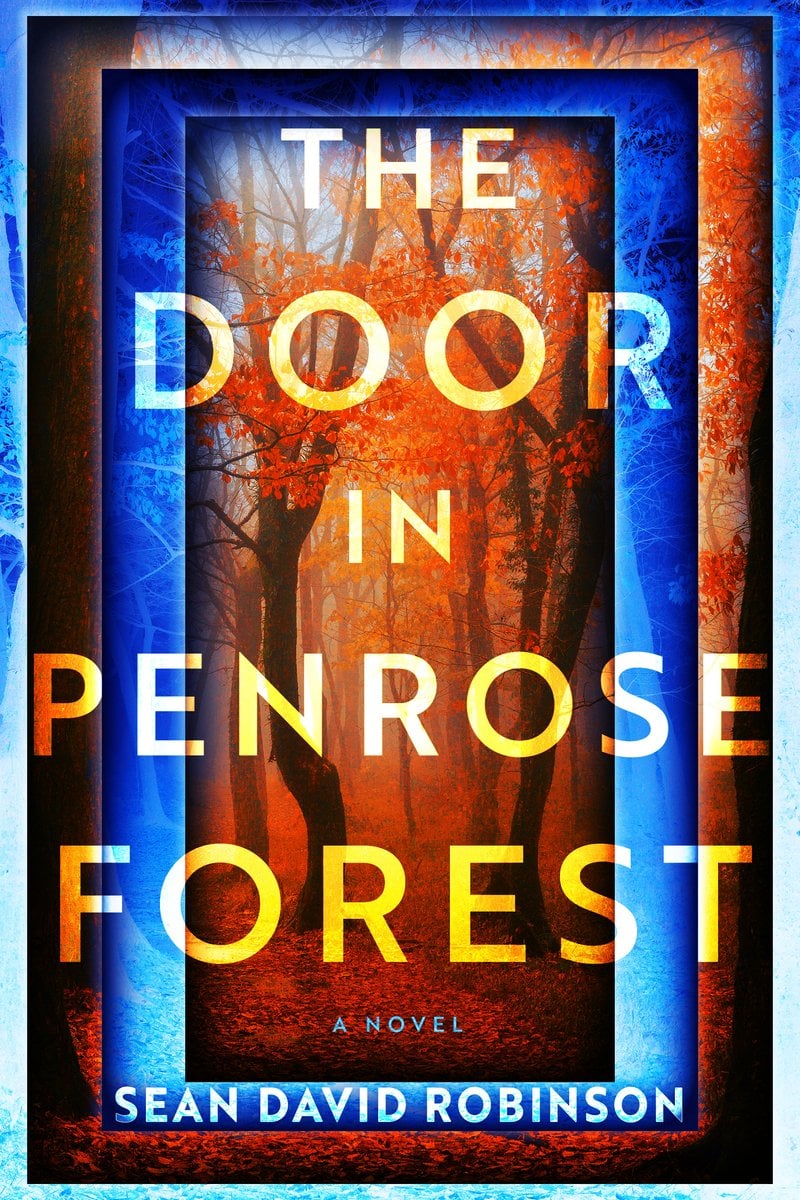

Sean David Robinson
Sean David Robinson is a native North Carolinian. His stage play, Starbright, debuted off-Broadway in 2018, winning two regional awards. In 2022, he became a member of the Novel in a Year cohort at StoryStudio Chicago, where he worked for two years on the manuscript that would become his debut. He lives in Asheville with his wife and their fur babies.