
Gregg Olsen on the Spokane River Killings and the Responsibilities of True Crime
A conversation with the author of 'By the River's Edge'
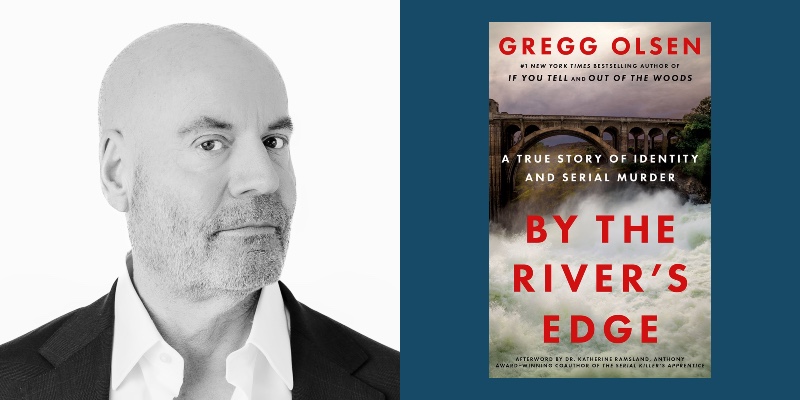
Gregg Olsen’s new book, By the River’s Edge (Thomas & Mercer), chronicles the killings of Yolanda Sapp, Nickie Lowe, and Kathy Brisbois, and a decades-long hunt for a serial killer in Washington.
What is the first true-crime story you covered?
It was the story of Danny Stutzman; a little boy found in a Nebraska cornfield on Christmas Eve. A genuine mystery. When it was discovered that he was the child of former Amishman, Eli Stutzman, I knew that was the story I wanted to tell in my first book. In a real way, Abandoned Prayers became the blueprint for all that I’ve done since. I wanted to tell Danny’s story and the impact it had on those who mourned for him. The only way to accomplish this was to go where the story was. Wherever it was. And that’s what I did. Since the Amish didn’t have phones, I went in person. I left no stone unturned. It started my quest to dig deeply into a story, give my readers what they can’t get anywhere else.
You’ve written more than a dozen nonfiction books about topics that range from a cyanide-poisoning mother (American Mother) to a kidnapper who tortured a brother and sister (Out of the Woods). What is it about true crime that captures your attention as a writer?
For me it has almost never been about the crime, but the story behind it and the people who find themselves on either side of some unthinkable tragedy. Is there something to say here? Something bigger than a horrendous crime? A subculture that is central to the case? A way of life we don’t know anything about? An unusual family dynamic? The murder or murders must be secondary. Here are two more things I ask myself: Do I want to spend a couple of years or more writing about this? And am I the right writer to tell the story?
What is your elevator pitch for By the River’s Edge?
Yolanda Sapp, Nickie Lowe, and Kathy Brisbois were part of an alliance of sex workers who looked out for each other called the Circle. Each were found murdered along the Spokane River, in Washington. For twenty-two years their brutal murders went unsolved. While others might have, Spokane cops never gave up. Twenty-two years after they started their hunt for the killer a DNA hit pointed to Douglas Perry as the perpetrator. But there was a twist: Doug had become Donna.
You’re a successful crime-fiction writer. Why is it you’ve chosen to share the stories of Yolanda Sapp, Nickie Lowe, Kathy Brisbois, and Doug and Donna Perry in By the River’s Edge as non-fiction rather than fiction?
Non-fiction honors truth and fiction spins a tale born of imagination—though to be fair, there is always truth in fiction in some form or another. Both can be effective in telling a story. I always have a thought that informs what I’m doing with non-fiction. This matters. They matter. I’m doing my best to give a voice to those who can no longer speak for themselves. I suppose I could have written a novel about three sex workers trying to find a way back to their children and other family members. I couldn’t have made up a character like Donna Perry, however, without some readers seeing it as anything more than an opportunistic choice to create interest and, maybe, court controversy.
What challenges did you face in researching this book?
The passage of time, incomplete records, and conflicting accounts from those involved, were expected challenges—and they come with the territory in older cases. What surprised—and disappointed me at the same time—was how very few people who knew them would speak up for the women of the Circle.
Of course, I understand that revisiting something as painful as a loved one’s murder is traumatizing. Eventually, with the help of one of Kathy’s daughters, I got where I needed to be to write about things authentically, but it was very difficult.
Dr. Katherine Ramsland, a professor of forensic psychology, wrote an Afterword for By the Rivers Edge. Not all your books include a professional point of view section. Why was it important to have her perspective included in this book?
Look, I’m not a psychologist. For more than 35 years I’ve written about people who have done the unthinkable, the worst a human can do to another. And after all of that, I can’t say with authority what the motivations truly are. Was it greed? Was it revenge? A bad day? A mental illness? We don’t always know.
We know what the prosecutors think, the cops think, and that’s part of the story, but not necessarily the truth. I respect Dr. Ramsland’s point of view, and her insight into behavioral patterns. She provides context and theory from a position of undisputed scholarship. She’s the best guide for that kind of insight of anyone I know.
You write about real events, but your books don’t just report what happened, you humanize the people involved, both victims and perpetrators. Can you share how and why you approach your craft in this way, in general and specifically for By the Rivers Edge?
I can’t say why people really do the things they do. I leave that to others. I’m here to illuminate a story by bringing forth the humanity of all those involved. I have compassion for the families who are related to a murderer. I think of the moms and dads of killers who live every day with the legacy of what their son or daughter has done. Not all have clean hands, but as far as I can tell, many do. They didn’t see—or couldn’t see—what was happening. We see that all the time when people get on TV and say so and so was the nicest person they ever knew, and they had no idea what they were really doing. Doug Perry was a violent criminal, but he was also severely abused. That’s not an excuse. It’s a fact that should be considered.
In writing your books, you pour over court records and talk to victim’s families, reading and hearing about gruesome and emotionally draining details. What do you do to keep the darkness from seeping into your personal life?
The real answer is that darkness has always seeped in and there’s no way of getting away from it. I come to every story knowing my connection to the primary subjects is a lifetime commitment. It is never the “gruesome” nature of the crime that haunts me, it is the impact on the people who trusted me to write the story. I’ve spent time with them. I feel it. If there is one thing I know, is that the hurt never goes away.
What do you hope people will take away from reading By the Rivers Edge?
There’s a lot to unpack and I need readers to approach the material with both an open mind and an open heart. The women of the Circle were so much more than sex workers or drug addicts. It is so easy for some people to dismiss them for a “risky” lifestyle. I am hopeful that the book adds to the dialog we’ve been having about mental illness, marginalized people, and the homeless. These women were mothers, daughters, and sisters who were trying to survive, right the ship, and get better.
What about perpetrator Donna Perry, what do you want people to take away from her story?
There are no excuses for what Doug Perry did. Zero. And the fact that Donna became transgender adds a complexity to her own personal story, but it isn’t a factor in what happened when Kathy, Nicki and Yolanda were discarded by the Spokane River. I expect I will wrestle with how I feel about Donna Perry for the rest of my life. I hate what she did. It is ugly, brutal and senseless. And yet at the same time I have a measure of sympathy for her too. Her growing up years were filled with horrific abuse, that was also ugly, brutal and senseless. I’m no Dr. Ramsland, but as I was writing the book I couldn’t help but come back to the genesis of what was to come in Donna’s life. What could have been done to stop the terror that was to come? And, how do we, help women like Kathy, Yolanda and Nicki survive in a world that looks the other way?