
The Allure of Society Thrillers
"Unlike more investigation-driven mysteries, high-society thrillers tend to operate on emotional rather than purely forensic logic."
Reading as much crime fiction as I do, I have noticed an interesting preference: I find murder far more intriguing when it happens in a conservatory. We need only look at the wild popularity of the board game, Clue, for confirmation. A killer in a ski mask is frightening. A killer in a tuxedo is fascinating.
Part of that fascination comes from contrast. The environments themselves are often beautiful: sprawling estates, private islands, historic universities, glittering galas, ancestral homes, luxury trains, destination weddings. Readers enjoy spending time in those spaces. They are immersive, aspirational, cinematic. Then violence enters the frame, contaminating the fantasy. Suddenly, the champagne tastes off.
I think that contamination effect explains why so many readers gravitate toward what might be called “prestige murder.” The violence feels sharper because it intrudes upon spaces designed to project perfection. Blood looks different on marble floors.
There is also the issue of access. Traditional detective fiction often centers on outsiders penetrating closed worlds. Hercule Poirot arrives at the manor house. Benoit Blanc enters the Thrombey estate. The investigator functions as both detective and anthropologist.
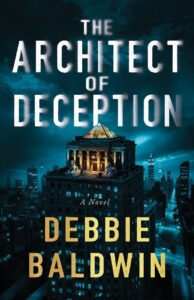
As the author of the high-society mystery The Architect of Deception, I’ve spent the past few years thinking about why readers, myself included, are so fascinated by the combination of privilege and violence. Why are we endlessly drawn to stories about the rich and powerful behaving badly? Why does murder somehow become more compelling when the suspects attended boarding school, summer on Nantucket, and play squash? Or, to put it another way: why do we love society murder?
The answer, I think, has less to do with wealth itself and more to do with consequences. We’ve all seen the news images of famous and wealthy people brought to justice. Harvey Weinstein, photographed on the red carpet, is now in prison orange. Richard Durst goes from quirky eccentric to killer. Certainly, there’s a sense of justice prevailing that is delicious, but I think there is more to it. The murder is the first domino before skeletons tumble from closets and empires fall. That tension is catnip for mystery readers.
Old money society operates in a world governed by rules: social codes, inherited status, family names, legacy institutions. People know where to sit, what to wear, whom to marry, and, most importantly, what not to say aloud. Everyone understands the phrase, “It’s just not done.” And no one dares to ask why. It’s a world where privilege begets privilege as long as you toe the line. Then someone dies violently. Suddenly, the entire structure begins to wobble.
One of the reasons novels like The Secret History, The Talented Mr. Ripley, Big Little Lies, and The Guest List resonate so strongly is that they weaponize secrets. Readers are seduced by a world, only to be forced to confront the rot. As a reader, it feels decadent to peek behind the glamorous curtain of the rich. The only thing more satisfying is watching that world crumble. The high-society thriller lets us indulge both impulses simultaneously.
In writing The Architect of Deception, I was fascinated by the idea of the modern American aristocracy, the new ruling class. I drew on my own experience at an Ivy League college to create my protagonist, Razz James, who exists inside that world but is emotionally detached from it. He understands its construct while simultaneously watching others take advantage of it at his expense. Another universal truth about money: there’s always someone who has more. No matter how much you have inherited or earned, it is in the nature of the hyper-rich to covet. The side effects of that desire are the secrets that can lead to murder. The privileged have it all, and yet are tortured by what’s missing in their lives. That duality makes great fiction.
These are intensely human fears wrapped in couture.
The best high-society thrillers are never merely about rich people behaving badly. They are about systems protecting bad actors and the good guy winning in the end. Wealth changes the mechanics of investigation. I can remember turning to my husband as we watched a police procedural in which an innocent deliveryman or shop owner was being interrogated and saying, “Why don’t these people ever ask for lawyers?” Meanwhile, Edward Lexington Farnsworth, V, shows up for an appointment with his attorney in tow, refuses to answer any questions, and is escorted out with sincere apologies. So when he gets caught, we cheer. That’s what makes the genre feel so satisfying. There is something primal about watching posh people unravel.
In ordinary life, there are consequences, but money creates insulation. Reputation management is a thriving business because image is more important than reality. David and Victoria Beckham may not be happy, but all is well as long as they appear happy. Lawyers, PR teams, family offices, inherited influence, private security, political connections—all function like layers of polish over human flaws.
Which means secrets can stay hidden.
And secrets are currency, both in elite circles and on the page.
Readers enjoy decoding elite behavior because elite behavior is rich with subtext. Every conversation contains innuendo. Every dinner seating arrangement is strategic. Every marriage may also be a merger. And because these environments are so controlled, mystery writers can imbue events with meaning through the subtlest disruptions. The dinner party doesn’t need a table flip to signal discord; a wrong glance across the table can feel as ominous as a gunshot.
That’s why the high-society thriller pairs so naturally with the locked-room mystery and an ensemble cast. Wealth creates contained ecosystems. Rich people gather in limited-access places: resorts, yachts, estates, private clubs. I remember laughing as a child, watching my parents’ friends travel north in the summer and south in the winter together, like a flock. I asked one woman why she didn’t want to meet new people. She replied, “My circle of friends is complete.” That has stayed in my head as the ultimate declaration of the insular world of the elite. That containment amplifies paranoia.
Perhaps most importantly, these stories allow readers to experience schadenfreude without guilt. Watching the ultra-privileged suffer consequences taps into something emotionally satisfying, especially in moments of economic anxiety or social instability. The genre often functions as a pressure-release valve. Readers may envy the wealth, but they enjoy discovering that money cannot buy moral immunity.
At least not all the time.
Still, I think the popularity of mystery novels ultimately comes down to character rather than class. Privilege magnifies personality. Ambition becomes greed. Confidence becomes entitlement. Romance becomes possession. Legacy becomes obsession. Everything is heightened. Those stakes are fertile soil for suspense fiction. I recently rewatched the fabulous murder mystery, Gosford Park. What fantastic depiction of unique characters in a remote setting.
Unlike more investigation-driven mysteries, high-society thrillers tend to operate on emotional rather than purely forensic logic. The crimes are often rooted in history, inheritance, betrayal, scandals, or old grudges. These are intensely human fears wrapped in couture.
It’s telling that so many of the most memorable mystery settings involve inherited wealth and decaying prestige–Rebecca, And Then There Were None, even more modern stories like Succession and Knives Out. The grandeur is the motive. The setting becomes the opportunity.
Large houses are especially effective because they manifest secrecy. I am writing a sequel to The Architect of Deception, where Razz’s best friend, Archie, travels to a fabulous mansion in the Adirondacks to attend his estranged father’s funeral. Like the characters, the house has a pristine facade and hidden secrets. Private wings. Locked studies. Staff corridors. Family portraits staring down from the walls. Family estates preserve history, but in thrillers, that history becomes motive. As Edgar Allen Poe well knew in The Fall of the House of Usher, the core appeal of the high-society thriller is collapse.
Readers enjoy watching an immaculate world crumble, not because we hate beauty or wealth or elegance, but because perfection is suspect. As a reader, when I meet a perfect character, I wait for the gruesome truth to out; as a writer, creating that gruesome truth is part of the fun. The more polished the exterior, the more convinced we become that something terrible must be lurking underneath.
And in crime fiction, that is undoubtedly always the case.
***

Debbie Baldwin
With a background that blends journalism, the law, print media, and television, Debbie Baldwin brings sharp wit, storytelling expertise, and a keen observational eye to her novels. A graduate of Princeton University and the University of Virginia School of Law, Baldwin is a former humor columnist for The Ladue News in St. Louis, where she wrote under the moniker “The Tangential Thinker” for ten years.
In 2015, she sold a television pilot to AT&T/DirecTV and went on to become co-creator, executive producer, and head writer of the ten-episode single-camera comedy Almost There, starring Steven Pasquale, Christopher Fitzgerald, and Susan Kelechi Watson. The Architect of Deception is her ninth novel. Baldwin and her husband have three children and live in Saint Louis with their puggle, Pebbles. Learn more at debbiebaldwinbooks.com.