
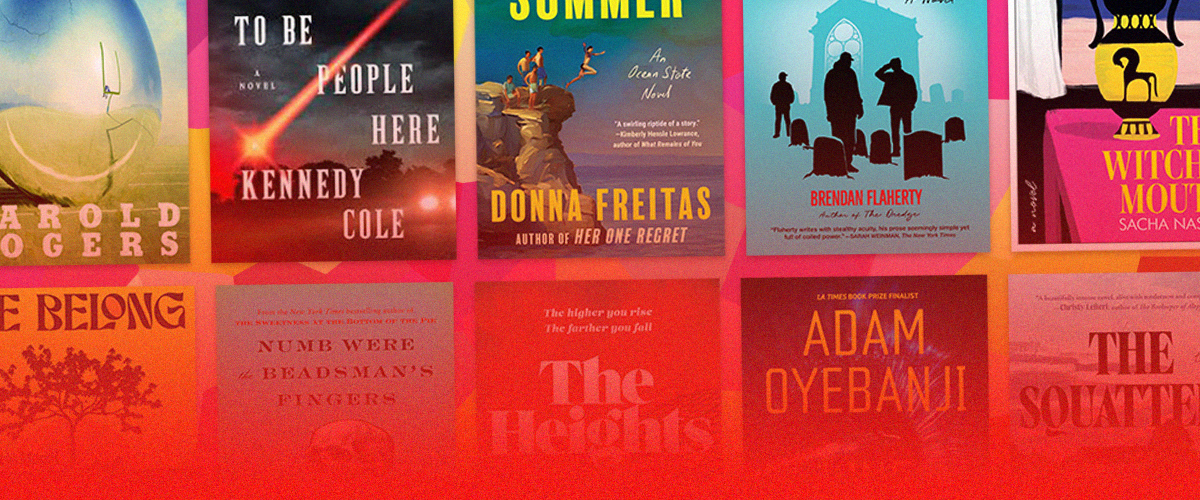
The best crime novels, mysteries, and thrillers of the month: November 2026
Featuring new titles from Donna Freitas, Ian Rankin, Brendan Flaherty, and more, plus the final Alan Bradley mystery
ghbvfgbhvnNovember brings cold winds and chilling adventures, with many of the year’s most intriguing gothics and noirs packed into the month ahead. Most of the following are clear crime and mystery novels; there are two books on the list below that are first-contact thrillers, but I figured their strong X-Files vibes enough to make them count as mysterious.
Thanks to my colleagues Olivia Rutigliano and Dwyer Murphy for their contributions.
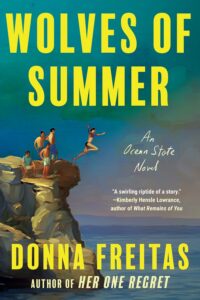
Donna Freitas, Wolves of Summer
(Soho Crime)
Donna Freitas has already proven herself one of the most fearless and fascinating writers around, especially with the suspense story Her One Regret, which addressed a taboo subject—motherhood, regretted—with compassion, understanding, and nuance. Her newest work, which I devoured in a single day despite the near-500-page length, expands on her previous book’s universe, with a glimpse into character Diana’s first case, as neighbors in a Rhode Island seaside suburb search for a missing girl, and are forced to confront their own long-buried traumas, reemerging in the wake of the preteen’s disappearance. Freitas is particularly concerned with examining the male gaze, the public nature of girlhood, and the terrifying experience of incipient womanhood on the world’s stage. Wolves of Summer should be noted as a mystery of some complexity; craftsmanship shines throughout the novel, and the denouement is perfection. –MO
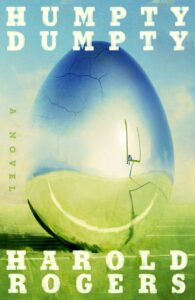
Harold Rogers, Humpty Dumpty
(FSG)
I haven’t read such a thorough condemnation of such a corrupt little town since Red Harvest. (Almost) everyone in this novel is culpable, although very few of them realize what they are even culpable of, even as the consequences of their actions spiral outwards to the public gaze, and even as the town becomes known nation-wide for both its heinous crimes and its callous attitudes. Harold Rogers sets his tale in Steubenville, Ohio, exploring the lead-up to and and aftermath of a horrific crime, to which the townspeople respond even more horrifically. Rogers’ linguistic prowess and creative talents are on full display here, but never in a way that detracts from understanding the story or its terrible underlying message. A literary tour-de-force, and a noir masterpiece. –MO
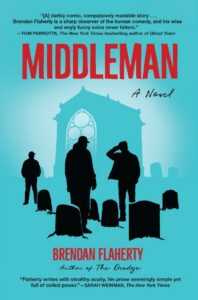
Brendan Flaherty, Middleman
(Atlantic Crime)
A middle-aged everyman struggling with family life and mounting debts gets drawn into a wild grave-robbing scheme when he moves to a small town with shadowy secrets. Flaherty is a writer on the rise, and his charms are on full display in this new novel, with a story full of big characters with subtly powerful arcs. –DM
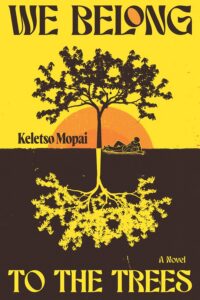
Keletso Mopai, We Belong to the Trees
(Seven Stories Press)
In immediate post-Apartheid South Africa, a ranch hand is accused of murdering a white farmer, sparking terrible rumors and increasing divisions in their remote township. Mopai uses a kaleidoscopic set of narrators to fill in the gaps and carry the truth forward to a day that can stand to hear it. –MO

Alan Bradley, Numb Were the Beadsman’s Fingers
(Bantam)
My heart broke upon hearing of the recent passing of Alan Bradley, the author of the brilliant Flavia de Luce mysteries—not only because I will greatly miss Flavia, but also because I had the chance to meet him personally and discovered him to be as lovely as I could have hoped. Numb Were the Beadsman’s Fingers is his final Flavia novel (his twelfth!), and if ever there were a book to go out on, it’d be this one. It’s about a dead nun, a decades-old case, and a mysterious false identity. RIP to Alan Bradley, and long live Flavia de Luce. –OR

Ian Rankin, The Heights
(Grand Central/Cardinal)
Ian Rankin’s stylish, modern take on a very classic mystery premise is a fun addition to November’s literary roster. The story is set in London, in an opulent high rise apartment overlooking Hyde Park. The residents are both impossibly wealthy and glamorous. And when, one night, the nighttime concierge is found dead, they are all suspects. Wheeeee! (This book also has the distinction having a sleuth whose name made me, a silent film fan, do a double-take: Gillian Gish).–OR
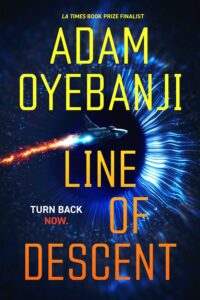
Adam Oyebanji, Line of Descent
(Saga)
This one takes place in the same world as Braking Day, Oyebanji’s mind-bending locked-space thriller of generation ships and factionalism, and functions well as a prequel. Line of Descent asks, what could motivate someone to go so far as to kill amidst the high stakes of disrupting order on a colony ship? Readers might end up surprised, but they will certainly feel satisfied. –MO

Saba Brelvi, The Squatters
(The Dial Press)
A well-to-do Muslim woman volunteering at a refuge center strikes up an uneasy connection with two of the migrants interned there, a pregnant woman and her husband, and begins helping them find shelter. After putting them up in a friend’s empty cottage, the woman and her family become the focal point for xenophobic reactionaries in the neighborhood and beyond, even as their connections with their community and their close friends begin to fray irreparably. The Squatters asks essential questions for the present day, and finds no easy answers. What do we owe to our communities, our selves, and our principles? Can a life have meaning without risk? Can words have meaning without subsequent action? And why don’t more books have references to the diggers? Read this shattering work of fiction at your own peril, for you might find yourself, too, standing up for your long-suppressed beliefs no matter the consequences. –MO
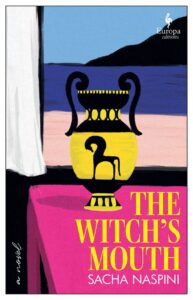
Sacha Naspini, The Witch’s Mouth
Translated by Clarissa Botsford
(Europa)
Grave robbing in Tuscany from ancient Etruscan graves has been big business since before the war, but with new regulations cracking down on antiquities smuggling elsewhere in Italy, the little band of thieves at the center of the novel face new gangs trying to muscle into their territory, renewed inquiries from weary local authorities, and internal divisions that threaten to dissolve their operation entirely. –MO
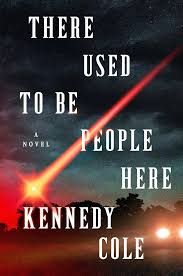
Kennedy Cole, There Used to Be People Here
(Berkley)
When a queer man dies in a gay bar restroom under, shall we say, unusual circumstances (a giant worm emerges from his mouth and leaves behind the mere husk of a body), two detectives go looking for answers, only to stumble upon a government conspiracy to cover up an alien crash site with deadly cargo. Kennedy Cole uses the language of science fiction to explore the experience of queerness as a person of color; one of the detectives is the first Black policeman in his small southern town, and he’s as drawn to the alien as he is repelled by his colleagues. A moody, atmospheric take on the first encounter thriller, with plenty of body horror thrown in (or perhaps, bursting out). –MO

Molly Odintz
Molly Odintz is the managing editor for CrimeReads and the editor of Austin Noir, now available from Akashic Books. She grew up in Austin and worked as a bookseller before becoming a Very Professional Internet Person. She lives in central Texas with her cat, Fritz Lang.