Jessica Hamilton on possession, menopause, and the horrors of middle age
Exploring the old intersection of madness, demons, and misunderstandings of women's bodies
Demonic possession or plain old menopause? It can be hard to tell, which is why the horrors of middle age for women lend themselves so well to the horror genre. There are the physical horrors, when our bodies betray us. There are the psychological ones, when our minds betray us. And there are the sociological ones, perhaps the most insidious of them all, when our own communities betray us.
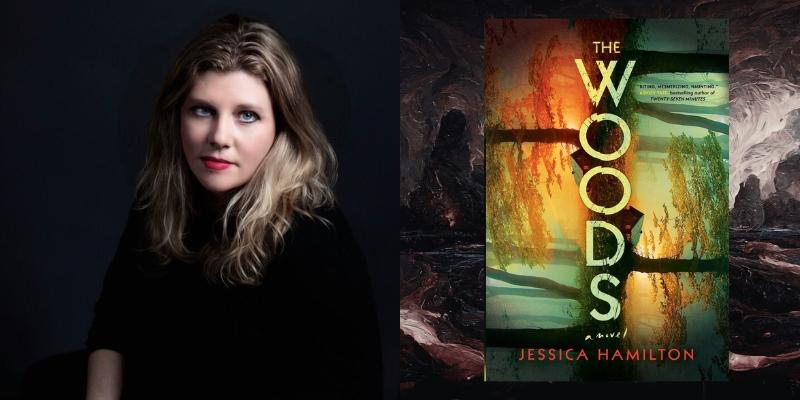
In my novel, The Woods, my protagonist, Alice, is in the throes of middle age. So, while she’s sure something sinister is in the woods, which seems to be targeting her family, she also questions herself at every turn, is constantly doubted by those around, her all while powering through the many physical hurdles of menopause.
Scalding flames spread quickly up the chest, wrapping a burning hand around the neck, moving onto the face causing a sheen of sweat on the forehead and upper lip that only intensifies the burn—no escape is possible from the fire within. A description of an everyday hot flash and yet it reads like a scene in a horror novel of a person being burned alive. The same can be done for the rivers of blood that may run unabated, the headaches that feel like a metal stake being driven into the scalp, the withering of the skin, the clumps of hair found in the drain after showering, the crack and creak of joints that ache.
These physical symptoms sound like well-known body horror tropes but are in fact real life experiences for many women going through menopause. In combination these symptoms can easily make a woman feel as though her body has been possessed by some evil force.
In his novel, Mary, Nat Cassidy describes the physical struggles of his middle-aged protagonist, Mary, in such a visceral way that it is in itself the horror. Making the reader forget that this is a stage of life that all women go through and not just the fiction of a very adept horror author.
Then there are the psychological impacts of middle age for women. Extreme fatigue, anxiety, unprovoked anger, incessant mental chatter, dark thoughts, disrupted sleep, sudden surges of unmanageable rage, untreatable depression, gaps in memory—I have heard many women complain of one or more of these symptoms due to menopause.
And yet, this list is what comes up when you google the symptoms of demonic possession. Clearly making the point that middle age lends itself well to the horror novel. It is one thing to feel that your body is turning on you, it’s another to feel that your mind is as well. And if you can’t trust yourself, then who can you trust?
In the novel, Death in Her Hands by Ottessa Moshfegh the protagonist Vesta becomes obsessed with a note that she finds in the woods around her house and the mystery that it presents. Very quickly the lines of reality become blurred for Vesta due to her confused state and her inability to decipher what is real and what is her own paranoia and delusion. She can’t trust herself which means she’s locked in an inescapable cycle of discovering something and then mistrusting that discovery.
My own protagonist, Alice, senses that there is something sinister in the woods around their new home but is prone to second guessing her own intuition because she no longer feels as sure of her memory or perception as she once did, before middle age. She wants to assert herself and what she believes is happening but lacks the confidence to do so under the influence of menopause.
If you’re unable to trust your memory, if you’re prone to paranoia and anxiety, irrational mood swings and brain fog you’re also ripe to be gaslit by those around you. Women being gaslit is not a new concept. The diagnosis of hysteria, which women were given until it was removed from the DSM in1980, was perhaps the most powerful tool of gaslighting.
These days it’s a little less obvious but happens just the same. It’s easy to dismiss a middle-aged women’s feelings by claiming that they are caused my menopausal hormones. But, if the paranoia, anxiety, depression grief etc. are in fact rooted in something other than hormonal changes this leaves a woman without the support she actually needs.
In the case of my protagonist, her concerns about the safety of her family and the threat of the woods are dismissed by her husband, mother and best friend as the ramblings of a paranoid, anxiety riddled, grief stricken menopausal woman. Add to this the fact that women often feel invisible in society after reaching middle age and it results in lack of credibility, power and presence. What could be worse than the horror of not being believed, not having any authority and not being seen?
Why did I choose to write about a middle-aged woman experiencing menopause in my latest novel? I’m fifty-one years old and have begun to experience a lot of what my protagonist, Alice, experiences. I wanted to give a voice to this stage in life and hopefully create some empathy for it in readers.
Mostly though, it was because the things that Alice was experiencing at this stage of life were great tools to ramp up the tension of the horror in my writing. A character filled with paranoia, anxiety, and sleeplessness from the very start of the novel. One who questions herself and is questioned by those around her and who causes the reader to question whether something is real or simply a paranoid delusion. Set this character in a house with a tragic history, surrounded by ancient woods and I was off to the races.
The simple truth is that often real life is the scariest of all and in the case of middle age for women, I’m sad to say, that is most certainly the case. Demonic possession or menopause? My bet is that it’s menopause. I don’t believe in demons, despite being a writer of horror.
Fortunately, there’s hormone replacement therapy, an increase in information about it and the horror does, apparently, have an end at some point. In the meantime, may there be many more novels that have the menopausal hero saving the day, despite the hot flashes, brain fog, sleepless nights and gaslighting.
***


Jessica Hamilton
Jessica Hamilton was born in Australia but grew up in Canada. She has lived and worked in the Czech Republic, Taiwan, India and Japan. She studied writing at the Humber School for Writers as well as George Brown College. She lives in Ontario, Canada with her husband, son and daughter. Her debut novel is titled What You Never Knew, her second novel is titled, Don't You Dare, and both are thrillers published by Crooked Lane Books.