How Gender and Technology Intersect in Fiction and Film
Cleo Ballard on women in sci-fi, technothrillers, and the fraught rise of artificial intelligence
“The human spirit must prevail over technology.”
–Albert Einstein
“With artificial intelligence, we are summoning the demon.”
–Elon Musk
“The development of full artificial intelligence could spell the end of the human race.”
–Stephen Hawking
*
Ever since humans could communicate, we’ve had technophobia. In 370 B.C. Plato was afraid that the creation of an alphabet would destroy human memory. The Greeks wrote about an artificial woman named Pandora, created by the Gods as a trap to destroy mankind.
The Luddites in the eighteenth century were fearful that automated looms would replace their jobs and craftsmanship. And Charles Darwin believed that machines would become a new species that would out-evolve us and warned “that man will become to the machine what the horse and the dog are to man – a domesticated, inferior pet.”
This distrust for technology has fueled bestselling thrillers and blockbuster movies. But the conflicts within are especially riveting when the protagonist is a woman. This is because the story’s clashes transcend physical force and become a battle of logic versus intuition.
Technology operates on cold calculation, strings of rigid computer code, and uses artificial intelligence to logically solve problems. But a brilliant heroine has something a machine lacks—the ability to be empathetic, intuitive, and the primal drive to survive and protect the species. These are qualities that a machine can’t truly understand and, ultimately, they become the most powerful weapon in the battle to exist.
Consider the movie The Terminator, where the protagonist, Sarah Connor, must save the world from a high-tech futuristic network and its killing machine. Tech thrillers usually revolve around man versus machine, but Gale Anne Hurd, the script’s co-writer, believed that an action movie’s stakes are heightened when the lead is a woman, because the writer can’t use “muscle logic” and is forced to create a heroine that utilizes her human nature—empathy, love, and biology—to survive. Sarah begins as a waitress who can’t even balance her checkbook and turns into a woman responsible for the survival of humanity. She’s the least likely hero who saves both her unborn son and the world.
The novel The Circle by David Eggers is a technothriller that twists the theme of woman versus machine, making its protagonist, Mae Holland, a cautionary tale about how ignoring intuition, a woman’s superpower, can result in losing the battle against technology, and unspeakable tragedy. Mae rises in the ranks of a powerful company called The Circle, which merges all personal information (banking, social media, and private data) into one “universal” identity called TruYou. To succeed, she morphs from skeptic to true believer of the company’s mottos: Privacy is Theft, Sharing is Caring, and Secrets are Lies.
Mae ignores her family’s pleas and fears. As a result, the reader bears witness to a cautionary tale where cold logic defeats ignored intuition, and Mae’s deal with the devil results in heartbreak.
But why else does the fight between a heroine and technology resonate so deeply for an audience? It’s incredibly personal!
Tech, and specifically AI, has the ability, unharnessed, to access the intimate details of our lives—our location at any moment, our health, family, banking information, private emails, DMs, and even phone conversations. Unchecked, it can act as Big Brother, spying through our devices, computers and televisions. This invasion of privacy and forced intimacy ups the stakes, the thrills, and fear factor. When a woman is at the center of this assault, the tension automatically skyrockets.
Consider the novel, The Handmaid’s Tale by Margaret Atwood. There is a political coup aided by a digital infrastructure, that overthrows the democratic US government and creates the totalitarian regime of Gilead. Days later a workplace ban is imposed on women. Their bank accounts are frozen, and they’re prohibited from owning property, holding money, or leaving the country. Ultimately, fertile women are forced to bear children for the new leaders.
As women are stripped of their identity, they fight against technology (and men) for their freedom. The protagonist, Offred, must exist in an analog world, and use her ability to make human connections—whispers, notes, physical touch—to reclaim her body and the lives of all women in Gilead. We are on the edge of our seats, hoping that she triumphs.
In contrast, the movie Ex Machina flips the script. A billionaire summons a brilliant young programmer to his island to evaluate Ava, an AI female robot. Ava has been created to be every man’s subservient female fantasy but she’s fully sentient and understands that she’s trapped in her body and on the island.
To escape, she uses the qualities the human programmer should have had—flirtation, vulnerability, and empathy—to outsmart her creator and kill both men. Ava claims her freedom and power, perhaps even her soul. This raises some complex questions about the definition of humanity (we can’t help but relate with our AI heroine as she uses her own technology to defeat humans), as well as the dangers of unchecked artificial intelligence.
We are currently living through a tech revolution in real time, making books and movies about women versus technology more prescient, terrifying, and heightening anxieties about privacy and the fear of being supplanted in our jobs and even our personal lives.
The movie Hidden Figures, set during the Space Race, is the true tale of black female “human computers” at NASA who were replaced by the first IBM mainframes. Those brilliant women were able to figure out a way to master the new technology and prove their worth, but their story foreshadows a possible future if technology replaces humans in the workplace.
In addition, books like The Power by Naomi Alderman make us wonder what would happen if women figured out a way to harness their biology to become weapons that discharge lethal levels of electricity. Would they retain their humanity? Or would they, as portrayed in the novel, devolve into the same kind of violence that once victimized them, corrupted by absolute power?
The themes of these sci-fi books and movies might sound preposterous. But currently, Chinese researchers are working on artificial womb technology, potentially redefining the definition of a mother. Tech companies have created 3D versions of deceased loved ones, altering the landscape of loss and grief. And AI chatbots have been accused of encouraging suicides in teens. A decade ago, the world would’ve bought popcorn to watch movies with similar futuristic themes or curled up by the fire to page through technothrillers.
Books and movies about women versus technology will always keep us riveted because in a not-so-distant future their themes might just become a reality. And the women in the stories we watch or read represent not only humanity’s biological drive to survive, but underdogs we can relate to and root for, and the most beautiful and ephemeral aspects of life.
As technology advances and our uncertainty builds, this theme will continue to captivate, and we will see our fragile world reflected in stories of heroines as they strive to save themselves, their children, and humankind before it’s too late.
***
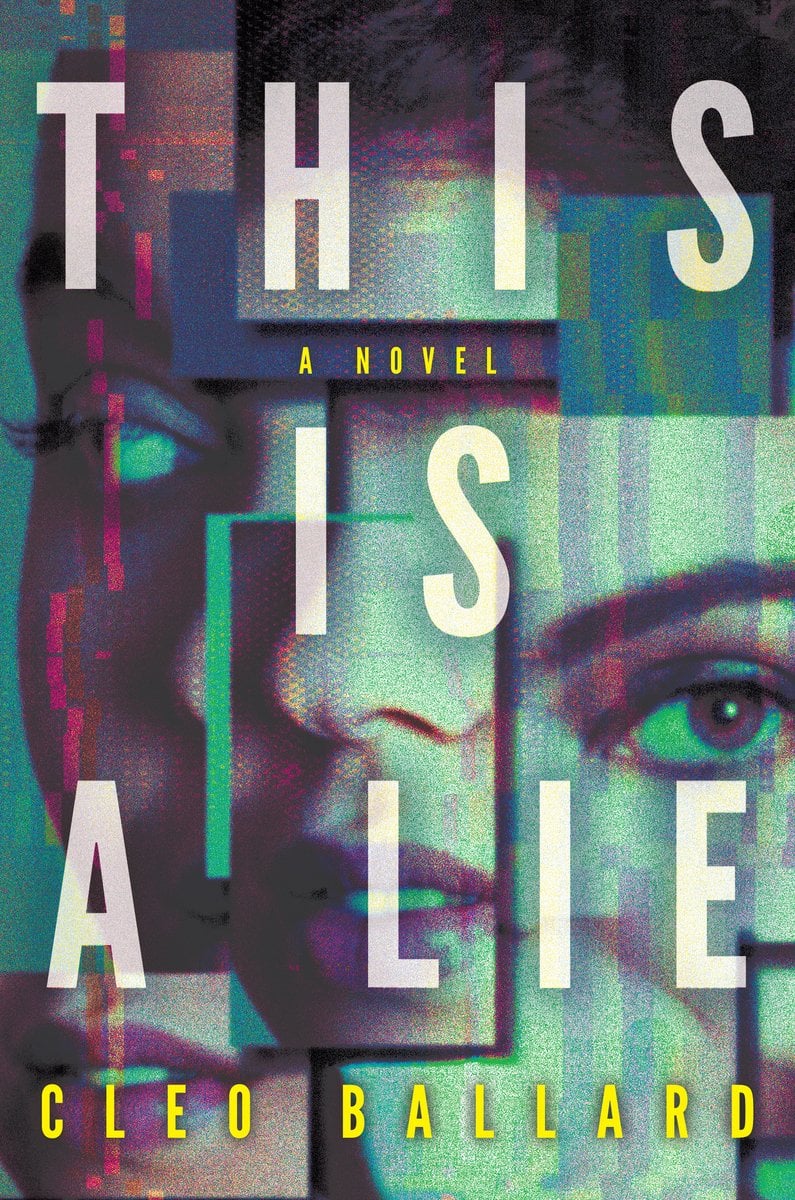

Cleo Ballard
Cleo Ballard, a graduate of Cornell University, is a former ghostwriter who lives in the Pacific Northwest. She is the author of This Is a Lie. When she’s not working on her next novel, she can be found biking, kitesurfing, winging, or planning her family’s next adventure.