

5 Obsession-Driven Noir Films Adapted from Novels
Carol Floriani recommends compulsive classics from Alfred Hitchcock, Billy Wilder, and others
When I first heard Sting’s lyrics to “Every Breath You Take,” the song’s chilling, threatening tone made me genuinely uneasy. Was someone watching me? Should I be looking over my shoulder? It seemed he had written a definitive stalker’s anthem. And yet, as unsettling as it was, the song was the sole number one hit for The Police and won a Grammy award for Song of the Year in 1984.
Are we obsessed with obsession? Possibly. Obsessive characters abound in creative works, and as I thought about it, several of my favorite films immediately came to mind. Characters with unrelenting fixations drive the disturbing plots of the following classic noir or noir-ish films, all craftily adapted from popular novels.
*
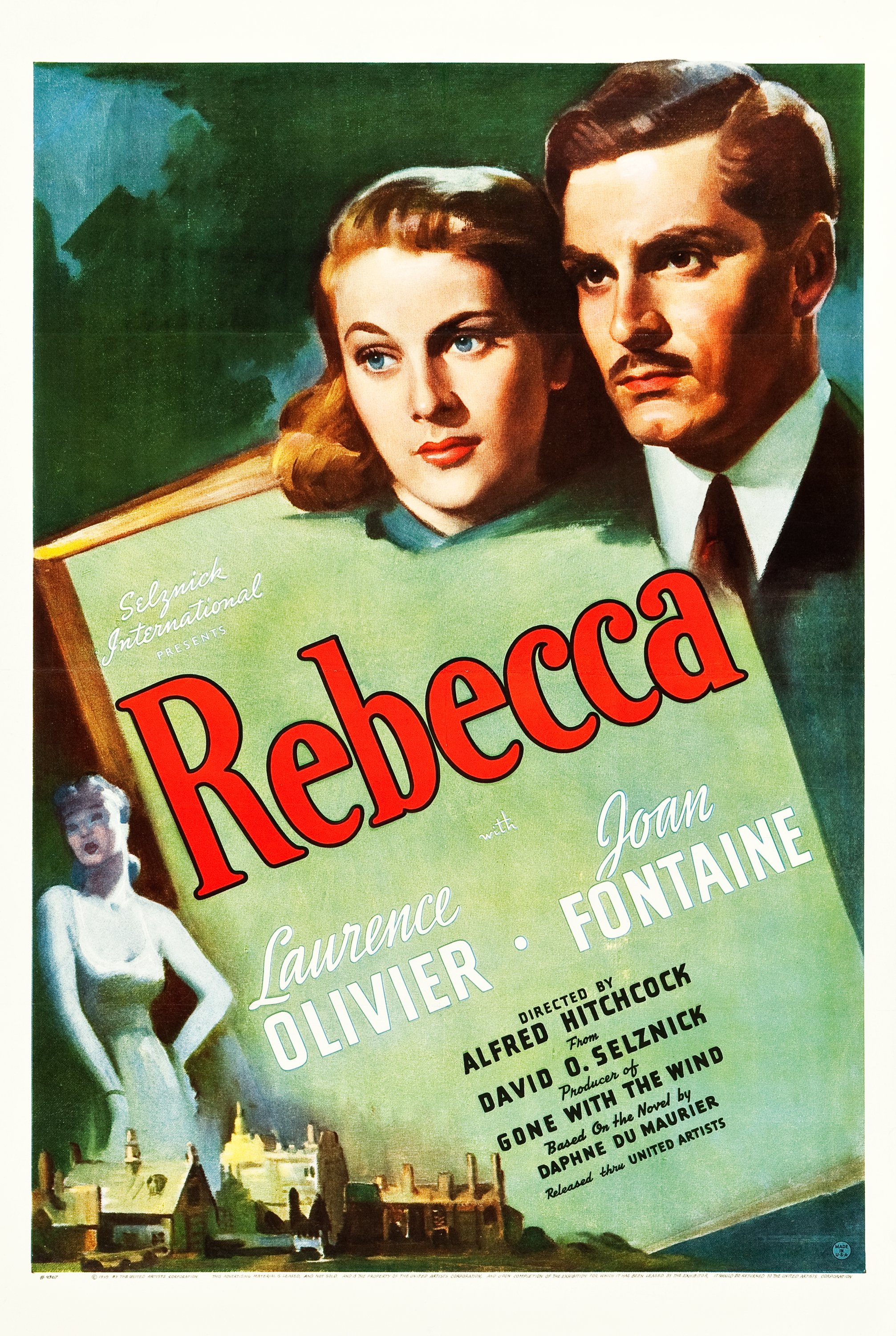
Alfred Hitchcock, Rebecca (1940)
I recall reading Daphne du Maurier’s suspenseful masterpiece, Rebecca, in high school. I became immediately intrigued by the tangled tale of “the first Mrs. de Winter,” the beautiful and captivating Rebecca.
Presumed to have died in a tragic boating accident near Manderley, her husband’s family’s estate on the southern shore of England, she reaches out from her watery grave to extend a forceful hold on the lives of those who loved or hated her. Her former temperamental husband Maxim, the naively insecure “second Mrs. de Winter,” and Manderley’s sinister housekeeper Mrs. Danvers, are all trapped, unable to escape from Rebecca’s manipulative grasp, as if she were stalking and haunting them from the afterlife.
And Mrs. Danvers, a name that has become synonymous with wickedness in film lore, is especially vulnerable. “Danny” professes that she would do anything for her former mistress, and her unrelenting obsession ultimately leads to devastation and her own demise.
Hitchcock’s Gothic film noir adaptation, riveting and true to du Maurier’s novel, won Academy Awards for Best Picture and Best Cinemaphotography (Black and White).
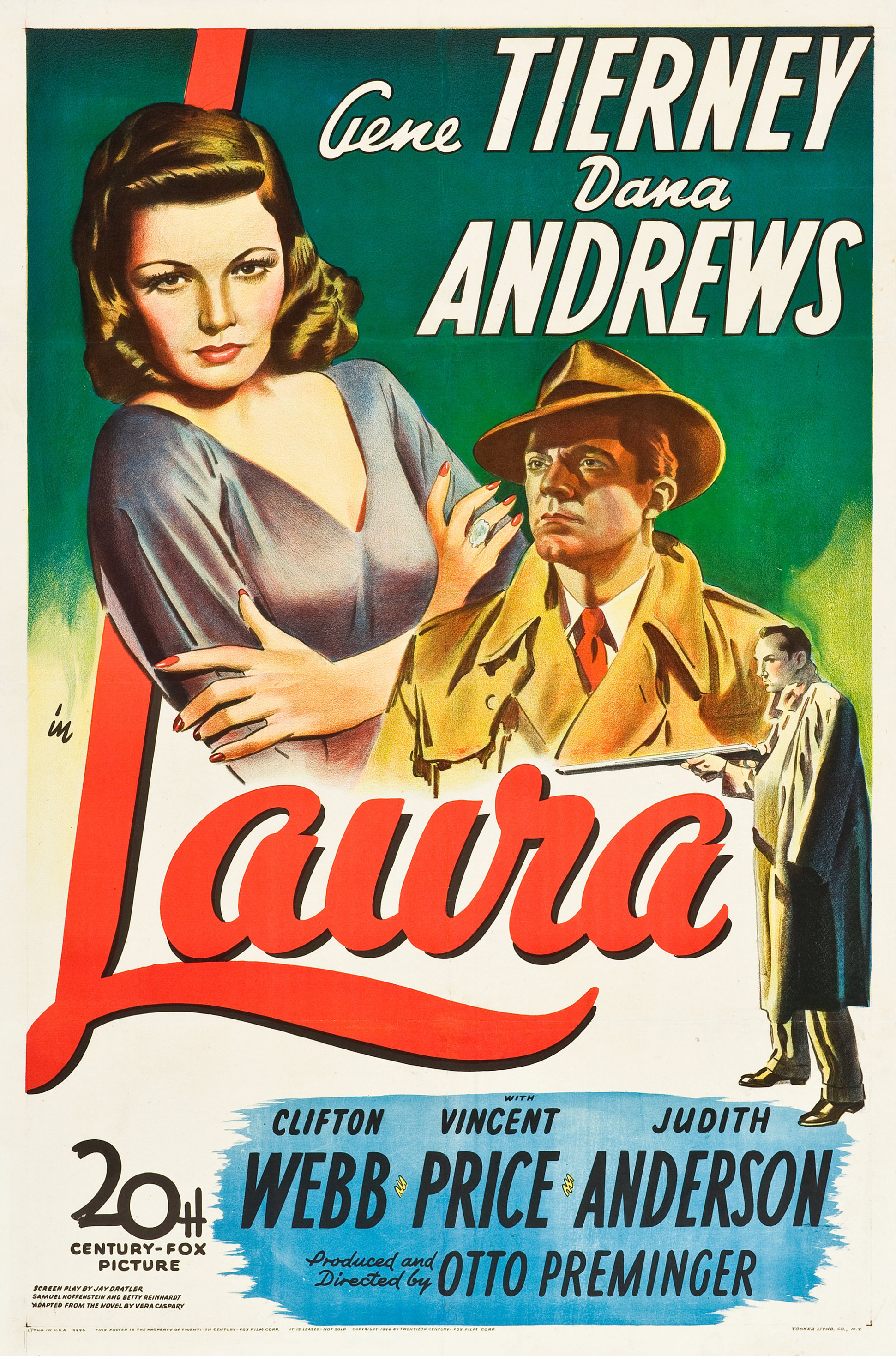
Otto Preminger, Laura (1944)
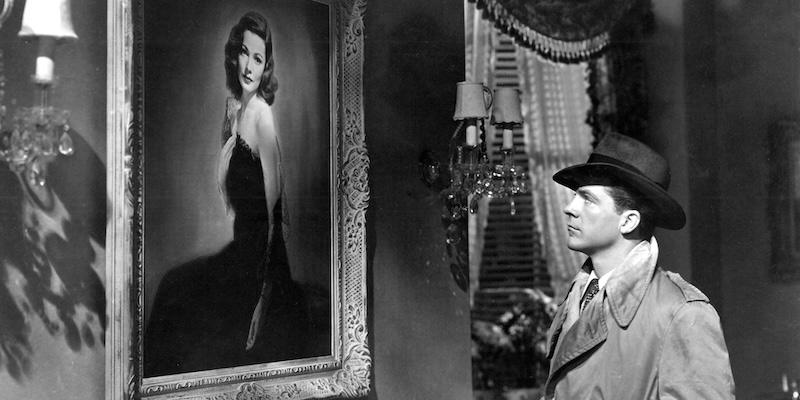
Laura, adapted from Vera Caspary’s 1942 novel, is often considered the quintessential film noir. Consumed by Laura’s beauty, arrogant newspaper columnist Waldo Lydecker and handsome detective Mark McPherson, both become completely obsessed with her. And who wouldn’t be obsessed with the stunning Gene Tierney as an ambitious career woman?
Waldo attempts to transform Laura in Pygmalion fashion by suggesting a new hair style and wardrobe and by exposing her to the arts. Mark, while investigating her presumed murder, falls hopefully in love with the exquisite portrait of her hanging over her fireplace. Waldo, many years Laura’s senior, stalks her, becoming insanely jealous of her young, attractive suiters. And Mark, transfixed by her painting, delves into her private life, desperate to know more about her under the guise of his investigation.
I won’t divulge the details of the shocking plot twist at Laura’s core, but I will say that no matter how many times I see the film, I always find it jarring.
Laura won an Academy Award for Cinemaphotography (Black and White).
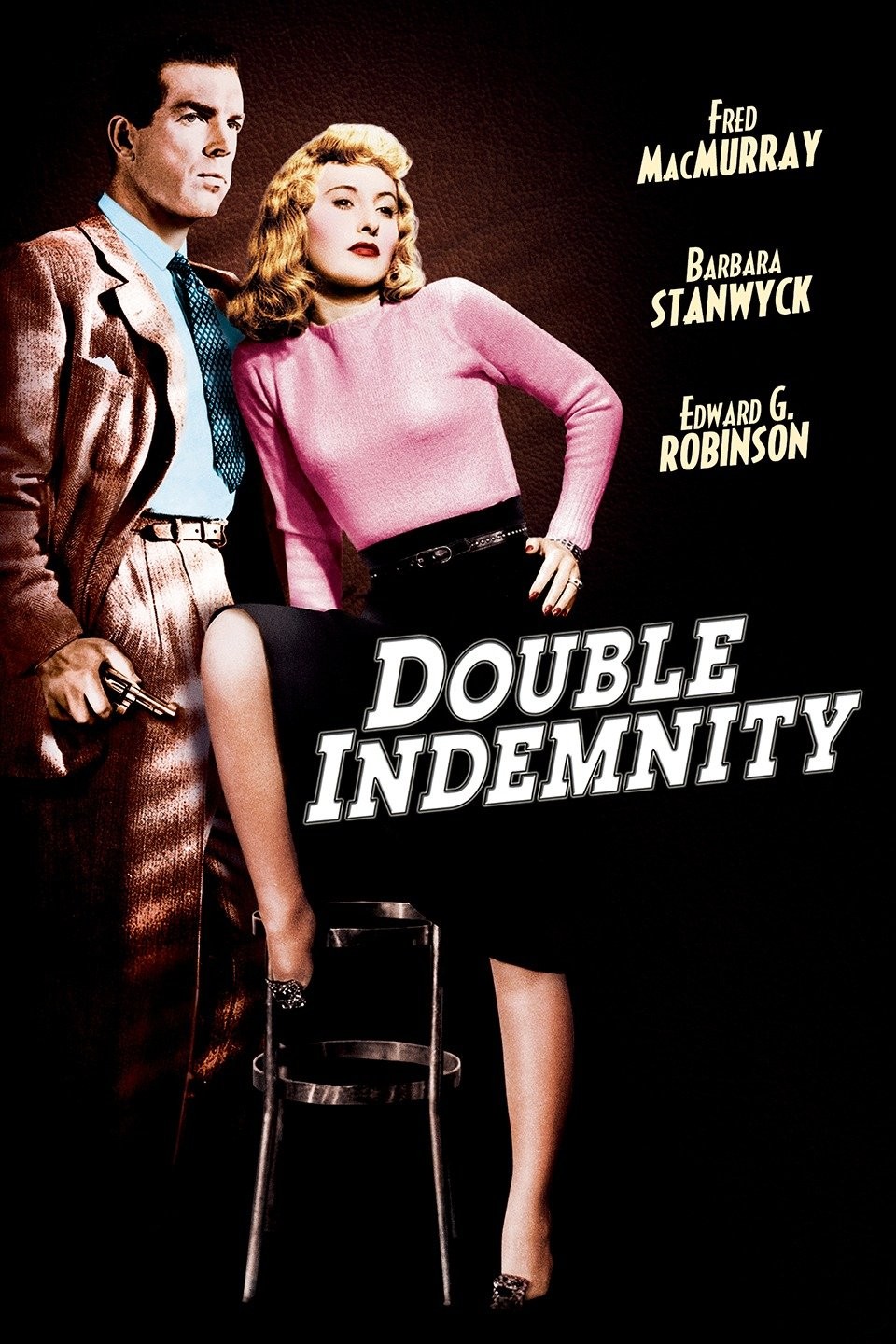
Billy Wilder, Double Indemnity (1944)
Billy Wilder’s Double Indemnity, based on the novel by James M. Cain, checks all the boxes that define a classic film noir—shadowy black and white lighting, voiceover narration, flashbacks, a seductive femme fatale, and a complex plot. In addition, as the story plays out, fast paced, bullet-like dialog adds to the tension. Insurance salesman Walter Neff falls hard for sultry blonde bombshell Phyllis Dietrichson, the wife of a client. His fascination with her quickly turns to obsession.
She easily lures him into a scheme to murder her husband after Neff duped him into signing an accident insurance policy containing a double indemnity clause. Intrigued by both the double payout for accidental death and the prospect of finally breaking free from her dull, inattentive husband, Phyllis shamefully manipulates Neff, taking full advantage of his obsession. Let’s just say their plot doesn’t work out exactly as planned.
Although Double Indemnity was nominated for seven Academy Awards, including Best Picture, it lost in all categories. However, the beloved film noir, starring Barbara Stanwyck and Fred MacMurray, was selected for the National Film Registry in 1992.

John M. Stahl, Leave Her to Heaven (1945)
When director John M. Stahl brought Ben Ames Williams’ bestselling novel, Leave Her to Heaven, to the big screen in 1945, his film noir left no doubt that the female lead, a ruthlessly diabolical femme fatale, was clearly in a class by herself. Beautiful, seductive Ellen Berent destroys everything in her path with her obsessive “love.” She stops at nothing, plotting and scheming until she gets her way. With an uncanny ability to rationalize irrationally, she is blind to her own evil deeds.
Gene Tierney received an Academy Award nomination for Best Actress in a Leading Role for her cool, calculating performance as Ellen. And interestingly, Ellen is the antithesis of the charismatic Laura Hunt, whom Tierney had portrayed the year before in Laura. Be prepared for unrelenting drama as you watch the villainy unfold in this spellbinding film.
Leave Her to Heaven, the first film noir shot in Technicolor, won an Academy Award for Best Cinemaphotography (Color).

Richard Fleischer, Compulsion (1959)
Fasten your seatbelt when you watch Richard Fleischer’s Compulsion, adapted from Meyer Levin’s 1956 novel of the same name. Based on the Leopold and Loeb thrill murder of fourteen-year-old Bobby Franks in 1924 Chicago, the book and movie closely mirror the actual case.
Two wealthy, egotistical University of Chicago law students, Judd Steiner and Artie Strauss, are obsessed with committing the perfect crime and certain they have the intellectual superiority to get away with it. Judd, believed to be schizophrenic, willingly submits to Artie’s dominance. They carry out their obsession by stalking, kidnapping, and killing young Paulie Kessler, but they make a careless rookie mistake that leads to their arrest.
The district attorney, horrified by their cold-blooded depravity, seeks the death penalty. The ensuing trial culminates in a mesmerizing courtroom scene featuring Orson Welles as an intrepid defense attorney. Faced with the nearly impossible task of saving Judd and Artie’s lives, he presents an intense monologue against capital punishment.
All three lead actors, Dean Stockwell, Bradford Dillman, and Orson Welles, won Best Actor Awards at the 1959 Cannes Film Festival.
*
Sting got it right. Obsession lurks everywhere in our lives, and it is here to stay. To think that someone could be watching “every breath you take” is unsettling, if not downright frightening. Yet it is an intriguing trope that never fails to keep us guessing in both books and movies. Grab an extra-large bowl of popcorn, take a seat, and watch the drama unfold!
***


Carol Floriani
After studying at the Universidad Complutense de Madrid and graduating from Rider University, Carol Floriani worked for many years in the editorial and publicity departments of a Big Five publisher before ultimately embarking on her writing career. In addition to Invitation to Murder, she is the author of two previously published young adult novels. She resides in New Jersey and New York City with her husband, an attorney.