The Top 10 Classic Detective Novels, According to Jeffrey Archer
The author of End Game on Arthur Conan Doyle, Raymond Chandler, Dorothy Sayers, and more
Agatha Christie has her own list on this website. This is the list of everyone else.
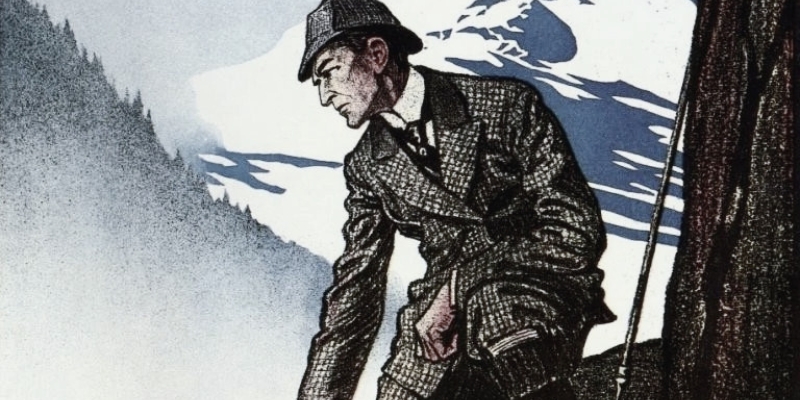
The detective story is thought to have been invented by Conan Doyle. And ironically, not only did he invent it, but he became the greatest practitioner of it. I don’t think he’s ever been equalled. The irony is how few novels he wrote—lots of what one might call novellas or short stories, but he only wrote four novels. They are masterpieces, and we have all learned from them.
His genius is the human being he had as his detective, Sherlock Holmes. But the genius also goes to the amazing brother, Mycroft, who he claims is cleverer than he is, and the sidekick, Dr Watson—a thoroughly decent, wonderful human being who can’t quite keep up with Holmes. Put that together and you have what is called, in book-writing terms, characters. And it’s characters that make books.
These are the ten novels I return to from before 1980. Some of them are a hundred and fifty years old. Some of them are sixty. All of them are alive on the page.
I will tell you almost nothing about the plots. A detective novel ruined for you in advance is a detective novel I have stolen from you. So: dates, authors, the shape of the book, and why it earned its place.
*
Number One

Arthur Conan Doyle, The Hound of the Baskervilles (1902)
“It’s characters that make books.”
–Conan Doyle on the foundation of the genre
Yes I have written about Doyle and Hound before—with good reason.
The detective story is thought to have been invented by Conan Doyle. Ironically, not only did he invent it—he became its greatest practitioner. I don’t think he’s ever been equaled.
Sherlock Holmes had been dead for eight years when The Hound of the Baskervilles was published. Doyle had killed him at Reichenbach Falls in 1893 because he was tired of him; the public refused to accept it; and Hound—a chronologically earlier case, set before Holmes’s death—was Doyle’s compromise. It is also, by general agreement, his best novel.
What you have to remember with Arthur Conan Doyle’s first book, A Study in Scarlet, is that it was his first book. He was writing it for magazines and only later turned it into a full-length plot. And it’s not just a detective story — it’s a revenge story as well. The aficionados, of which I’m not one, do not consider it his best work. But it’s what set off his career.
Hound is what happens fifteen years later. It is gothic. It is patient. Watson is alone on the moor for almost half the book—Holmes does not appear for chapters at a time—and the slow gathering of menace, the fog, the great dog, the family curse, are all sustained for two hundred pages without a single passage that drags.
What Doyle had by 1902, and what Scarlet did not yet have, was full mastery of his own characters. Here, in Hound, Holmes is sharper here. Watson is funnier. The villain is more dangerous. The genius of Hound is that the form Doyle had invented was now playing to him.
And I love Mycroft, Sherlock’s cleverer elder brother working quietly for the government, is one of the great minor inventions. My brother’s cleverer than I am, Holmes keeps telling us—and when we finally meet Mycroft, we believe him.
For readers who think they know Sherlock Holmes from television. The novel is better.
The Hound of the Baskervilles is the masterpiece, and I go back to it every few years. If you are introducing Holmes to a teenager, start there.
Number Two

Wilkie Collins, The Moonstone (1868)
T.S. Eliot called it “the first, the longest, and the best of modern English detective novels.” He was right on the first count. He was probably right on the third. The second is debatable—The Moonstone is not a short book—but if you have not read Collins, you have not read the foundation of everything that followed.
A great yellow diamond is stolen on the night of an English country-house party. The investigation that follows runs across two years, three narrators, and a cast of household servants, lawyers, doctors, and the first proper fictional detective in English literature: Sergeant Cuff, who grows roses when he is not solving crimes.
What Collins understood, and most modern crime writers have forgotten, is patience. He lets the reader feel the weight of the household. The detective novel that opens with a corpse on page one has its uses. The detective novel that opens with a household and earns its corpse has more.
A book for the long evening. Not the long weekend.
Number Three

Dashiell Hammett, The Maltese Falcon (1930)
The book that invented the American detective novel.
The Maltese Falcon became a worldwide bestseller, and rightly so. Sam Spade is not Sherlock Holmes. He’s bloody good. He’s not Sherlock Holmes. But it’s a damn good story. And I recommend it.
He is a private investigator in San Francisco who takes a case from a woman who is lying to him, and who continues to take her money even when he knows she is lying, because the money is good and the case is interesting and he has rules of his own that have nothing to do with the law.
Hammett wrote the way he had lived. He had been a Pinkerton operative. He knew, in a way no British crime writer of his generation could have known, what the inside of an actual investigation felt like. The dialogue is harder than English fiction permits itself to be. The morality is bleaker. The book is shorter than you expect.
For readers who think the British country-house murder is the only legitimate form of detective fiction. It is not.
Number Four

Raymond Chandler, The Big Sleep (1939)
“He captures America. You know you’re on the street with him. That itself is a gift.”
–Raymond Chandler
The other great American detective novel, and the one I would press on a reader who liked Hammett but wanted more sentences.
The Big Sleep, by Raymond Chandler, written in 1939, is a classic—and of course became a classic film. Its genius is that Marlowe is Sam Spade with better lines. It’s famously complicated. Very difficult to follow at some points, but a wonderful story. Even when Chandler was asked who killed the family chauffeur, he couldn’t even remember.
But no reader reads Chandler for the plot. It’s the language. He captures Los Angeles. He captures America. He captures the people. You know you’re on the street with him. That itself is a gift.
What Chandler did to the American detective novel is what Sayers did to the English one: he made it literary without making it precious. Marlowe is a moralist in disguise. He pretends not to care. He cares more than anyone in the book. That contradiction is the engine.
For readers who underline sentences. Almost every page has one.
Number Five

Dorothy L. Sayers, The Nine Tailors (1934)
A detective novel about church bells.
I am not joking. The Nine Tailors is set in a Fenland parish where the bell-ringers gather one New Year’s Eve to ring a peal of nine thousand changes—and somewhere in the course of that long, freezing night, a man dies. Lord Peter Wimsey, Sayers’s amateur detective, arrives by accident.
It is interesting how women are often the best detective writers—although in those early days, of course, they couldn’t even get into the police force, let alone be a detective, which is in itself remarkable. They were often the wives of men who couldn’t understand why they were even writing.
In the case of The Nine Tailors, what you have is the great Lord Peter Wimsey—who is not a detective. He is a member of the House of Lords. He is an aristocratic peer. He is an amateur. He just loves joining in. But he has a gift for solving problems. So it’s a very strange novel and very, very English. If you are of that P.G. Wodehouse flavour, Lord Peter Wimsey is your man.
Sayers does something here that Hammett and Chandler never bothered to attempt: she writes a detective novel that doubles as a portrait of a community. The vicar, the squire, the farm laborers, the church itself—they are all on the page, and they are all on the page for a reason. By the end you cannot remember which character was the means to which end. That is the trick.
For readers who want their detective novel to feel like a long Sunday at someone else’s house. Best with weather outside.
Number Six

Dorothy L. Sayers, Gaudy Night (1935)
The Sayers most undergraduates are made to read. Also, by some distance, the best.
Gaudy Night is set inside a fictional Oxford women’s college, at a reunion dinner, and the crime is not—at first—a murder. It is a campaign of poison-pen letters and increasingly nasty pranks, and the woman investigating is not Lord Peter Wimsey but Harriet Vane, Sayers’s writer-detective, who is also Sayers herself. By the time Wimsey arrives, the book has already become something detective fiction in 1935 was not supposed to be: a novel about women, scholarship, and what intelligent women are permitted to want.
It is, technically, a detective novel. It is also one of the best novels of the 1930s about university life, female intellect, and the costs of independence. That Sayers did both at once, in one book, and made it a bestseller, tells you something about what the genre is capable of when a serious writer takes it seriously.
For readers who think detective fiction cannot also be literary fiction. Sayers proved the case.
Number Seven

Georges Simenon, Maigret Sets a Trap (1955)
Simenon wrote seventy-five Maigret novels in forty years. Then he wrote another two hundred novels that were not Maigret novels. He was, by some measures, the most prolific serious novelist of the twentieth century, and the question that has hung over him ever since is: how was that possible without the books being bad?
The answer is that they are not bad. They are the opposite of bad. Maigret Sets a Trap—written when Simenon was already fifty-two and could have phoned it in—is one of the tightest, most psychologically precise detective novels ever written.
I know Simenon well, and I know Maigret well. He’s a very French detective with a team around him who do as they’re told. The great character in Maigret’s books—and you always need characters—is his wife. So when he goes home at night, he tells her what the crime is. And she’s no fool. She gives him clues about which direction he should be going. The reader loves that, because it brings a woman in who is playing a major part.
He has a tremendous rival, another detective. They don’t like each other. But the commissioner, who is in charge of both of them, knows exactly how to play them off against each other. I recommend Maigret. Great fun.
I think it is possible that my respect for Georges Simenon was that he was probably married to a very powerful woman, as indeed I am myself. And writers write about what they know. So if you have a powerful wife, you write about her—because it’s a lot easier to write about someone you know than to invent someone.
Powerful women are in all my books. They are in the Clifton Chronicles. They are in the William Warwick series. They play a major role, sometimes seen, sometimes unseen.
For readers who want to finish a detective novel in one sitting. You will. And then you will read another.
Number Eight

P.D. James, Cover Her Face (1962)
“She was almost the person who proved that you could write a detective novel and it could actually be literature.”
–P.D. James
The first Adam Dalgliesh novel. A young woman is found dead in her bedroom in an English country house. The police are called. A detective who reads poetry, and who carries a private grief, takes the case.
P.D. James was a colleague of mine in the House of Lords, so I knew her quite well and held her in very high regard. She was almost the person who proved that you could write a detective novel and it could actually be literature. The feeling was that detective novels were pulp fiction—a bit of fun, holiday stuff. P.D. James took it to another level.
She wrote fourteen books in her time. She was seriously taken for a Booker Prize winner—immensely liked and admired within the profession. I think she took detective writing to a new level.
Phyllis—to her friends—published Cover Her Face when she was forty-two and working full-time at the Home Office. She had been writing it on trains and in hotel rooms for years. By the time she retired she had written fourteen Dalgliesh novels and become a Dame, and was, by general acclaim, the writer who took up the Sayers mantle and carried it for half a century.
What James did to the detective novel was to take its central premise—a clever man works out the truth—and refuse to let it remain entertainment. Her Dalgliesh is a man with an interior life. The crimes he investigates leave marks on him. The form was never the same again.
For readers who want the detective novel to grow up. Phyllis grew it up.
Number Nine

Colin Dexter, Last Bus to Woodstock (1975)
“And he died three months later. So it was nice to have had the phone call.”
–John Thaw, who rang to ask to play the lead in Old Love
The first Inspector Morse novel.
A young woman is found dead in an Oxford pub car park. Morse—opera-loving, beer-drinking, crossword-solving, professionally arrogant—takes the case, with his patient sergeant Lewis in tow. Dexter wrote thirteen Morse novels in twenty-five years and then stopped, deliberately, because he had said what he wanted to say. Few crime writers have the discipline to do that. He did.
The secret with Morse—other than his love of the Jaguar car and his desire always to have a better Jaguar than anyone else—is that he went to Oxford. He’s a high intellectual. He loves the opera. He loves the theatre. He reads the serious classics. But his daytime job is a detective.
Most of the other people in his office, in the force, find him quite hard to handle. But when it goes to a crime in an Oxford college, they think they’re dealing with a detective who is far cleverer than they are, and they can put him in his place. They’re not. They’re dealing with an intellectual, and he can hold his own. You love following the stories because you watch how he intricately uses his scholarship to beat scholars.
Of course, those of you who watched the television series will have fallen for John Thaw. Not only was he a very fine actor—equally convincing, he was convincing as an intellectual.
I only spoke to him once. It was a very sad conversation. He rang me to say I’d written a short story called Old Love about a professor at Oxford and the woman he loved, and he wanted to play the professor. He rang and said, “Please tell anybody that I’d love to play this part.” And he died three months later. So it was nice to have had the phone call, and the chat, to a man I truly admired as an actor.
What Dexter understood, and few television-adaptation writers since have remembered, is that Morse on the page is funnier than Morse on the screen. The novels are wry, intellectually vain, full of crossword clues and Latin tags and footnotes that fight with each other. They are also—because Dexter was a serious puzzle-setter—genuinely solvable, if you read carefully.
For readers who like their detective with a record collection and a grudge. Morse has both.
Number Ten

Ellis Peters, A Morbid Taste for Bones (1977)
A medieval monk solves a murder in twelfth-century Shropshire.
I am aware how that sounds. Stay with me.
Brother Cadfael—soldier, crusader, herbalist, monastic—is one of the most original detectives ever invented. The setting is the abbey of Shrewsbury. The cases involve relics, abbots, feudal lords, and the long shadow of the civil war between Stephen and Matilda. Edith Pargeter, writing under the Ellis Peters pseudonym, produced twenty-one Cadfael novels in twenty-two years and almost single-handedly invented the historical mystery as a viable commercial form.
What Peters did was to refuse the easy assumption that older settings make for slower books. Cadfael is fast. The plots tighten in the way Christie’s plots tighten. The medieval politics are real. And the monk himself—quiet, watchful, with a younger man’s history hidden under the habit—is a character every modern detective writer should study.
For readers who want to be transported as well as gripped. Few books transport better.
***
for more reading lists from Jeffrey – please visit https://jeffreyarcher.


Jeffrey Archer
Jeffrey Archer is one of the world's bestselling authors, with sales of over 300 million copies in 115 countries and 48 languages. Famous for his discipline as a writer who works on up to fourteen drafts of each book, Jeffrey also brings a vast amount of insider knowledge to his books. Whether it's his own career in politics, his passionate interest in art, or the wealth of fascinating background detail - inspired by the extraordinary network of friends he has built over a lifetime at the heart of Britain's establishment - his novels provide a fascinating glimpse into a range of closed worlds. A member of the House of Lords, the author is married to Dame Mary Archer, Chancellor of The University of Buckingham, and they have two sons, two granddaughters and three grandsons. He splits his time between London, Grantchester in Cambridge, and Mallorca, where he writes the first draft of each new novel.