
5 Works of Folk Horror
Not for the Faint-Hearted
Bitter Karella rounds up a few favorite entries in a nebulously-defined subgenre
Folk Horror is really having a moment right now, because, honestly, what’s scarier than small towns full of small people? Whether it’s a metaphor for the stifling conformity of village life or an examination in the guilt inherent in abandoning the ancestral ways for concrete jungle of the big city, folk horror speaks to universal unease around secretive neighbors, weird rituals, and kids in animal masks chanting spooky nursery rhymes. But beyond those specific trappings, folk horror is a nebulously defined subgenre. Some readers lump anything to do with folklore into that category—to the point that I’ve heard arguments that films like “Nope” or “Close Encounters of the Third kind” count because aliens are a form of “modern folklore,” or the classic gothic tales of MR James count because “ghosts are folklore.” At the opposite end of the spectrum, others argue that a story can only be true folk horror if it’s set in the UK –in the same demon-haunted hills where films like “Witchfinder General,” “The Blood on Satan’s Claw,” and “The Wicker Man” were filmed. Probably the best definition comes from Adam Scovell, whose book Folk Horror: Hours Dreadful and Things Strange helped jumpstart modern interest in the form; folk horror involves rural isolation, strange beliefs culminating in a grotesque ritual, and an unwholesome relationship with the very land itself. But the reality is that folk horror is kind of like pornography—you know it when you see it. Here’s a few favorites that I’ve read!
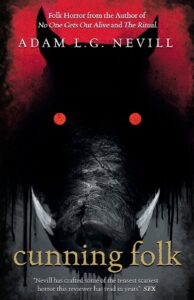
Andrew Nevill, Cunning Folk
This one is SO folk horrory. It couldn’t be more folk horrory if it was carved as runes on a big old neolithic megalith on a fog-enshrouded moor. It checks all the boxes you want a quality folk horror to check. Tom and Fiona move their family to a farmhouse in the country—heck—because they want to get back to the simple trad life—check—and get away from all that big city crime—check—but their idyllic new existence is threatened by their creepy witchy neighbors —check—who don’t like outsiders—check! Tom and the witches engage in a petty war of HOA violations that gradually escalates to pet-killing and attempted murder. Nevill knows exactly what he’s writing, working well-trod folk horror ground, but what might be a by-the-numbers trifle in the hands of a lesser storyteller is elevated by prickly, honestly drawn characters. Watching the relationship between Tom and Fionna crumble as Tom, the man of the house, bumbles his every attempt to alpha male his way out of trouble is difficult reading—and Cunning Folk’s commentary on the self-defeating demands of masculinity is as riveting as the occult shenanigans.
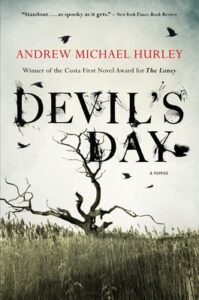
Andrew Michael Hurley, Devil’s Day
This one’s got another classic folk horror set-up: Guy returns home from the big city to his dark fucked-up Podunk town with a new beau in tow, and now he’s got to explain to newbie all the dark fucked-up Podunk town secrets and how they’re really not that bad, honest. John’s brought his new wife Kat home to the eerie ass end of Lancashire, where they celebrate “Devil’s Day,” a holiday to commemorate that time that the actual literal devil made a famine happen in town. Kat thinks this is only a temporary holiday, but in the wake of his grandfather’s death John is feeling the pressure to stay behind to continue the old man’s legacy. Hurley excels in subtle, slow burn horror of the veddy bri’ish sort, making his damp, dreary descriptions of British moors perfectly suited for folk horror. This is the sort of horror where the land itself is a character, exerting a strange irresistible magnetism over its inhabitants and leading them inexorably toward their doom.
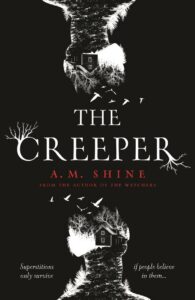
AM Shine, The Creeper
The Creeper is an unusual entry into the genre, an Irish folk horror combining elements of its more American-coded cousin hicksploitation as well as the sense of cold-blooded academic detachment reminiscent of Lovecraft’s best stories into an uncomfortable mélange. A not-at-all ominously weird academic hires a pair of students to investigate an isolated village out in the deep woods that has not had contact with the outside world for hundreds of years. Naturally, the residents of Tír Mallacht are all very normal and welcoming. Just kidding, of course they’re a bunch of inbred freaks with bad attitudes. Shine’s prose excels in painting the harshness and desperation of eking out a living in this bleak wilderness, and the authentic decrepitude of Tír Mallacht is a big part of the book’s success. The village is protected by the biggest freak of all, a supernatural monster called “the creeper” with a real weird modus operendi—he just hangs outside of your house at night, waiting for you to see him, and if you see him three times—he gets you! Stick around to have your mind blown by that twist ending!
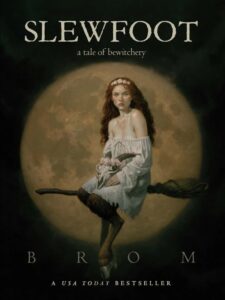
Brom, Slewfoot
Abitha is a mail-order bride shipped from the bosom of mother England to warm the bed of a hapless puritan nebbish in the far away provinces of the new world. When her husband meets a mysterious and untimely demise, Abitha is at the mercy of her far more sinister brother-in-law who will stop at nothing to get his claws on the family farm. But Abitha finds an unlikely ally in Slewfoot, a mysterious cryptid that haunts the local woods whom the puritans decry as a manifestation of the devil himself but whom Abitha comes to know so much more tenderly. Slewfoot turns many of the genre conventions upside down in a way that brings the subtler themes front and center: the true monstrosity comes less from the supernatural than from the bigotry and misogyny of a community determined to thwart Abitha’s self-realization at every turn. Slewfoot takes a meandering path to its ultimate end, but the blood-soaked femgore finale, when the fucking around is finally over and it’s time to find out, is well worth the trip.
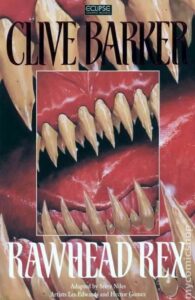
Clive Barker, Rawhead Rex
Barker is much more known for his urban horrors, but this nasty little diversion into rural Kent is such a beautiful distillation of Barker’s style that it’s impossible to resist. A local farmer accidentally unearths an ancient pagan deity with the deceptively goofy name “Rawhead Rex,” though we’ll forgive that since he’s sort of based on the actual British bogeyman Rawhead Bloodybones. Originally banished to the underworld as the “new” Christian religion replaced his worshippers, Rawhead Rex is elated to find that these modern Christians have gone soft and can’t withstand a re-emerged dark god. Time for carnage. Rawhead Rex goes on a bloody rampage across the alchemical countryside, anointing a horny verger with hot piss to become his dedicated Renfield (it makes sense in context) and killing a bunch of local yokels. This is a gonzo, no-holds-barred Barker story, you see, so the deaths—including the hero’s own preteen son—are not merciful. Lots of bone-cracking, blood-spurting details in this one for folks who like their horror wet. The story might be spiritually akin to a slasher, but Rawhead Rex’s relationship with the usurper faith and the revelation of the totem that ultimately banishes him back to the shadows put this squarely in the folk horror camp.
***

Bitter Karella
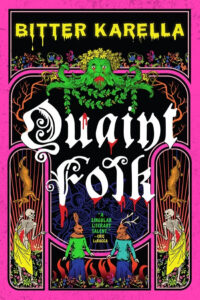
Bitter Karella is the writer and horror aficionado behind the twice Hugo-nominated microfiction comedy account @Midnight_pals, which asks what if all your favorite horror writers gathered around the campfire to tell scary stories. His work has appeared in Seize the Press, Tenebrous Press's Your Body in Not Your Body, and Ghoulish Books' Bound in Flesh. She also dabbles in cartooning and text game design. Her latest novel, Quaint Folk, is now available.