The Organized Arson Fraud Gangs of Old New York
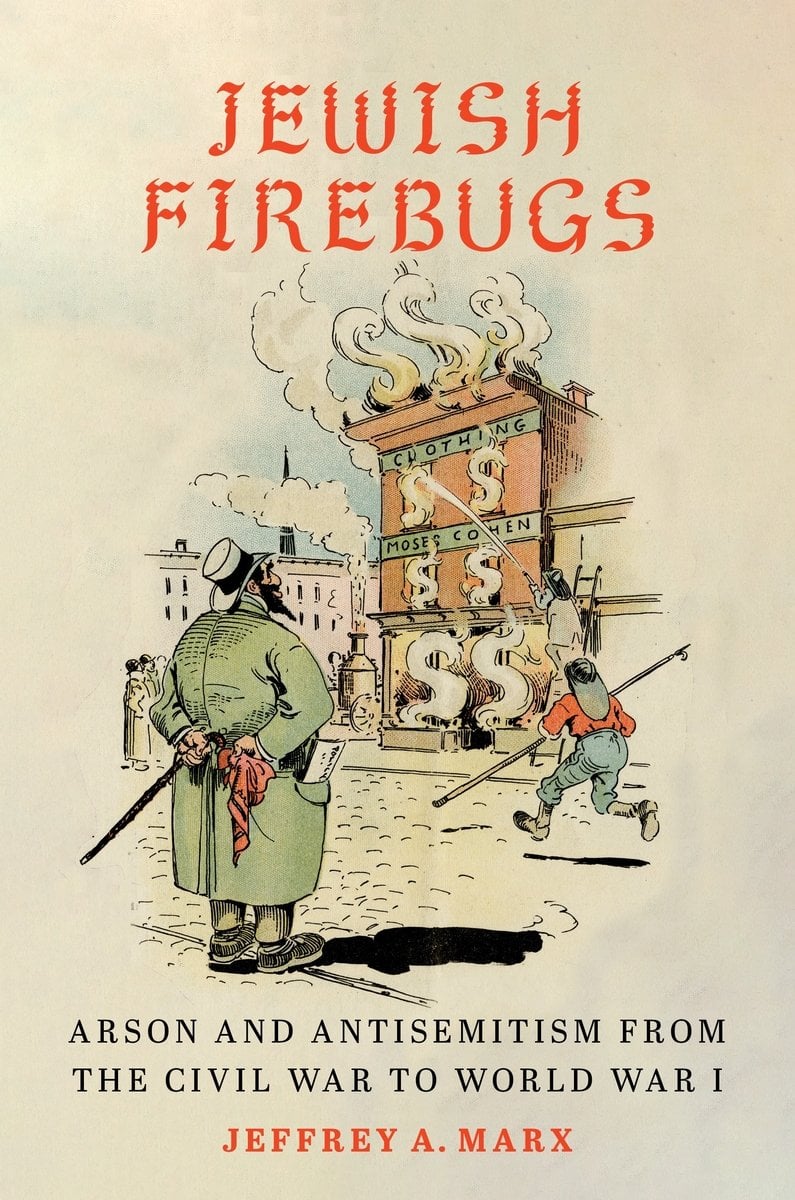
An excerpt from Jewish Firebugs: Arson and Antisemitism from the Civil War to World War I by Jeffrey A. Marx
Zucker and Blum
In June 1895, the New York papers featured the sensational news of an “organized gang” who had been setting fires in Manhattan and Brooklyn, netting over $200,000 from insurance companies. The members of this “Firebug Brotherhood” were said to range from the “plain crook to the rich fire fiend.”
Soon arrested was Isaac Zucker, a “prosperous tailor” who lived in a “fine house” with his wife and children in Union Hill, New Jersey. He was said to be the leader of this gang, responsible for burning out stores in New York City, Philadelphia, Washington, and New Jersey. It turned out, however, that Zucker had acted almost entirely alone over a twenty-year period in setting fire to his homes and places of business in Philadelphia, Newark, and New York to collect insurance money.
Isaac Zucker (ca. 1846–1915?) immigrated to the United States from Russia around 1870, settling in New York. For the first decade after his arrival he sold cutlery, crockery, and hardware, then had a stand in a market selling tea. He amassed enough capital from this to move to Newark, where he opened a boot and shoe factory and then opened a second factory and store in Philadelphia, both employing twenty to twenty-five workers.
After selling those enterprises, in the early 1880s he returned to New York City, where he manufactured women’s and children’s cloaks. This was also a good-sized operation, employing between twenty-five and seventy workers, depending on the season. Though Zucker followed the common Jewish economic trajectory at this time from peddler to store owner (and then, for some, to factory owner), he discovered that there was an even more lucrative means of income through arson.
In 1895 Zucker was charged for a fire he had set three years earlier in his store and in the apartment next door. When the building did not burn down as Zucker had hoped, he came back a few days later to pull down some of the chimney and walls before the adjuster for the fire insurance company arrived. His trial also revealed that he was associated with at least a half dozen previous fires: one in his New York home, one in his Newark shoe store, two in his Philadelphia shoe store, an-other in his Brooklyn cloak store, and one in a recently opened Newark cloak store.
All these fires resulted in payouts from his fire insurance policies. Following some of these fires he held onto the burnt stock and then transported it to the next location he torched, as proof of his loss. Zucker was consequently found guilty of first-degree arson and sentenced to thirty-six years imprisonment. He served almost twenty of those years before either being released or, more likely, dying in prison.
Max Blum (ca. 1835–1924), Zucker’s next-door neighbor, was born in Russia. He immigrated to the United States in 1877 and settled in New York, where he worked as a peddler. In 1886 he had been sentenced to four years in prison for setting fire to a clothing store in Philadelphia. Since it appeared that he had only a secondary role in the fire that Zucker set to his apartment, he went on trial instead for setting a previous fire to a fur store in 1894 and was sentenced to eighteen months at Sing Sing. Upon his release, he stayed clear of prison for the next twenty-five years until his death.
*
Torches
The Zucker case also highlighted a second key participant involved in the business of arson: a “torch,” “mechanic,” or brenner (Yiddish for “burner”) who was hired to set fire to the premises. Using a torch had the advantage of providing the storeowner or tenement dweller with an alibi since he could then be conveniently far away from the fire when it took place.
The torch, however, had more use than simply providing an alibi. He was also expected to have some degree of skill in setting the fire. The torch whom Zucker and Blum used was Morris (Jacob) Schoenholz (ca. 1851–1924). He was born in Russia, immigrated in 1872, and settled in New York, where he worked as a peddler (figure 3.4).26 In 1876 he had been sentenced to ten years in prison on a burglary charge. Upon his release, he worked as a presser in a sweat shop and then ran an ex-press business, transporting items with a horse and a covered wagon.
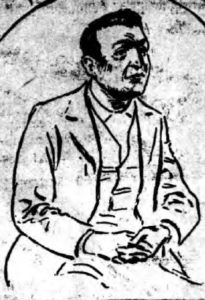 . Morris (Jacob) Schoenholz. New York Herald, February 5, 1898.
Schoenholz had grown up in the same town with Max Blum, and it was through Blum that he began working for Zucker, transporting burnt stock from one location to another. In addition, between 1890 and 1895, he set a number of fires for Zucker and others, torching tenements and stores. In 1892, having been promised $25, he lit the fire in Zucker’s store.
Schoenholz was sent to Sing Sing prison for forty-eight years for setting a fire in a flat in January 1895. In hopes of reducing his sentence, he agreed to turn state’s evidence and provided the testimony that convicted Zucker. As a result of his testimony, he was released after ten years and stayed out of prison for the rest of his life.
To set his fires, Schoenholz used a “bladder” filled with inflammable liquid (like benzine) that was hung from the ceiling. Next, he sprinkled alcohol on the floors and walls and started a small fire. When the flames reached the bladder, it exploded. For the 1892 Zucker and Blum fire, he used two butter tubs and a barrel filled with twenty gallons of benzine. Alternatively, he would turn on all the gas burners in a tenement apartment and then light one. An explosion soon followed.
Other “mechanics” started their “blowouts” by saturating trains of light fabric with a flammable liquid, draping it over furniture or clothing, waiting for its vapors to fill a room, and then throwing in a match from the outside into the premises. A kerosene oil lamp was sometimes left broken on the floor to suggest it was an accident. In later years arsonists used sausage skins filled with gasoline.
Other torches at this time included Louis Rothman and Sarah Silbermeister, who sometimes worked together. Rothman (b. 1845) had immigrated to the United States in 1892. He was married and worked as a clothier when he wasn’t setting fires.
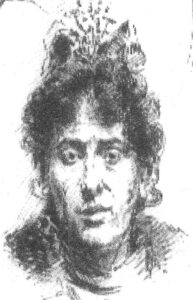 Sarah Silbermeister. Leslie’s Weekly, February 18, 1897.
Sarah Porter Silbermeister (b. 1862) came in 1891. She was married and had five children, ranging from three to thirteen in 1895 (figure 3.5).33 She was involved in nine incidents of arson in tenement houses. Testifying against them at their trial for a fire they set in 1894 was a third torch, Simon (Sheyer) Rosenbaum (b. 1853), who came to the United States in 1887.34 Both Rothman and Silbermeister spent ten years in prison.
It should be noted that garment factories, tailor shops, and other stores were not the only targets of arsonists. In one horrific case from August 1912, Morris Greenberg (1847–1928), a tailor from Russia, his son David, a twenty-two-year-old sewing machine operator, and Louis Evans (Evansky), a twenty-nine-year-old tailor, were arrested and convicted for attempting to set fire to a stable containing seven decrepit horses.
After insuring seven of his healthy horses for $200 each, Evansky secretly sold them off, substituted seven old horses worth less than $5 a piece, and hired the Greenbergs to set fire to the stable. After securing the seven decrepit horses, the Greenbergs saturated the coats of two of them with gasoline and kerosene before setting three separate fires in the stable. The three men were sentenced to various terms of imprison-ment at Sing Sing.
*
Adjusters
In addition to the torch, the public adjuster came to play an increasingly large role in Jewish arson fraud schemes. Appearing in the late 1880s, the public adjuster was a relatively new player in the insurance industry, inserted between the policy owner and the insurance company.
Given that many immigrant policy owners did not have facility with English and were faced with complicated forms and procedures for collecting on their loss, the public adjuster stepped in, for a percentage of the payout (five to fifteen percent), to negotiate with the insurance company adjuster on behalf of the policy owner. The public adjuster would need to vociferously defend the policy owner’s claim since the insurance companies were naturally quite conservative when it came to accessing the damage.
A joke around this time had an insurance adjuster staggering out of a train wreck, profusely injured, who proclaimed that he was just fine and denied there was a wreck, and an 1890 Puck cartoon had a character explain that he could sell goods at less than cost and still make a living since he had a cousin who was a fire insurance adjuster. Since there was no licensing for this position, it was an easy middleman occupation, and competition for clients was fierce. One public adjuster testified at an arson trial that when a fire broke out at a saloon in 1894, he arrived to find between six and ten other public adjusters who were there before him.
When it came to arson fraud, a skilled public adjuster could help defend the policy owner’s claim, but since he worked on a percentage basis, he knew how to inflate the damages in order to increase the payout. Given the relative ignorance of the policy holder, it was common that the public adjuster would not share the actual amount of the final payout, so as to increase his income.
The public adjuster, along with the policy owner and the torch, thus became a fixed part of arson fraud schemes, especially since the position was so lucrative. In 1897 public adjusters who were involved in arson groups were said to have made $12,000 a year, while in 1913 Henry C. Freeman, a public adjuster convicted of second-degree arson, stated that he had an income of $25,000 a year, the equivalent of $750,000 today.
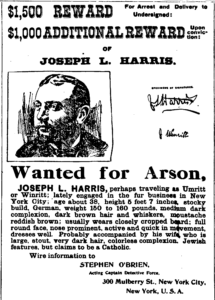
One Jewish public adjuster whose story was in all the papers was Joseph L. Harris (b. ca. 1860), who immigrated to the United States in 1881. Over the next twelve years, several of the fur stores and a dry goods store he was involved with had fires, netting him insurance payments of at least $13,000. By 1889 he became a public adjuster and received a portion of insurance payouts from businesses that had suffered fires. Subsequently he lived in luxury in a three-story brownstone in a fashionable Brooklyn neighborhood with his own horse-drawn carriage and owned a summer cottage on Bay Shore, Long Island.
One of the fur businesses he represented had a fire in 1894 that resulted in a settlement of $191,000 (the equivalent of over $6 million today). It turned out, however, that he was also a secret copartner of the firm. He went into hiding in 1895 just before he was indicted for third-degree arson. Though over the next few years there were claims of him being spotted and arrested—once in Illinois and another time in Copenhagen—by 1900 he still had not been found, nor is there any indication of his arrest in future years.
A second Jewish public adjuster involved in arson was Samuel Milch (ca. 1865–1927). Milch was from Galicia (today Ukraine) and had served prison time there, before coming to the United States in 1880. In 1886 he had also served nine months in the New York Penitentiary for petty larceny. In 1894 Milch arranged with Louis Gordon (ca. 1857–1938), who had immigrated in 1872, to burn down Gordon’s shirt manufacturing factory. They knew one another since they were members of the same Jewish lodge.
Milch had him take out between $53,000 and $92,000 in fire insurance, then arranged for Max Glueckman to set the fire, pay-ing him between $500 and $750. Glueckman (b. ca. 1868) arrived in the United States in 1889. When he wasn’t setting fires, he worked as a shoe-maker.44 Charles Lenz, a policeman assigned to the fire marshal’s office, was paid $100 to keep quiet about what he knew.
The trial took place over ten weeks and involved 136 witnesses for the state and 150 for the defense. Gordon was sentenced in 1896 to six years’ imprisonment for procuring the fire, but his sentence was later commuted to three years. Milch, who agreed to turn state’s evidence and testify against Gordon, had all the charges against him dropped.
 New York Evening Journal, September 14, 1897.
Following these trials, Milch stayed clear of further arson and public adjusting activities, instead obtaining employment as an agent for a life insurance company. In 1914 he was charged with a scheme that paralleled his arson scam: issuing a policy for an individual with severe heart problems, bribing a doctor to issue a healthy report, and then splitting the $15,000 proceeds with the policy holder when the insured soon died.
Another individual often involved in arson fraud was the insurance adjuster who represented the fire insurance company. Like the public adjuster, the insurance adjuster could inflate the amount of the damage caused by the fire but could also neglect to inform the company if there were several other policies taken out on the same burnt stock. One such insurance adjuster was Max Grauer (1854–1916), who had immigrated to the United States in 1886. He was convicted in 1895 for arranging a fire in a store on Canal Street in 1894, using both Rothman and Silbermeister as his torches, and sentenced to thirty years in Sing Sing prison.
*
The Fire Broker
The most sophisticated configuration for arson involved the use of a fire broker (not to be confused with an insurance broker). For a percentage of the payout, the fire broker guided a client through the tasks of procuring a policy from an insurance broker, secured a mechanic, and then arranged for the client to be away when the fire was set. Once the fire occurred, the fire broker would recommend a public adjuster for the client to use. The public adjuster, in turn, would pay the broker a “divvy,” up to fifty percent of his take for being recommended for the job.
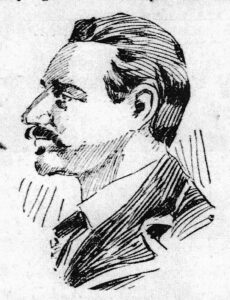
One such fire broker was Adolph Hershkopf (1863–1916). He immigrated to the United States in the early 1880s and settled in New York, where he married, had two children, and worked as a barber.
Starting in 1885, Hershkopf brokered a number of fires. In the parlance of the time, he was a “drummer,” an active solicitor in seeking stores and apartments to burn. At his trial, one witness testified that Hershkopf came into his restaurant and said, “You ought to have a fire here.”
Hershkopf sometimes also served as the insurance agent for some of his clients. He thus was awarded a commission from the insurance company for selling the policy, received a share of the insurance payout from the policy owner as the fire broker, and collected fifty percent of what the public adjuster received from the policy owner (five to ten percent of the payout) as a commission for recommending his use.
In 1894 Hershkopf arranged a fire for his neighbor, Solomon Klein-rock (b. 1863), who had arrived in the United States in 1886. Kleinrock owned an unsuccessful liquor store and saloon on the bottom floor of a five-story tenement housing twenty families, which Hershkopf suggested could be burned down for insurance money. Accordingly, a $1,200 policy was taken out with the Niagara Insurance Company and the saloon set ablaze.
 Adolph Hershkopf.
Philadelphia Inquirer, July 10, 1896.
In the fire that followed, however, seven people were injured and a young girl on the third floor perished. Testifying against him at his 1896 trial was Max Glueckman, who had previously set fires for Milch. Hershkopf had used Glueckman over the years as his mechanic, setting at least a dozen fires to flats and stores. Also testifying against Hershkopf was Louis Grauer (1873–1941), a public adjuster who had been Hershkopf ’s partner. (Kleinrock was not put on trial since he had fled with his half of the insurance money, apparently re-turning to Russia.)
As a result of their testimony, Hershkopf was convicted in 1896 of manslaughter and was sentenced to forty-eight years in prison. Eight years later, however, he was pardoned by New York Governor Benjamin Odell due to hostile witness testimony against him at his trial. He returned to his family and resumed work as a barber, staying clear of prison for his remaining days.
***

Jeffrey A. Marx
Jeffrey A. Marx is an Independent Scholar and the author of Smoothing the Jew: Abie the Agent and Ethnic Caricature in the Progressive Era and Jewish Firebugs: Arson and Antisemitism from the Civil War to World War I.