How 'At Close Range' Set the Tone for Rural Crime Storytelling
Once overlooked, the 1986 noir now has an outsize influence.
Rural noir – crime stories set in small American towns, nestled among cornfields and along winding riverbanks – has long been a hugely popular and influential subset of crime movies, TV, books and short stories.
We’ve had rural crime stories for as long as we’ve had dirty doings in bucolic settings. Some are fictional, like “The Postman Always Rings Twice,” and some are fact-based, like “Bonnie and Clyde” or “In Cold Blood.” And we can’t forget Ed Gein, the real-life murderer and mama’s boy upon whom Robert Bloch based “Psycho.”
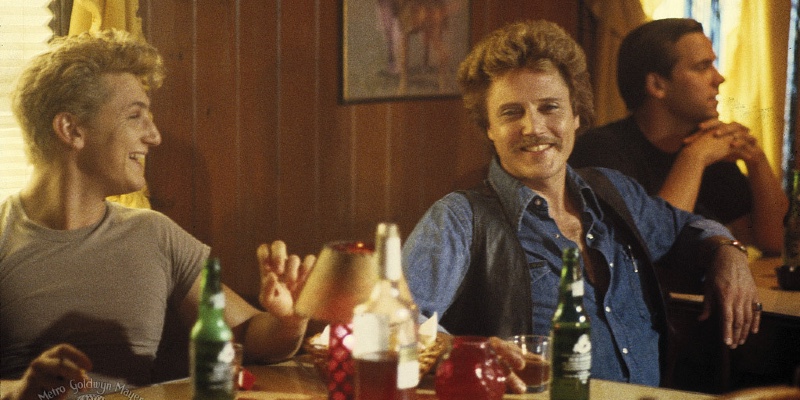
But as for the past 40 years, I’d argue that one of the most influential works of crime film was “At Close Range,” the 1986 noir thriller directed by James Foley and starring Christopher Walken in all his feathered-hair glory, Sean Penn in his Madonna era and Mary Stuart Masterson, who deserved to have a long career that didn’t include “Five Nights at Freddy’s.”
Foley’s film, which couldn’t find an audience when it was released in April 1986, was beautifully shot and lyrical until things turned brutal. But even the Madonna single “Live to Tell,” which was played in heavy rotation on MTV, couldn’t prompt people to go to theaters to see “At Close Range.”
But the movie’s story of murderous small-town criminals forged a path for a lot of rural crime tales in the years since, including TV series like “Ozark” and many bestselling novels.
Cops and robbers? Not really
“At Close Range” certainly followed in a lot of footsteps. Among the most notable is “In Cold Blood,” the 1966 Truman Capote non-fiction novel made into a memorable Richard Brooks film in 1967.
Two years before “At Close Range,” the Joel and Ethan Coen thriller “Blood Simple,” released in 1984, exercised some of the same rural noir muscles in its tale of deceit and betrayal in a small Texas town. “Blood Simple” is better known and better remembered than “At Close Range,” though, and launched the Coen brothers into a career that included some of the best rural crime films that would follow, including “Fargo” in 1996 and “No Country for Old Men” in 2007.
I’d argue that “At Close Range” accomplished the same feats as those films and did so with a hypnotizing mixture of beauty and brutality and was unjustly overlooked, taking in just $2.3 million at the box office, only about a third of its budget.
The film was written by Nicholas Kazan, whose father was director Elia Kazan, and was directed by James Foley, whose diverse – to say the least – filmography includes not only “At Close Range” but “Glengarry Glen Ross” and a couple of the “Fifty Shades” movies. Admit it, you didn’t know the same director was responsible for filming “Always Be Closing” and the erotic adventures of Anastasia Steele and Christian Grey, did you?
“At Close Range” was based on a real-life rural Pennsylvania criminal gang run by Bruce Johnston Sr. The gang made a living for nearly two decades, until 1978, burglarizing rural homes, barns and businesses, stealing valuables from safes as well as antiques and tractors and anything that could be resold. The thieves found that part of the appeal of rural crime, burglarizing and stealing from remote sites, is that people are less likely to pass by on dark country roads than on city streets.
The movie really emphasizes this, with Walken’s team – his character is Brad Whitewood in the movie – carefully stealing from isolated buildings, posting a member of the gang down the road with a walkie talkie to warn the thieves if anyone does happen to come near.
That sentry job is the first one taken by Brad Junior, played by Sean Penn. The younger Brad lives with his mother and grandmother but is always impressed when his estranged father drops by with cash. After young Brad is kicked out of the house by his mom’s boyfriend, he goes to live with his father and is soon made the lookout for the gang.
As Brad Junior grows in confidence, he and his brother (played by Sean’s real-life brother Chris Penn) and a small group of offshoots of the older Brad’s gang take the initiative in staging their own robberies.
At the same time, Brad Junior falls for a 16-year-old town girl, Terry (Mary Stuart Masterson), and, interestingly enough, Terry isn’t horrified to learn that her new boyfriend knocks over barns and offices.
One of the elements of “At Close Range” that seems most prescient of the many rural crime stories to follow is that the movie isn’t a cops and robbers story. It’s a robbers and more robbers story.
A beautiful, lonely-looking crime story
As a matter of fact, “At Close Range” has only a blink-and-you’ll-miss-it police presence. There’s no grizzled old sheriff or crusty marshal in pursuit of the two generations of thieving Whitewoods. This sets the movie apart from more recent and more traditionally structured rural crime films with a dogged investigator like in “No Country For Old Men” or “Hard Rain” or “Hell Or High Water.”
Think the “Justified” TV series, based on the work of Elmore Leonard, without Marshal Raylan Givens but even more Boyd Crowder and the Bennetts and Crowes. I’d miss Raylan and actor Timothy Olyphant and his marshals cohorts, but I could watch the Crowders and Bennetts and Crowes forever.
(Speaking of the Bennett clan and Mags, its matriarch, in “Justified,” I’ll note the 1945 mystery/comedy film “Murder, He Says,” starring Fred MacMurray as a pollster who goes to Hillbilly country to find his predecessor, who has disappeared. He runs into the Fleagle family, led by matriarch Mamie, played by Ma Kettle herself, actress Marjorie Main. There’s a direct line that can be drawn from Main’s character through various Ma Barker portrayals to Margo Martindale’s brilliant Mags Bennett, mother of a murderous crew of sons, or as she calls them, her “tads.” There’s unfortunately no parallel matriarch in “At Close Range.”)
As I was saying before I interrupted myself, “At Close Range” thoroughly eschews much of a police presence to focus on the bad guys, who are bad to greater and lesser degrees, naturally. The rural criminals of “Justified” or “Ozark” would feel right at home with the two Brads and their cohorts in “At Close Range.” The 1986 film is set in 1978, in the twilight of the older Brad’s criminal reign, and consists of a lot of drinking, tractor stealing and cockfighting – the rural criminal trifecta.
Filmed along lonely, narrow roads cutting through cornfields, and in backlit, deserted town squares at night, “At Close Range” is a gorgeous movie. The scenes fit the characters and especially the older Brad’s motivations: He notes that he’s driven on narrow backroads all over the country and never run into the police.
Big Brad’s philosophy of theft is simple: “Everywhere I go, I see money.” It’s ripe for the taking, he tells his son, who becomes enamored of his father’s fast car and pool, adorned by girlfriend Candy Clark.
Most of the women in the movie aren’t ornamental as much as they are incidental, a fault of many crime movies. While I like that Masterson’s character is ambivalent or even casually accepting of Little Brad’s criminality, her character ultimately is ill-treated. That’s probably not a surprise given the era of moviemaking. We’d know a lot more about the character today.
The camera lingers on Terry and most of the characters, including the older Brad’s feathered hair and blonde mustache. The movie is an example of how to find the beauty in any cast and any setting: sparsely populated small towns and countrysides, sparks thrown by a torch used to cut open a safe, shallow rivers lit only by moonlight, the perfect spot to hold someone’s head underwater.
There’s crime in them thar hills.

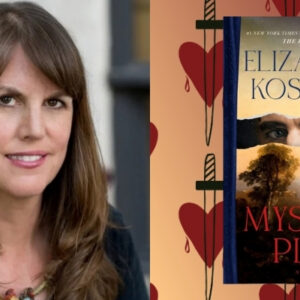
Keith Roysdon
Keith Roysdon is the author of two crime novels, “Seven Angels” and “That October,” as well as numerous short stories on sites like Punk Noir and in anthologies like “Fighting Words,” “Bad Intentions” and “Daydream Believer,” the latter to come later in 2026. He’s written more than 75 pop culture pieces for CrimeReads on everything from Dennis Lehane to juvenile mystery novels to odd 1970s TV movies.